



Planting and Growing passion flower 'Incense'

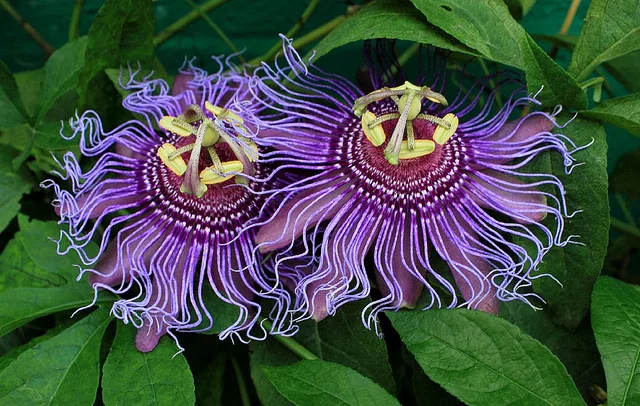
| Care difficulty | 3 / 5 |
|---|---|
| Watering schedule | Moderate regular watering, avoid prolonged drought and stagnant waterlogging |
| Sunlight requirements | Full sun · Partial shade |
| Ideal temperature | Information to be completed |
| Soil type | Loam |
| Soil pH | Alkaline · Neutral |
| Soil moisture | Moist but well drained |
| Fertilizing | Balanced perennial feed every four weeks spring through summer growth |
| Toxicity | Information to be completed |
How to Water passion flower 'Incense'?
Crato passionvine 'Incense' does not handle a lack of water well. During the germination phase especially, the soil should be kept constantly moist. When the plants are mature enough, reduce watering to twice a week if your garden receives less than 4 cm of water weekly. The plant doesn't do well in damp soil with excess water, so be mindful of your soil's water retention. Don't forget that soil in containers will dry out more quickly than garden soil, so may require more frequent watering.
Learn more →What Are the Sunlight Requirements for passion flower 'Incense'?
Crato passionvine 'Incense' thrives best under full sun conditions, requiring ample sunlight to facilitate optimal growth and flower production. However, it exhibits admirable tolerance towards partial sun, adapting well if it receives several hours of direct light daily. Deviations from these light conditions can lead to subdued flowering and reduced vigor. When grown outdoors, crato passionvine 'Incense' should be positioned in a location that ensures maximal exposure to sunlight throughout the day. This adaptability to light conditions highlights its robust nature, making it a favorable choice for gardeners seeking a resilient and vibrant flowering plant.
Learn more →What Is the Ideal Temperature Range for passion flower 'Incense'?

Crato passionvine 'Incense' displays a notable resilience to temperature variations. It can tolerate temperatures as low as -10°C (14°F) and as high as 43°C (109°F). This adaptability reduces the risk of plant damage in moderate climate extremes. However, protection is essential during severe cold snaps or heatwaves. In cold conditions, crato passionvine 'Incense' may exhibit wilting or darkened foliage, while extreme heat can cause leaf scorch and drooping. Preventive measures, such as mulching during the winter and providing shade in intense heat, are crucial to maintaining its health. Its wide temperature tolerance makes crato passionvine 'Incense' suitable for diverse environments, though careful care ensures optimal growth.
Learn more →What Soil Is Best for passion flower 'Incense'?
Crato passionvine 'Incense' is not fussy about soil type, but requires constant moisture and good drainage, which can be difficult to achieve. You can always mix the soil with organic compost, which will improve drainage and regulate moisture. The plant thrives in slightly acidic soil, with an ideal pH ranging from 5.0-6.0.
- Soil type
- Loam
- Soil pH
- Alkaline · Neutral
What Are the Moisture Requirements for passion flower 'Incense'?
Moist but well drained
Learn more →How to Fertilize passion flower 'Incense'?

Crato passionvine 'Incense' is a heavy feeder. It will benefit from the regular application of quality fertilizers, rewarding you with beautiful blooms. Use a high quality, general-purpose fertilizer with a well-balanced nitrogen, phosphorus, and potassium ratio. Start fertilizing in the spring, just before the new growth appears, and keep doing this every five weeks until the fall.
Learn more →How to Prune passion flower 'Incense'?

Crato passionvine 'Incense' is a vigorous flowering vine recognized for its fragrant, colorful blooms. Optimal pruning should be done in early spring before new growth begins. Remove dead or damaged stems, and trim back overgrown areas to encourage healthy growth and abundant flowering. Regular pruning helps maintain shape and control size, promoting better air circulation and reducing disease risk. Check reliable gardening guides for specific care tailored to your region's climate.
Learn more →How to Propagate passion flower 'Incense'?

To propagate your crato passionvine 'Incense', take a cutting that's 10 to 15 cm long. Remove the bottom leaves, dip into rooting hormone, and place into a pot with moist soil. Cover with plastic and keep shaded, warm, and moist, repotting once a root system has developed. This usually takes about a month.
Learn more →How to Transplant passion flower 'Incense'?
Crato passionvine 'Incense' thrive best when transplanted in the gentle warmth of early to mid-spring or the consistent cool of mid to late fall. Choose a sunny location with well-drained soil. Ensure the new site mimics the original conditions for optimal growth.
Learn more →How to Care for passion flower 'Incense' in Winter?

Information to be completed
Learn more →How to Plant passion flower 'Incense'?
Crato passionvine 'Incense' can easily be planted as a small plant, but can also be grown from seed. This can sometimes take more than a month, and you will need to wait until seedlings have developed a couple of sets of leaves before transplanting them. Planting is best done in the spring or fall, when the soil is still warm. Choose a sunny site in your garden with shelter from strong winds and water well after planting.
Learn more →How to Repot passion flower 'Incense'?
Information to be completed
Learn more →How to Harvest passion flower 'Incense'?

The flowers from your crato passionvine 'Incense' can be snipped off individually and used either fresh or dried in the kitchen. The fruit is usually ready in the late summer to early fall, and should be picked when they are plump and have a deep orange, red, or purple color, depending on the variety you are growing.
Learn more →Common Pests & Diseases

Diseases
May be susceptible to honey fungus (rarely) and a virus
Pests
May be susceptible to glasshouse red spider mite, glasshouse whitefly, mealybugs and scale insects under glass
Explore the plant health library →The Toxicity of passion flower 'Incense'
Information to be completed