



Planting and Growing hazel 'Kentish Cob'

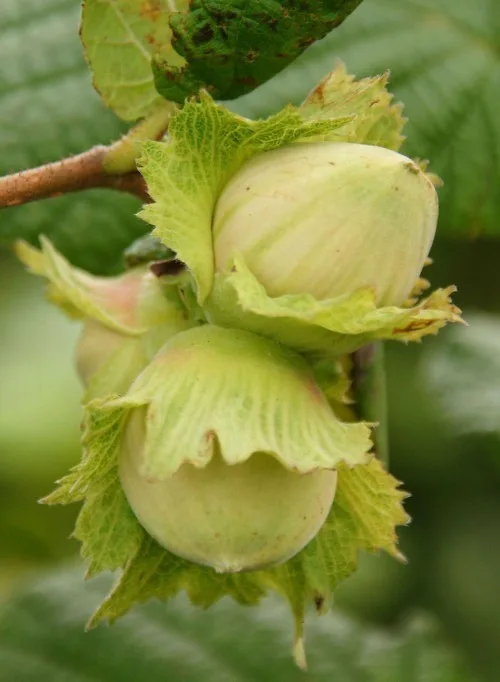
| Care difficulty | 3 / 5 |
|---|---|
| Watering schedule | Moderate regular watering, allowing slight drying between waterings |
| Sunlight requirements | Full sun · Partial shade |
| Ideal temperature | Information to be completed |
| Soil type | Chalk · Clay · Loam · Sand |
| Soil pH | Alkaline · Neutral |
| Soil moisture | Moist but well drained · Well drained |
| Fertilizing | Balanced feed monthly during active growth season |
| Toxicity | Information to be completed |
How to Water hazel 'Kentish Cob'?
Moderate regular watering, allowing slight drying between waterings
Learn more →What Are the Sunlight Requirements for hazel 'Kentish Cob'?
Full sun · Partial shade
Learn more →What Soil Is Best for hazel 'Kentish Cob'?
- Soil type
- Chalk · Clay · Loam · Sand
- Soil pH
- Alkaline · Neutral
What Are the Moisture Requirements for hazel 'Kentish Cob'?
Moist but well drained · Well drained
Learn more →How to Fertilize hazel 'Kentish Cob'?

Balanced feed monthly during active growth season
Learn more →How to Prune hazel 'Kentish Cob'?

Brutting or breaking sideshoots half way along their length in August followed by shortening the brutted shoots to 3-4 buds when the catkins are shedding pollen in late winter. When necessary remove up to one third of old overcrowded shoots to the main branches
Learn more →How to Propagate hazel 'Kentish Cob'?

Propagate by chip budding in mid- to late summer or grafting onto clonally produced rootstocks or seedlings in late winter.
Learn more →How to Plant hazel 'Kentish Cob'?
For fruit production, grow as a goblet-shaped bush. Keep clear soil in a 60cm radius around trunk
Learn more →Common Pests & Diseases

Diseases
May be susceptible to honey fungus, silver leaf and powdery mildews
Pests
May be be susceptible to caterpillars, gall mites, aphids and sawflies. Squirrels like to feed on the nuts
Explore the plant health library →