



Planting and Growing African lily 'White Giant'

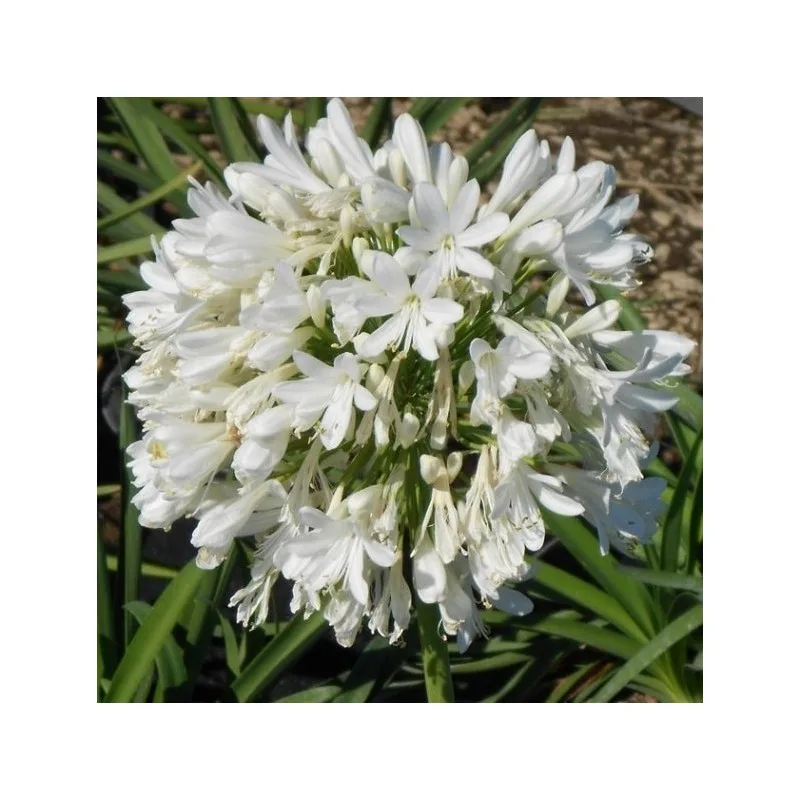
| Care difficulty | 3 / 5 |
|---|---|
| Watering schedule | Water deeply but infrequently, allowing soil to dry between waterings once established. |
| Sunlight requirements | Full sun |
| Ideal temperature | Information to be completed |
| Soil type | Chalk · Clay · Loam · Sand |
| Soil pH | Acid · Alkaline · Neutral |
| Soil moisture | Moist but well drained · Well drained |
| Fertilizing | Apply a balanced liquid fertilizer every 2-4 weeks during the spring and summer growing season. |
| Toxicity | Harmful if eaten. Wear gloves and other protective equipment when handling |
How to Water African lily 'White Giant'?
Water deeply but infrequently, allowing soil to dry between waterings once established.
Learn more →What Are the Sunlight Requirements for African lily 'White Giant'?
Full sun
Learn more →What Soil Is Best for African lily 'White Giant'?
- Soil type
- Chalk · Clay · Loam · Sand
- Soil pH
- Acid · Alkaline · Neutral
What Are the Moisture Requirements for African lily 'White Giant'?
Moist but well drained · Well drained
Learn more →How to Fertilize African lily 'White Giant'?

Apply a balanced liquid fertilizer every 2-4 weeks during the spring and summer growing season.
Learn more →How to Prune African lily 'White Giant'?

No need to cut down in the autumn as the seedheads look attractive over winter
Learn more →How to Propagate African lily 'White Giant'?

Propagate by division every three to four years, in spring
Learn more →How to Plant African lily 'White Giant'?
In mild areas, grow in well-drained soil in a sunny, sheltered position. Otherwise grow in a container and position in full sun. Water during the growing season and liquid feed monthly from spring to flowering. Overwinter the whole container in a cold greenhouse. See agapanthus cultivation
Learn more →Common Pests & Diseases

Diseases
May be susceptible to a virus
Pests
May be susceptible to slugs and snails and agapanthus gall midge
Explore the plant health library →The Toxicity of African lily 'White Giant'
Harmful if eaten. Wear gloves and other protective equipment when handling