



Planting and Growing Japanese anemone 'Praecox'

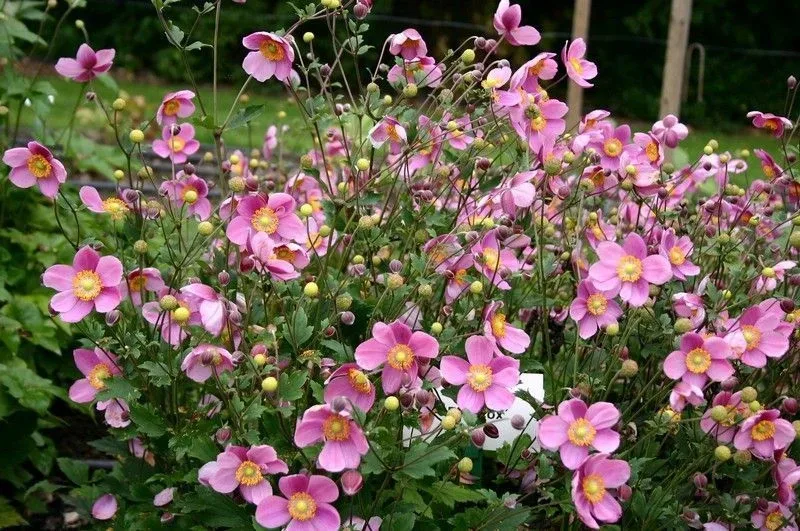
| Care difficulty | 2 / 5 |
|---|---|
| Watering schedule | Keep soil evenly moist during growth and flowering |
| Sunlight requirements | Full sun · Partial shade |
| Ideal temperature | Information to be completed |
| Soil type | Chalk · Clay · Loam · Sand |
| Soil pH | Acid · Alkaline · Neutral |
| Soil moisture | Moist but well drained |
| Fertilizing | Light balanced feed in spring |
| Toxicity | Ingestion may cause mild stomach upset, contact may irritate skin. Wear gloves and other protective equipment when handling] |
How to Water Japanese anemone 'Praecox'?
Keep soil evenly moist during growth and flowering
Learn more →What Are the Sunlight Requirements for Japanese anemone 'Praecox'?
Full sun · Partial shade
Learn more →What Soil Is Best for Japanese anemone 'Praecox'?
- Soil type
- Chalk · Clay · Loam · Sand
- Soil pH
- Acid · Alkaline · Neutral
What Are the Moisture Requirements for Japanese anemone 'Praecox'?
Moist but well drained
Learn more →How to Fertilize Japanese anemone 'Praecox'?

Light balanced feed in spring
Learn more →How to Prune Japanese anemone 'Praecox'?

Cut back in late autumn
Learn more →How to Propagate Japanese anemone 'Praecox'?

Propagate by division in early spring or autumn, or propagate by root cuttings
Learn more →How to Plant Japanese anemone 'Praecox'?
Will grow in any garden soil but avoid excessive winter wet, dislikes being moved around. Can spread rapidly once established.
Learn more →Common Pests & Diseases

Diseases
May be infected by powdery mildews
Pests
Prone to leaf and bud eelworms
Explore the plant health library →The Toxicity of Japanese anemone 'Praecox'
Ingestion may cause mild stomach upset, contact may irritate skin. Wear gloves and other protective equipment when handling]