



Planting and Growing Cornish heath 'Grandiflora'

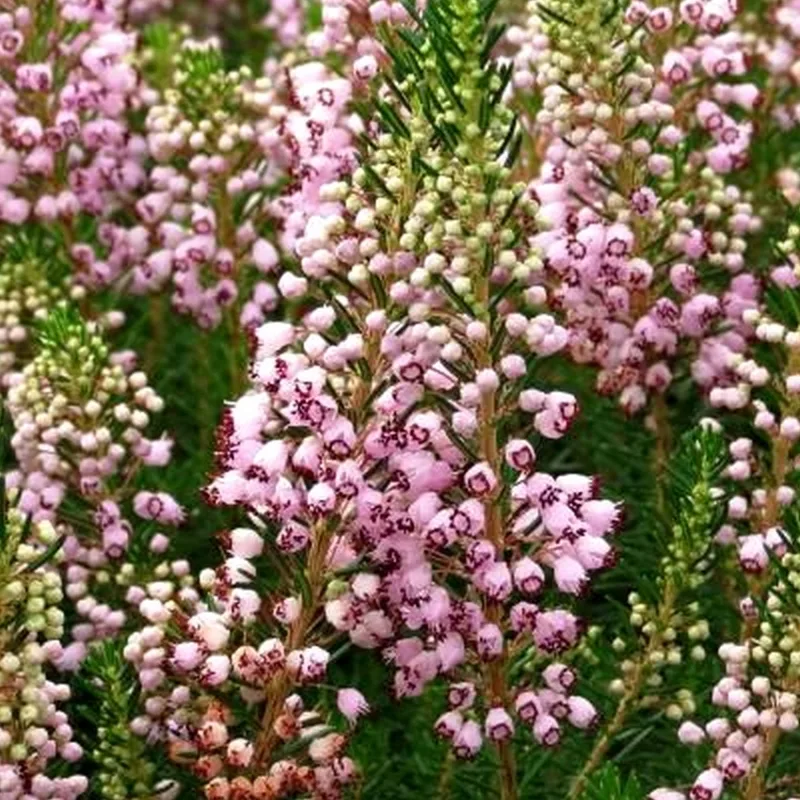
| Care difficulty | 2 / 5 |
|---|---|
| Watering schedule | Keep acidic root zone evenly moist, never leaving waterlogged soil |
| Sunlight requirements | Full sun |
| Ideal temperature | Information to be completed |
| Soil type | Clay · Loam · Sand |
| Soil pH | Acid · Neutral · Alkaline |
| Soil moisture | Moist but well drained · Well drained |
| Fertilizing | Ericaceous fertilizer monthly from spring through late summer |
| Toxicity | Information to be completed |
How to Water Cornish heath 'Grandiflora'?
Keep acidic root zone evenly moist, never leaving waterlogged soil
Learn more →What Are the Sunlight Requirements for Cornish heath 'Grandiflora'?
Full sun
Learn more →What Soil Is Best for Cornish heath 'Grandiflora'?
- Soil type
- Clay · Loam · Sand
- Soil pH
- Acid · Neutral · Alkaline
What Are the Moisture Requirements for Cornish heath 'Grandiflora'?
Moist but well drained · Well drained
Learn more →How to Fertilize Cornish heath 'Grandiflora'?

Ericaceous fertilizer monthly from spring through late summer
Learn more →How to Prune Cornish heath 'Grandiflora'?

Shorten flowered shoots to about 1.5–2.5 cm from the previous year's growth. Prune after flowering has finished.
Learn more →How to Propagate Cornish heath 'Grandiflora'?

Propagate by semi-ripe cuttings in mid or late summer
Learn more →How to Plant Cornish heath 'Grandiflora'?
Best grown in neutal to acid well-drained soil in an open site with full sun but tolerant of alkaline soils. Ideal for growing in containers in lime free (ericaceous) potting compost. See Hardy heathers and erica cultivation
Learn more →Common Pests & Diseases

Diseases
May be susceptible to fungal diseases, including honey fungus (rarely), and Phytophthora root rot, in wet conditions
Pests
Generally pest-free
Explore the plant health library →