



Planting and Growing common mock orange

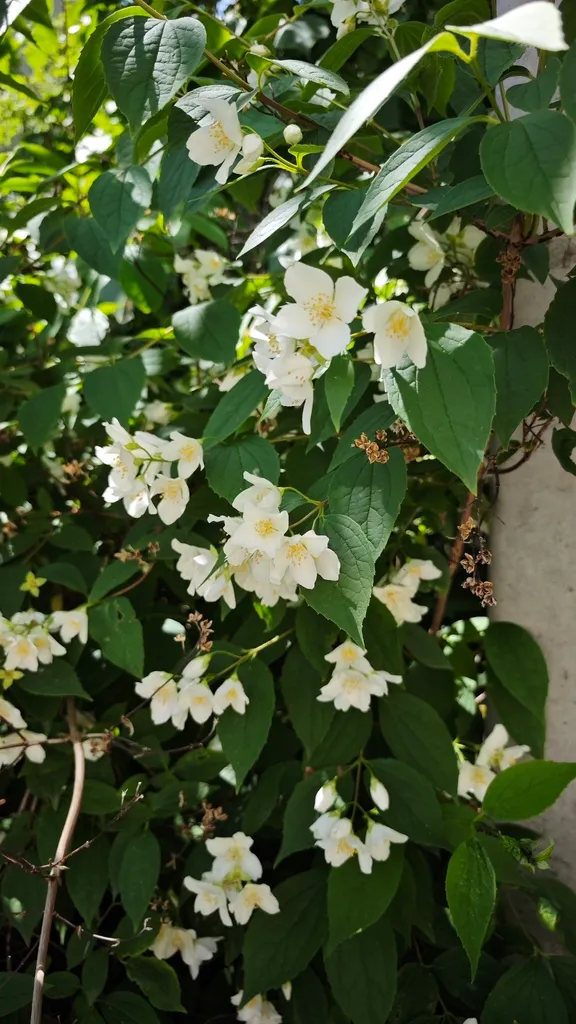
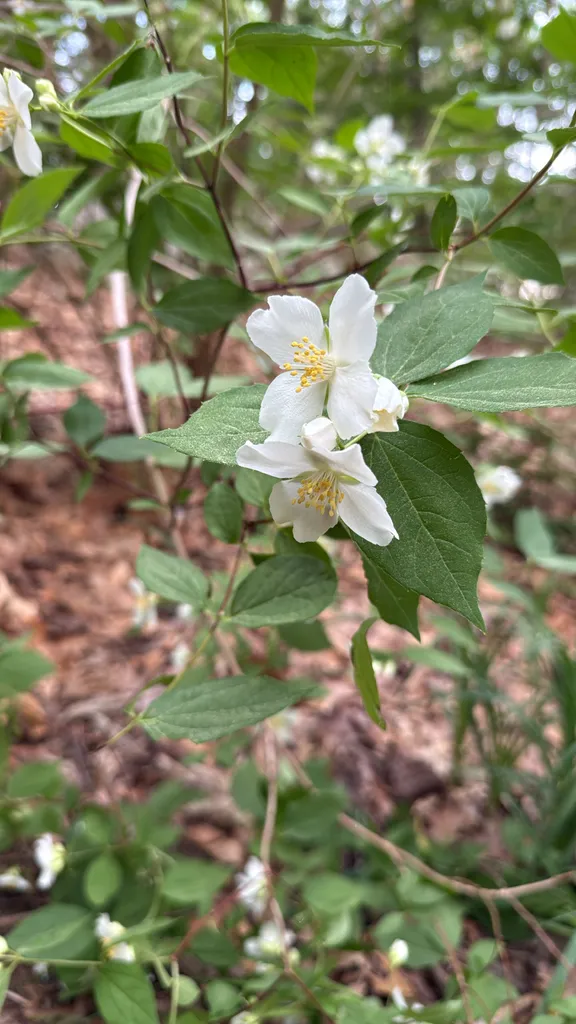
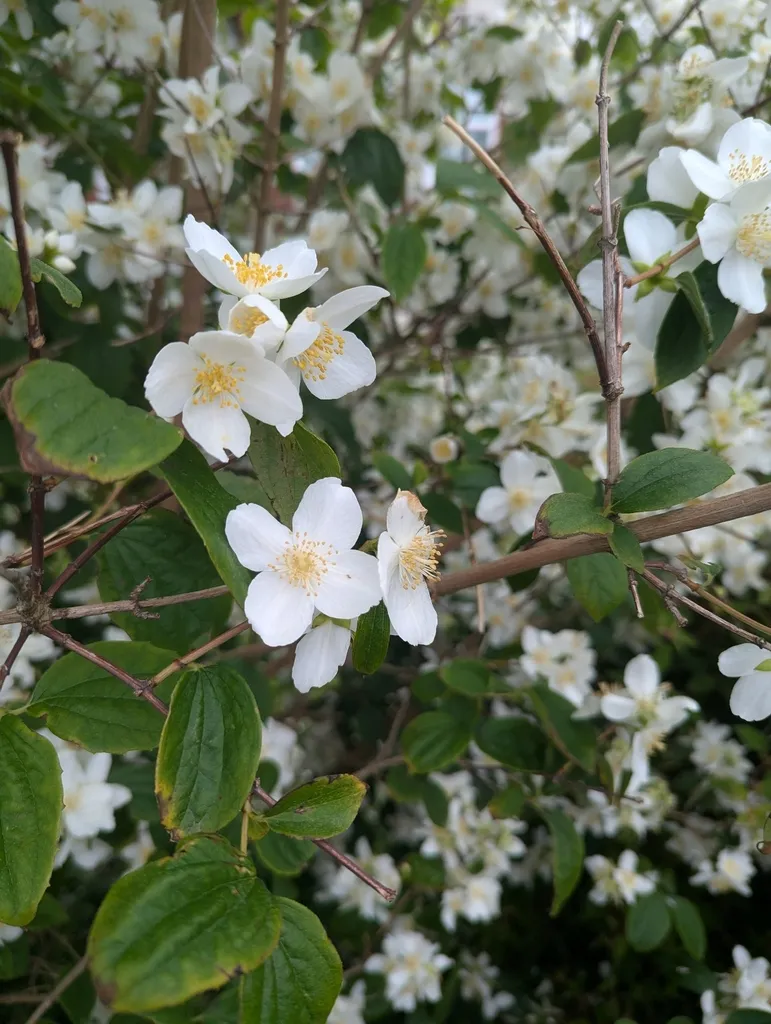
| Care difficulty | 2 / 5 |
|---|---|
| Watering schedule | Deep watering during dry spells, allowing slight surface drying between soakings |
| Sunlight requirements | Full sun · Partial shade |
| Ideal temperature | 15 – 25 °C |
| Soil type | Chalk · Clay · Loam · Sand |
| Soil pH | Acid · Alkaline · Neutral |
| Soil moisture | Moist but well drained · Well drained |
| Fertilizing | Balanced shrub or tree feed once each early spring |
| Toxicity | Information to be completed |
How to Water common mock orange?
Native to regions with moderate climates, sweet mock-orange thrives in well-drained soil and requires consistent moisture to mimic its natural habitat. It has a moderate drought tolerance but prefers regular watering to maintain its lush foliage. Watering should occur once every 1-2 weeks, allowing the soil to dry slightly between sessions. As an ornamental shrub commonly grown outdoors, sweet mock-orange benefits from mulching to retain soil moisture, especially during its active growing season when water needs are heightened.
Learn more →What Are the Sunlight Requirements for common mock orange?
Sweet mock-orange thrives best under full sunlight, which significantly enhances its growth, health, and flowering capabilities. Full sunlight involves exposure to direct sun for at least 6 hours daily. However, sweet mock-orange also shows a good tolerance to partial sun, where the light is mixed with periods of shade—this can be beneficial during extremely hot weather to prevent excessive heat exposure. Deviations from these conditions, particularly prolonged shade, can impede growth and reduce flowering. Ideally, sweet mock-orange should be planted in a garden spot that receives consistent, direct sunlight for the majority of the day to optimize its ornamental value and vigor.
Learn more →What Is the Ideal Temperature Range for common mock orange?

The plant sweet mock-orange exhibits impressive resilience to temperature variations, tolerating cold down to -20℃ (-4℉) and heat up to 35℃ (95℉). This tolerance makes it adaptable to a range of climates, though care should be taken during extremes. In cold conditions, sweet mock-orange may exhibit leaf discoloration or stem damage, while excessive heat can cause wilting or browning. Protective measures such as mulching in winter and providing shade during intense summer heat can mitigate these effects. These temperature tolerances suggest sweet mock-orange is suitable for both temperate and continental regions, demanding moderate intervention to thrive through extreme weather.
Learn more →What Soil Is Best for common mock orange?
Sweet mock-orange thrives in its native habitat with well-draining soil and a pH range of 6.5 to 7.8. It prefers slightly acidic to neutral soil, which optimizes nutrient absorption for healthy growth. The ideal soil composition includes a mix of sand, loam, and clay, offering good drainage and moisture retention. For a suitable soil mix, combine 40% loam, 30% sand, and 30% compost. Ensure excellent drainage by using a mix that prevents water-logging. Incorporate a slow-release, balanced fertilizer during planting to enhance growth. Regularly check pH levels and adjust with lime or sulfur as needed.
- Soil type
- Chalk · Clay · Loam · Sand
- Soil pH
- Acid · Alkaline · Neutral
What Are the Moisture Requirements for common mock orange?
Moist but well drained · Well drained
Learn more →How to Fertilize common mock orange?

For the robust growth and opulent blooms of sweet mock-orange, apply a balanced fertilizer in early spring at the onset of growth. This aids in vital nutrient replenishment, enhancing the plant's vigor and floral display. Adjust fertilization frequency to monthly applications during the growing season, and reduce dosages by autumn. Over-fertilizing may burn roots, so follow manufacturer's guidelines on quantity. While young sweet mock-orange plants benefit from regular feeding, mature ones require less, reflecting their slower growth rate. To ensure nutrient uptake, water soil before applying granular fertilizers and rake lightly into the soil. Utilize this targeted fertilization strategy for thriving sweet mock-orange plants.
Learn more →How to Prune common mock orange?

Sweet mock-orange is a deciduous shrub known for its fragrant white flowers. Prune sweet mock-orange in late spring after flowering to maintain shape and encourage vigorous growth. Remove dead or weak branches, and thin out overcrowded areas to improve air circulation. Aim to cut back old wood to stimulate new shoots. Proper pruning enhances flowering, prevents disease, and helps the plant maintain its aesthetic appeal. Regular, targeted pruning ensures sweet mock-orange thrives and remains healthy.
Learn more →How to Propagate common mock orange?

Sweet mock-orange can be effectively propagated through cuttings, a method that permits the grower to create an exact clone of the desired plant. Softwood cuttings are the most successful, taken from fresh, new growth. The cut should be made just below a leaf node, and leaves on the lower half of the stem should be removed. Dipping the cut end in rooting hormone can enhance rooting success. The cutting should then be placed in a well-draining potting mix, kept moist and covered with a plastic bag to maintain humidity. Rooting generally occurs in 4 to 8 weeks.
Learn more →How to Transplant common mock orange?
The perfect time to transplant sweet mock-orange is the rejuvenating season of early spring, allowing it to flourish in its new location. Prioritize well-draining soil and partial to full sunlight for optimal growth. If needed, provide extra care and attention during the initial relocation period.
Learn more →How to Care for common mock orange in Winter?

Information to be completed
Learn more →How to Plant common mock orange?
Indoors-potted: In an indoor setting, sweet mock-orange may not reach its full blooming potential; ensure a spacious spot to accommodate growth. Outdoors-potted: Outdoor pots constrain sweet mock-orange's roots, so choose a large container to encourage lush flowering. Outdoors-in the ground: Sweet mock-orange thrives outside in the ground, with space allowing for a fragrant display of its characteristic blossoms.
Learn more →How to Repot common mock orange?
Information to be completed
Learn more →How to Harvest common mock orange?

Due to its delicate white flowers and pleasant smell, the sweet mock-orange is often harvested for its flowers. These sought-after flowers will be harvested at the beginning of summer until they stop blossoming each year.
Learn more →Common Pests & Diseases

Diseases
May be susceptible to honey fungus (rarely) and powdery mildews
Pests
May be susceptible to aphids
Explore the plant health library →The Toxicity of common mock orange
Information to be completed