



Planting and Growing clematis 'Kermesina'

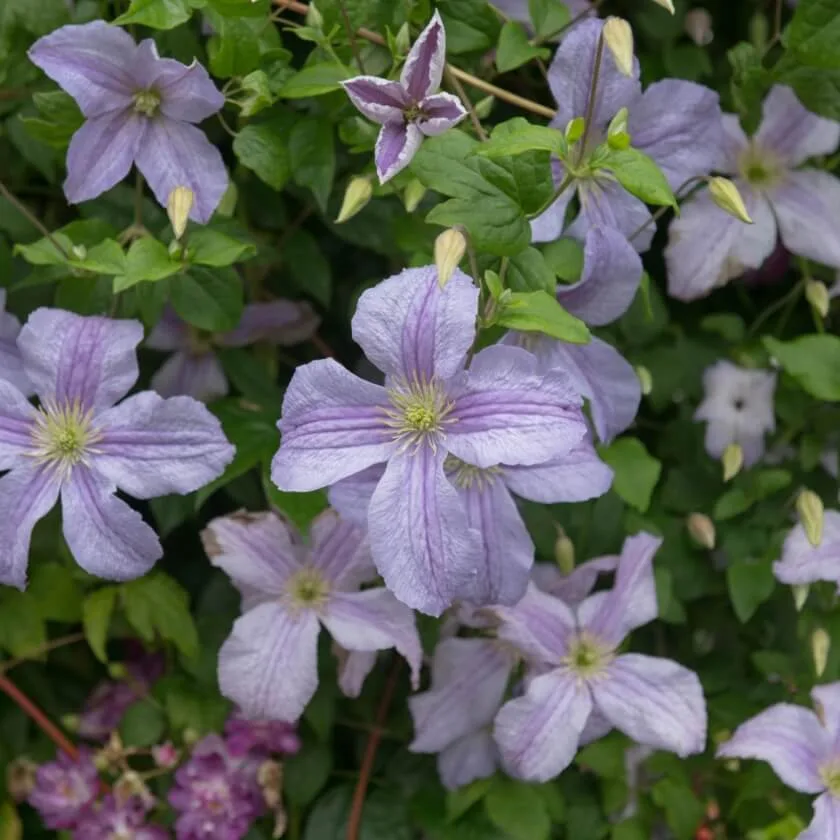
| Care difficulty | 3 / 5 |
|---|---|
| Watering schedule | Deep watering, allow surface compost to dry slightly between waters |
| Sunlight requirements | Full sun · Partial shade |
| Ideal temperature | Information to be completed |
| Soil type | Chalk · Clay · Loam · Sand |
| Soil pH | Alkaline · Neutral |
| Soil moisture | Moist but well drained |
| Fertilizing | Clematis specific fertilizer monthly from spring to early autumn |
| Toxicity | Skin irritant. Wear gloves and other protective equipment when handling |
How to Water clematis 'Kermesina'?
Deep watering, allow surface compost to dry slightly between waters
Learn more →What Are the Sunlight Requirements for clematis 'Kermesina'?
Full sun · Partial shade
Learn more →What Is the Ideal Temperature Range for clematis 'Kermesina'?

Information to be completed
Learn more →What Soil Is Best for clematis 'Kermesina'?
- Soil type
- Chalk · Clay · Loam · Sand
- Soil pH
- Alkaline · Neutral
What Are the Moisture Requirements for clematis 'Kermesina'?
Moist but well drained
Learn more →How to Fertilize clematis 'Kermesina'?

Clematis specific fertilizer monthly from spring to early autumn
Learn more →How to Prune clematis 'Kermesina'?

Clematis pruning: group three
Learn more →How to Propagate clematis 'Kermesina'?

Propagate by layering or semi-hardwood cuttings
Learn more →How to Transplant clematis 'Kermesina'?
Information to be completed
Learn more →How to Care for clematis 'Kermesina' in Winter?

Information to be completed
Learn more →How to Plant clematis 'Kermesina'?
Plant in a moisture-retentive, well-drained soil, with the roots and base of the plant kept cool and shaded by other plants or a layer of pebbles at the base. Plant with the crown 5-8cm (2-3in) deep to encourage new shoots to grow from below ground level. See clematis cultivation for more advice
Learn more →How to Repot clematis 'Kermesina'?
Information to be completed
Learn more →How to Harvest clematis 'Kermesina'?

Information to be completed
Learn more →Common Pests & Diseases

Diseases
May be susceptible to honey fungus (rarely), clematis wilt and clematis slime flux
Pests
May be susceptible to aphids, snails and caterpillars; petals may be eaten by earwigs
Explore the plant health library →The Toxicity of clematis 'Kermesina'
Skin irritant. Wear gloves and other protective equipment when handling