



Planting and Growing Eryngium × zabelii

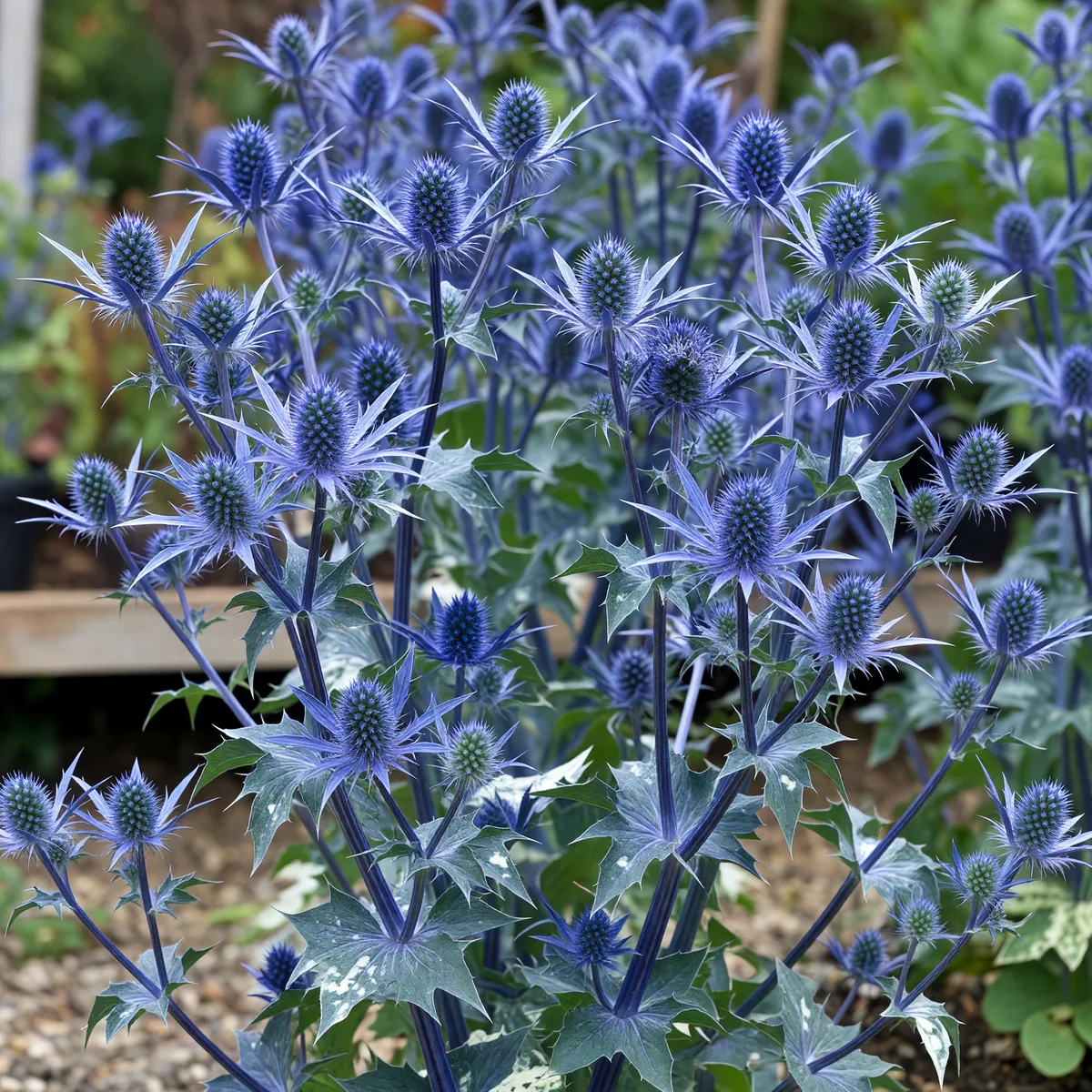
| Care difficulty | 3 / 5 |
|---|---|
| Watering schedule | Low water demand, let soil dry thoroughly between watering sessions |
| Sunlight requirements | Full sun |
| Ideal temperature | Information to be completed |
| Soil type | Chalk · Loam · Sand |
| Soil pH | Acid · Alkaline · Neutral |
| Soil moisture | Well drained |
| Fertilizing | Diluted low-nitrogen feed once yearly at spring growth beginning |
| Toxicity | Information to be completed |
How to Water Eryngium × zabelii?
Low water demand, let soil dry thoroughly between watering sessions
Learn more →What Are the Sunlight Requirements for Eryngium × zabelii?
Full sun
Learn more →What Soil Is Best for Eryngium × zabelii?
- Soil type
- Chalk · Loam · Sand
- Soil pH
- Acid · Alkaline · Neutral
What Are the Moisture Requirements for Eryngium × zabelii?
Well drained
Learn more →How to Fertilize Eryngium × zabelii?

Diluted low-nitrogen feed once yearly at spring growth beginning
Learn more →How to Prune Eryngium × zabelii?

Cut back any dead foliage throughout the season and but leave spent flowers for winter interest. Cut flowers before they open for floristry purposes
Learn more →How to Propagate Eryngium × zabelii?

Propagate by seed, by root cuttings in late winter and by division in spring
Learn more →How to Plant Eryngium × zabelii?
Will grow well in poor, moderately fertile, well-drained soil in full sun avoiding wet winter conditions
Learn more →Common Pests & Diseases

Diseases
May be susceptible to root rot and powdery mildews
Pests
May be susceptible to leaf and bud eelworms, and slugs and snails
Explore the plant health library →