
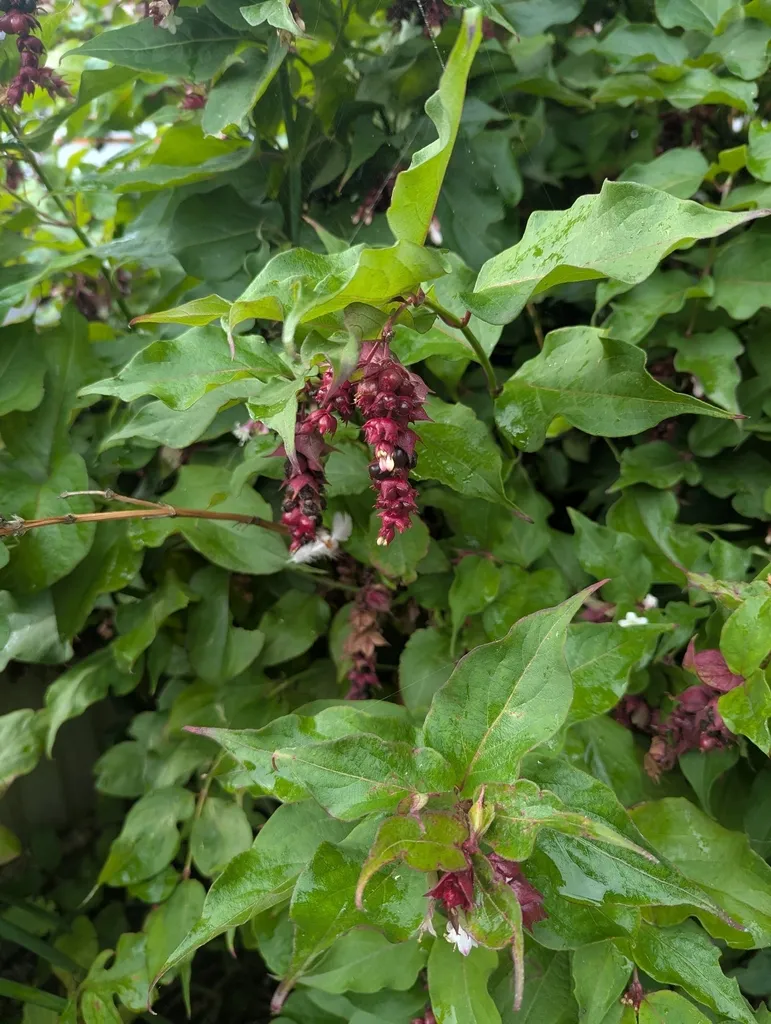



Himalayan honeysuckle

Himalayan honeysuckle · Propagation

Himalayan honeysuckle · Leycesteria formosa
Also known as: flowering nutmeg; granny's curls; pheasant berry

Himalayan honeysuckle is generally recognized for its low maintenance requirements, thriving in most garden environments with minimal special care. Key to himalayan honeysuckle's success is ensuring adequate moisture, although himalayan honeysuckle can tolerate short periods of drought once established. Pruning is important; annual trimming of old wood encourages new growth. Without regular pruning, himalayan honeysuckle may become leggy. Lastly, protection from strong winds is advised as himalayan honeysuckle's stems can be somewhat brittle.

Watering: Moderate regular watering, avoid prolonged drought and stagnant waterloggingSunlight: Full sun · Partial shadeFruit are ornamental - not to be eaten. Wear gloves and other protective equipment when handling

How to Propagate Himalayan honeysuckle?

Belonging to Caprifoliaceae family, himalayan honeysuckle is typically propagated through stem cuttings. For optimal results, use semi-hardwood cuttings taken from vigorous, healthy growth. Cut a 4-6 inch length, strip the lower leaves, and dip the cut end in rooting hormone to hasten root development. Plant the cutting in a well-draining, moist soil mix, providing indirect light and consistent humidity. Rooting should occur within a few weeks, after which it can be gradually acclimatized to normal growing conditions.