
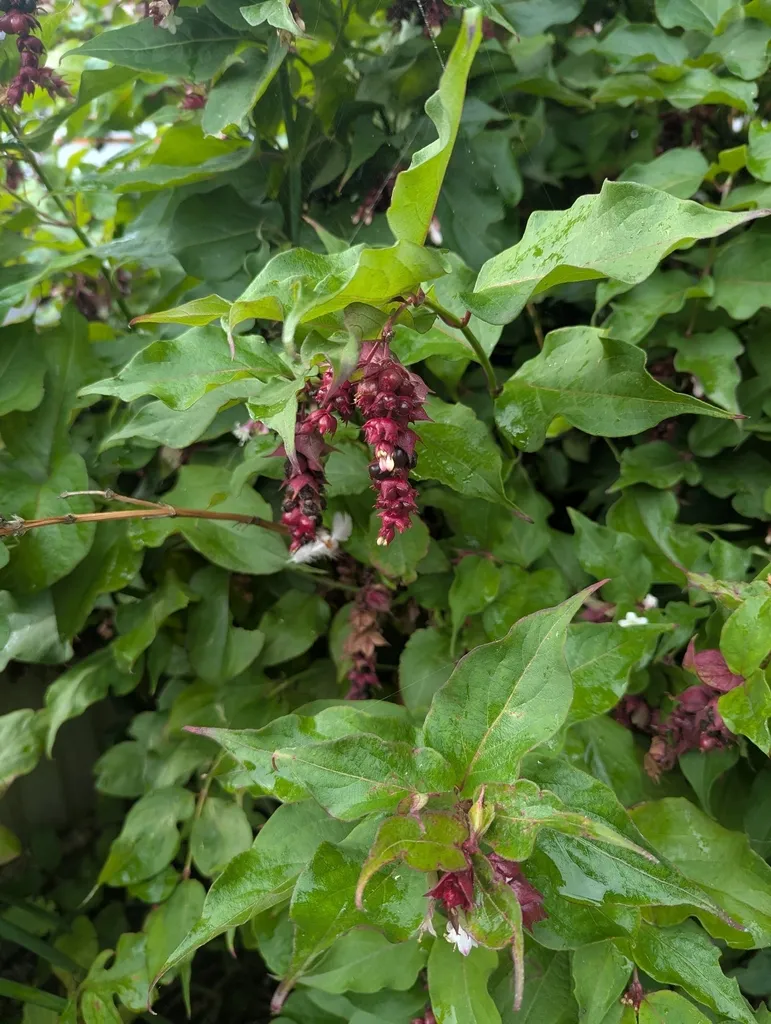



Himalayan honeysuckle

Himalayan honeysuckle · Soil

Himalayan honeysuckle · Leycesteria formosa
Also known as: flowering nutmeg; granny's curls; pheasant berry

Himalayan honeysuckle is generally recognized for its low maintenance requirements, thriving in most garden environments with minimal special care. Key to himalayan honeysuckle's success is ensuring adequate moisture, although himalayan honeysuckle can tolerate short periods of drought once established. Pruning is important; annual trimming of old wood encourages new growth. Without regular pruning, himalayan honeysuckle may become leggy. Lastly, protection from strong winds is advised as himalayan honeysuckle's stems can be somewhat brittle.

Watering: Moderate regular watering, avoid prolonged drought and stagnant waterloggingSunlight: Full sun · Partial shadeFruit are ornamental - not to be eaten. Wear gloves and other protective equipment when handling

What Soil Is Best for Himalayan honeysuckle?

The plant, himalayan honeysuckle, naturally thrives in forested and mountainous regions with well-drained, moderately fertile soils. It prefers a pH range of 6.0 to 7.5, tolerating slightly acidic to neutral conditions, which allows for optimal nutrient absorption. Native soils often include components like sand, clay, and loam. For a suitable soil mix, combine garden soil with equal parts compost and sand to ensure proper drainage. Alternatives include loamy mixes available commercially. Adding a slow-release balanced fertilizer biannually can enhance growth. Ensure good drainage to prevent water-logging, which himalayan honeysuckle is sensitive to.

Soil type
Chalk · Clay · Loam · Sand
Soil pH
Acid · Alkaline · Neutral
PlantCare

Your Ultimate Guide to Plants

Identify, grow and nurture the better way!

PlantCare plant identification and care illustration
PlantCare

Botanist in your pocket

Scan to download PlantCareDownload on the App Store

Scan the QR code with your phone camera to download the app