
Daffodils: How to Plant, Grow, and Enjoy Spring’s Cheerful Blooms
Learn how and when to plant daffodils for stunning spring blooms. Discover daffodil varieties, planting tips, and why these hardy, deer-resistant bulbs are a gardener’s favorite.
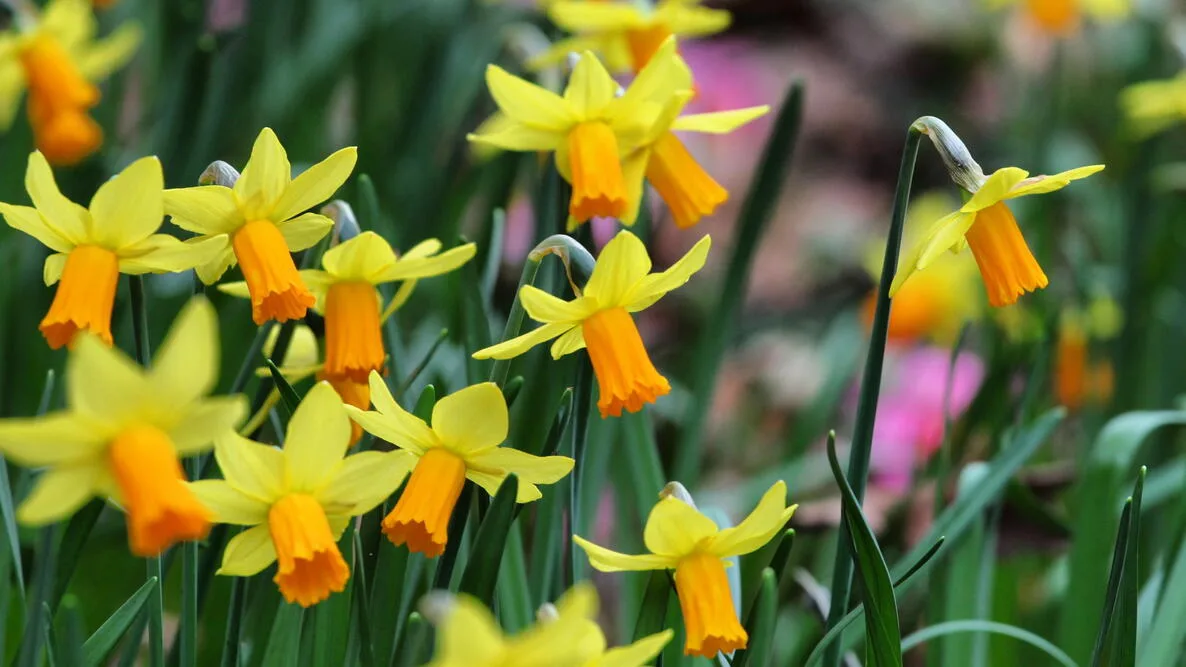
Nothing heralds spring like the cheerful daffodil! These sunshine-yellow flowers emerge at winter’s end to lift our spirits. Plus, daffodil bulbs are deer- and rodent-resistant (unlike tulips)!
Learn more about how and when to plant daffodils—and the delightful variety of choices, from the classic yellow to mini daffodils.
Daffodils are hardy perennials that come back year after year, spreading and often naturalizing. They are fall-planted bulbs, usually planted in October, and the flowers bloom in late winter or early spring. (They are the March birth flower, after all!) Most daffodils grow easily in most regions of North America, except in the hottest, wettest areas, such as South Florida.
There are thousands of daffodil varieties. The traditional daffodil flower may be a showy yellow or white, with six petals and a trumpet-shaped central corona. Still, many cultivated varieties (cultivars) exist today if you fancy experimenting with a more exotic double, frilled, or bicolor narcissus.
Daffodils are suitable for planting between shrubs, on a border, or even in pots. We especially love daffodils in a woodland garden and large groves. You’ll find that many gardeners plant the bulbs not just by the dozens but by the hundreds! Daffodil flowers can also be forced inside to add cheer to the winter months, making great springtime cut flowers.
Choosing Daffodil Bulbs
Select high-quality daffodil bulbs that have not been dried out. The larger the bulb, the better.
DutchGrown™ bulbs are of the highest quality, ensuring optimum performance. You probably haven’t seen daffodils bigger than their top-sized daffodil bulbs. See where to buy daffodil bulbs.
Planting
Where to Plant Daffodils
Daffodils do best in full sun, though they will grow in partial shade. They’re generally not picky about soil, but good drainage is vital as they are susceptible to rot when kept too wet. Hillsides and raised beds work well. Otherwise, improve clay soil by amending it (12 inches deep) with organic material such as well-rotted compost.
When to Plant Daffodil Bulbs
- Plant daffodil bulbs in the fall—at least 2 to 4 weeks before the ground freezes. See local frost dates.
How to Plant Daffodil Bulbs
- Plant the bulb with the top (pointy end) set about two to three times as deep as the bulb is tall. For example, the top of a 2-inch bulb should be about 4 inches in the ground, while a 3-inch bulb should be planted 5 to 6 inches deep.
- Where winters are severe, make sure at least 3 inches of soil is covering the bulb.
- Daffodils will tolerate crowding, but they prefer to be placed about 3 to 6 inches apart.
- It may help to sprinkle a little bulb fertilizer in the hole during planting. Learn more about preparing soil for planting.
- Resist the temptation to uncover spring-flowering plants such as daffodils and tulips. You can loosen mulch, but the shoots will still benefit from protection against cold, drying winds in early spring.
- Daffodils contain oxalic acid—a substance that makes them unpalatable to most rodent pests. However, if pests are bothering your bulbs, consider adding sharp pieces of shells or a pelleted rodent deterrent into and around each planting hole.
Growing
- Apply a low-nitrogen, high-potash (potassium) fertilizer after flowering if bulbs are not performing as desired. Learn more about preparing the soil for planting and soil amendments.
- Water late-flowering daffodils in dry spring weather (flowers may abort in dry conditions).
- Lift and divide the clumps when flowering becomes sparse or the clumps become congested.
After Daffodils Bloom
- After the flowers fade, you can deadhead (pinch off) the faded flowers.
- However, do NOT remove the leaves until they turn yellow. Daffodils use their leaves to store energy in the bulbs for next year’s flowers. The plant continues to absorb nutrients for about 6 weeks after the flowers have faded. If you cut or mow them back too early, they will not bloom next year.
- Keep watering the plants even if the blooms have faded.
- Once the leaves have yellowed and died back naturally, you can snip off the dead leaves at the base (or pull lightly while twisting the leaves). You can also mow the area without worry.
- Once daffodils (and tulips) have gone by, add bone meal to the soil for next year’s blooms.
If the dying leaves offend your sensibility, plant other bulbs, such as daffodils, daylilies, or true lilies, in the same area to hide the fading foliage.
Harvesting
- When cutting daffodils, keeping these flowers in their own vase is best, as their stems secrete a fluid, that promotes the wilting of other flowers. If you must combine them, soak them by themselves for as long as possible, then rinse them and add them to the arrangement last. Learn more about keeping cut flowers fresh.
- Note that contact with the sap of daffodils may irritate skin or aggravate skin allergies.
Pests and Problems
- Daffodils are both deer-resistant and rodent-proof, as these animals do not like the taste of the bulbs in the Narcissus family.
- Daffodils can also be toxic to pets, so make sure your animals don’t munch on them.
- The most common problems include bulb scale mites, large narcissus bulb fly, narcissus basal rot, narcissus nematode, slugs, and other fungal infections and viruses.
Types
According to the American Daffodil Society, there are 13 official daffodil flower types and more than 25,000 named cultivars!
Whatever variety you choose, the most important tip is: Get the best quality bulbs for the best flowers. The bigger the bulbs, the better. Look for top-size bulbs, the biggest bulbs on the market.
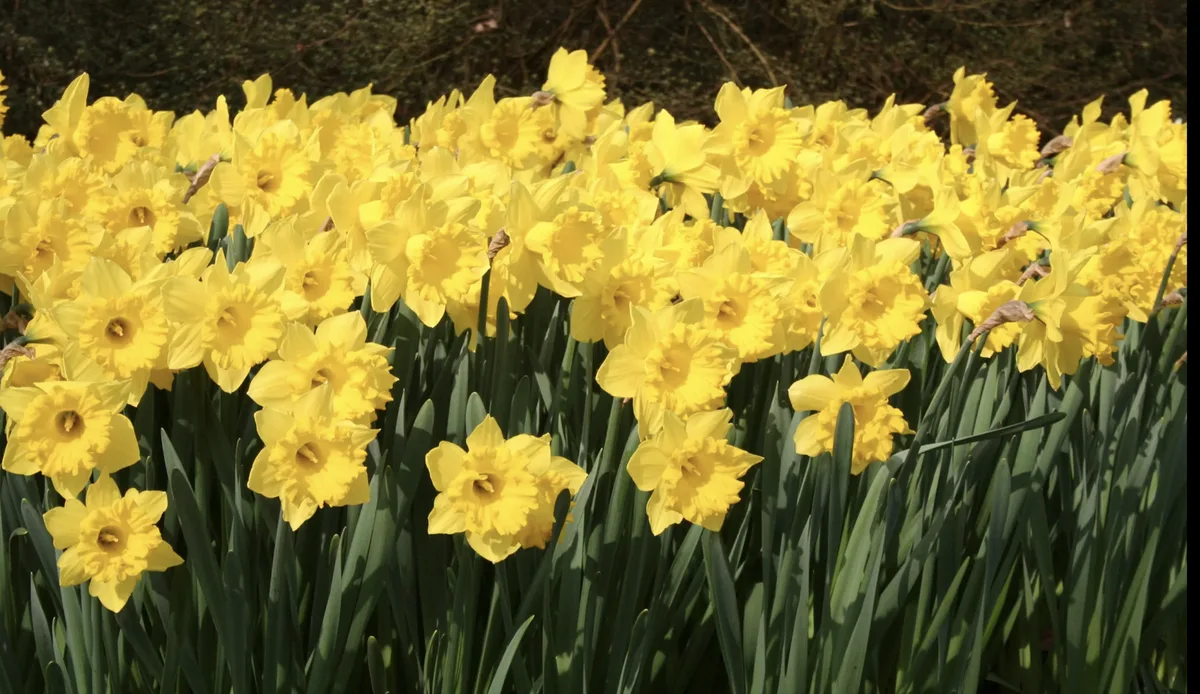
- ‘Dutch Master’ is the classic daffodil—big and yellow with a very large cup and oversized trumpets. They bloom early, naturalize easily, and are great for planting in masses.
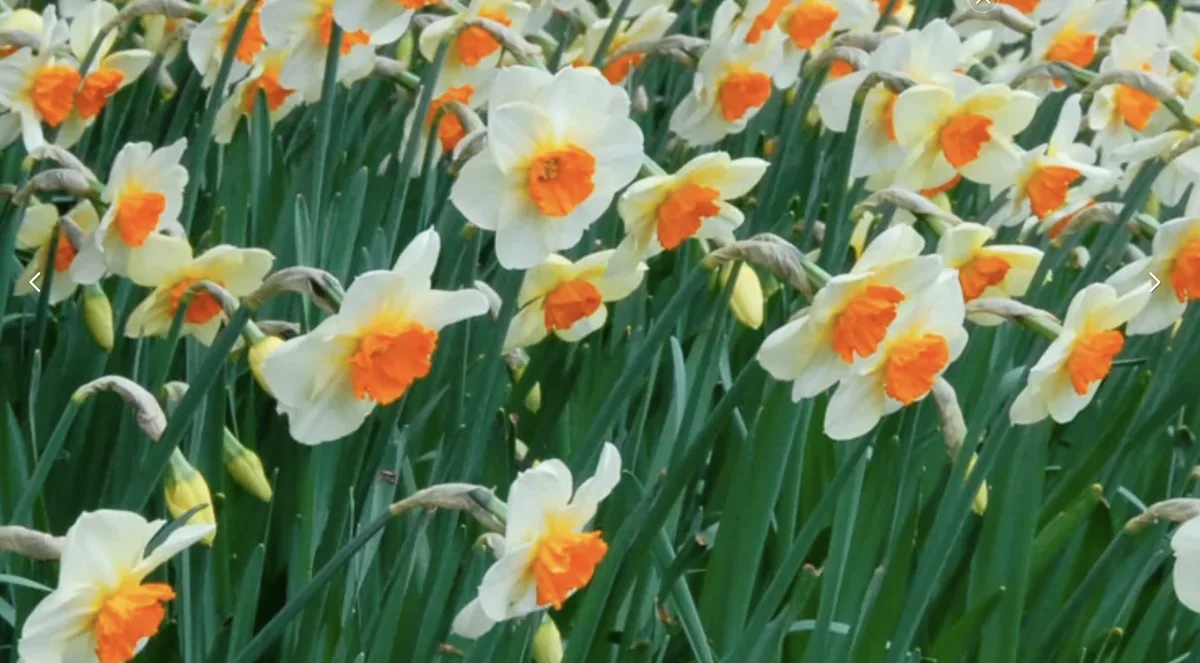
- ‘Barrett Browning’ is the recognizable pure white daffodil with a bright orange trumpet surrounded by a golden halo. They bloom early, naturalize easily, and do well in warmer climates, too.
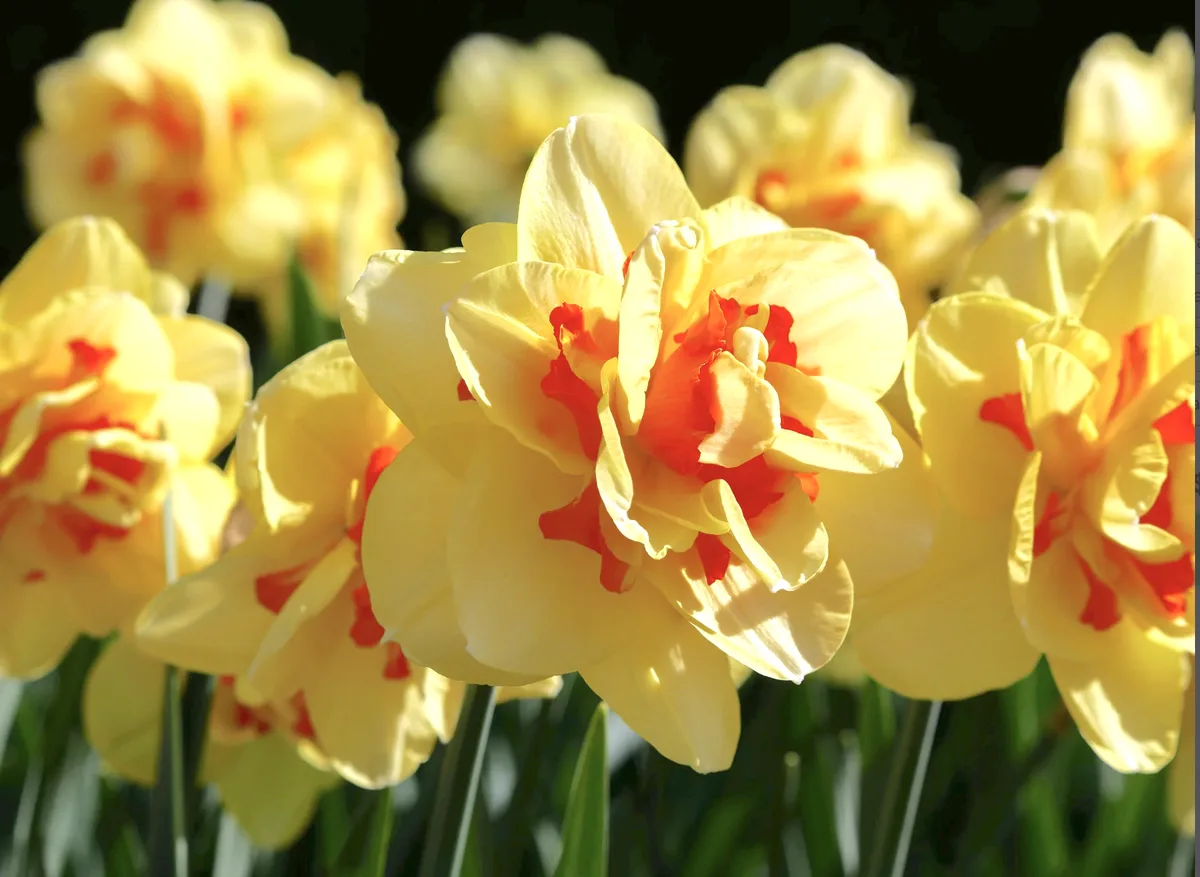
- ’Tahiti’ is a stunner with layers of rounded, golden yellow petals interspersed with frilly, red-orange accents. They bloom mid- to late season, last longer, and make an excellent cut flower.
- ‘Tete-a-Tete’ is an adorable mini daffodil that flowers early and blooms for weeks as one of the longest-blooming varieties. Ideal for flower beds and containers and naturalizes with ease.
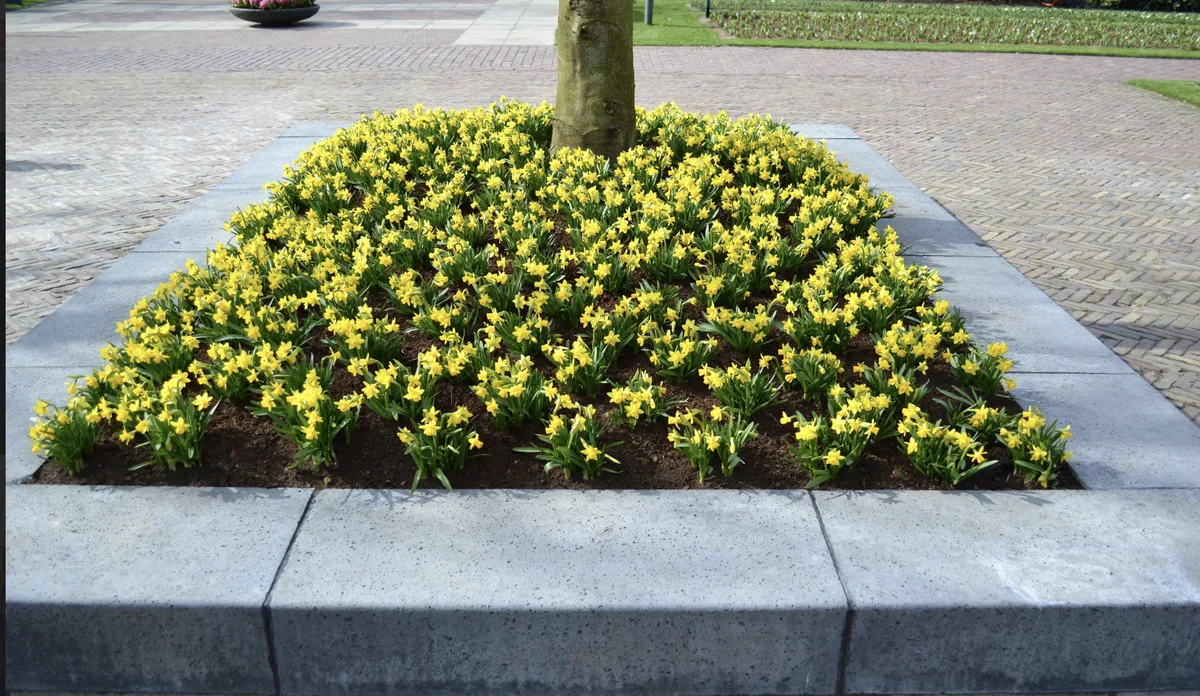
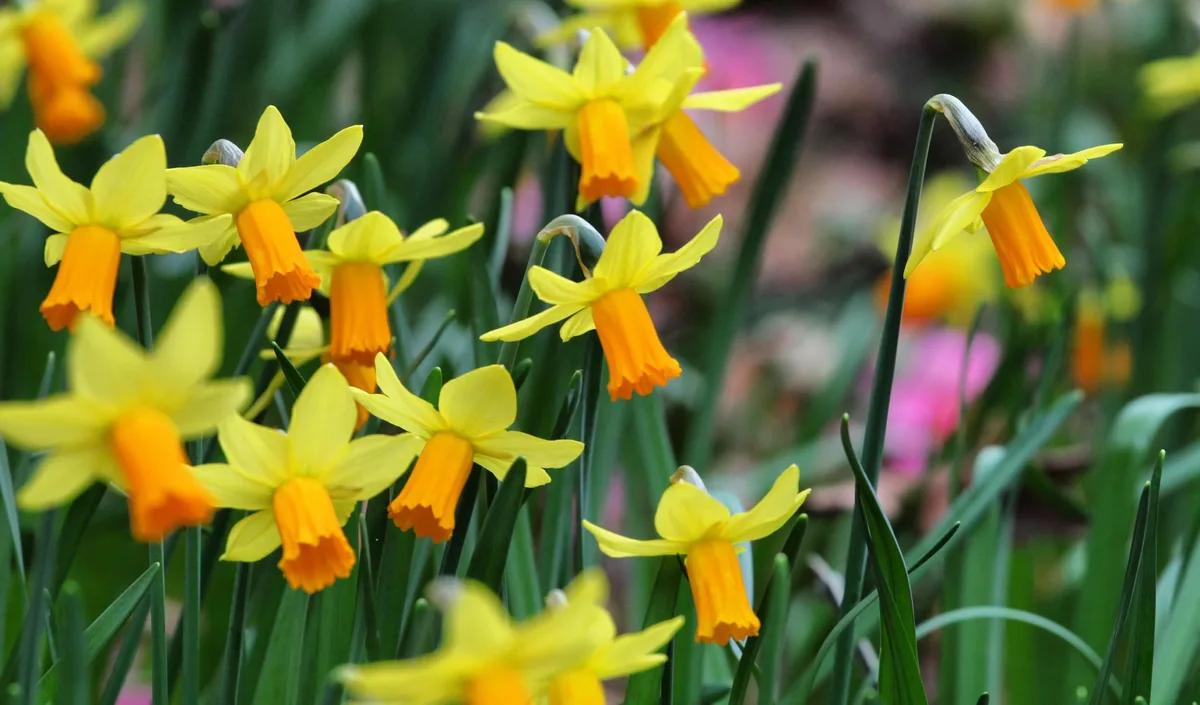
- ‘Jetfire’ is another mini daffodil with bright orange cups and swept-back yellow petals. It blooms in early spring, is very long-lasting, and doesn’t flop over.
- ‘Petit Four’ is a good choice for a partially shady site. The flower has white petals with a double cup of apricot pink and grows 16 inches tall.
- ‘Cheerfulness’ bears double flowers and multiple blooms per stem; this daffodil is very fragrant with a lovely gardenia-like scent. Blooms in late spring and makes an excellent cut flower.
- ‘Thalia’ is an all-white daffodil, making it wonderful for moon gardens. Learn about 20 pure white flowers to include in your garden.
Wit and Wisdom
- Daffodils are a March birth flower.
- Daffodils symbolize regard for someone. See more flower meanings.
Here’s some daffodil-themed prose to brighten your day:
“Daffodowndilly”
She wore her yellow sun-bonnet,
She wore her greenest gown;
She turned to the south wind
And curtsied up and down.
She turned to the sunlight
And shook her yellow head,
And whispered to her neighbor:
“Winter is dead.”
–A.A. Milne, in When We Were Very Young
Daffodils,
That come before the swallow dares, and take
The winds of March with beauty.
–William Shakespeare, The Winter’s Tale
I wandered lonely as a cloud
That floats on high o’er vales and hills,
When all at once I saw a crowd,
A host, of golden daffodils;
Beside the lake, beneath the trees,
Fluttering and dancing in the breeze.
–William Wordsworth, “I Wander’d Lonely as a Cloud”
Of Spring Weather:
Chillier, but daffodillier.
–The 1991 The original publication