
Planting and Growing Foxgloves
The foxglove is a stately flower with tall elegant spikes covered in bell-shape blossoms beloved by hummingbirds and bumblebees. Find out how to plant, grow, and care for foxglove flowers.
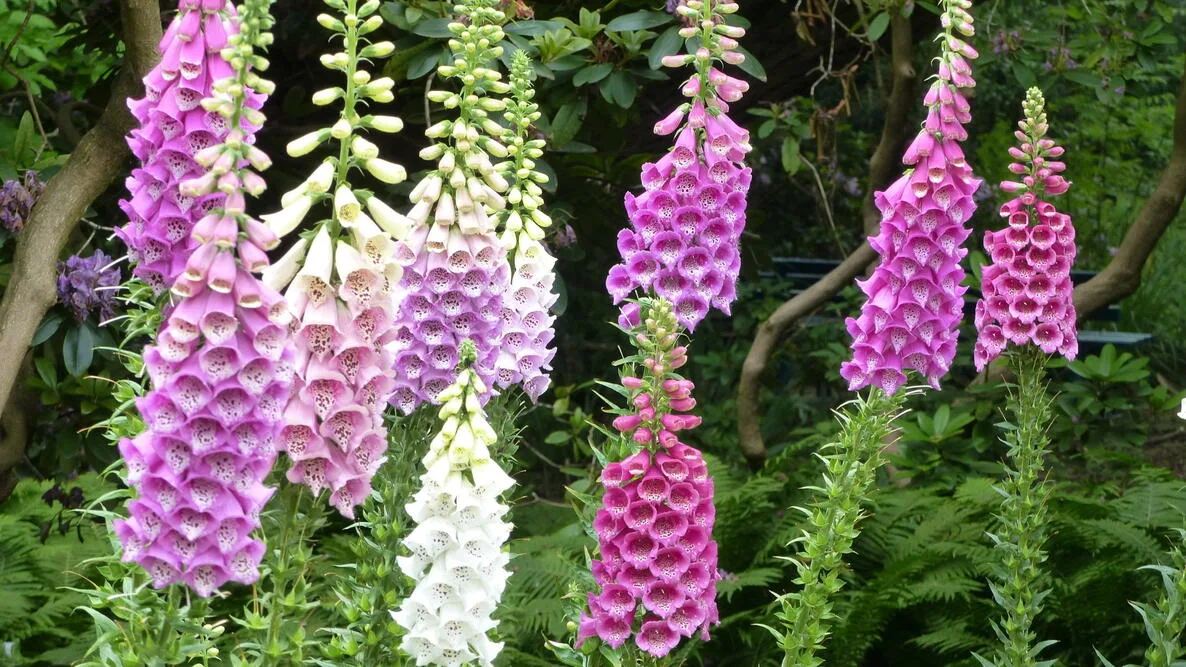
Foxglove is a stately flower with tall, elegant spikes covered in bell-shaped blossoms beloved by hummingbirds and bumblebees. It’s also rabbit- and deer-resistant. Learn more about growing foxglove.
Common foxglove (Digitalis purpurea) is a biennial or short-lived herbaceous perennial in most regions, although there are hybrids that grow in flower in year one. It is hardy in Zones 4–9. In its first year, the plant simply forms a rosette and foliage; in the second year, the plant grows a 3- to 5-foot spike covered in 20 to 80 small downward-facing, tubular flowers in purple, pink, or white.
Each flower tube has a small lip on which bumblebees can land to access the nectar at the base of the tube. Hummingbirds may also visit the flowers. The flower blooms from late spring through midsummer and then dies. Therefore, for continuous blooms, plant it for 2 consecutive years. Or, look for varieties that flower in year one.
Be aware that foxglove also self-seeds prolifically. In some places, it’s considered an invasive plant. Deadhead after flowering to avoid an excess number of seedlings, or reconsider planting foxglove.
Is Foxglove Poisonous?
Yes. Foxglove is poisonous, although recorded poisonings from this plant are very rare. The plant contains digitalis and other cardiac glycosides. These chemicals affect the heart. To be poisoned from foxglove, you would need to eat the seeds, stems, or leaves, or suck the flowers.
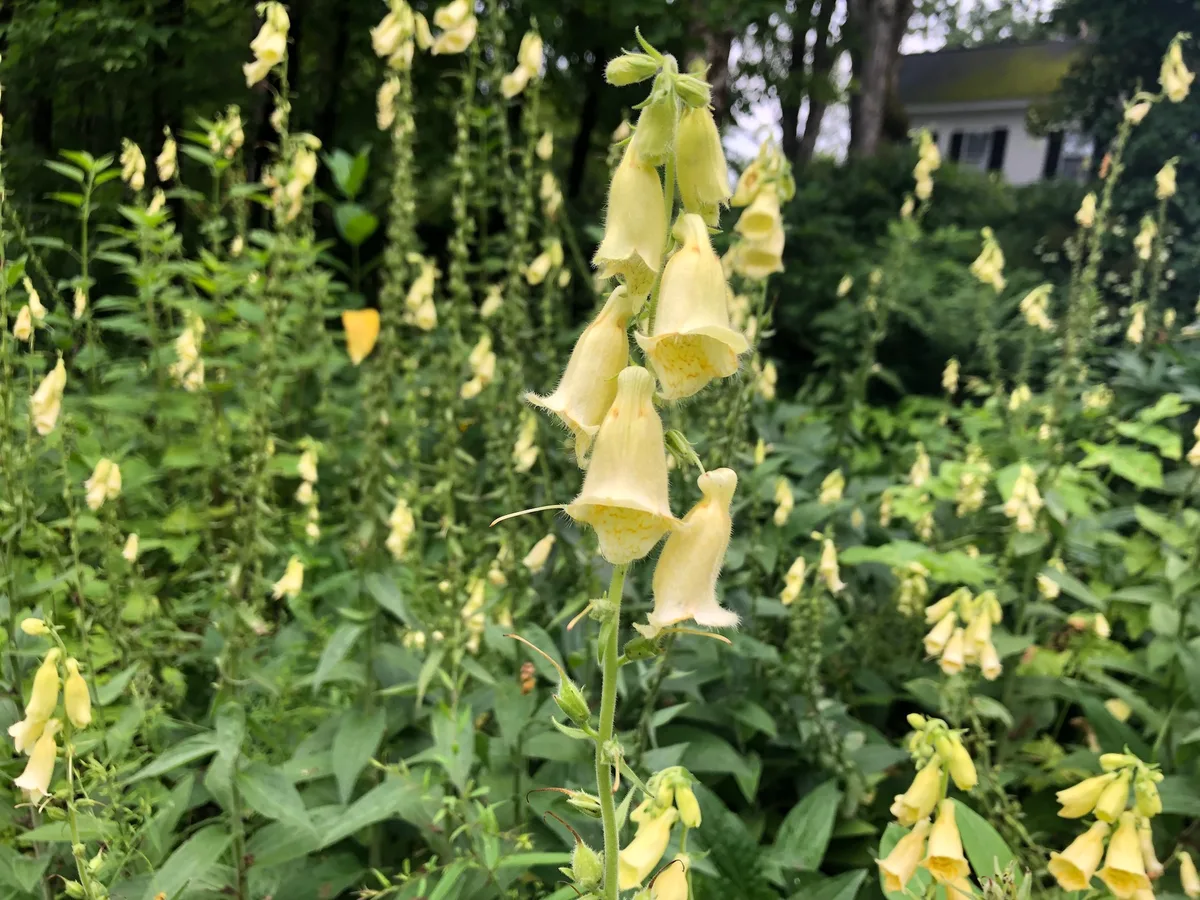
Planting
When to Plant Foxglove
Sow seeds in late summer. Any seedlings should be planted into the garden bed in early fall so that they can establish the root system before cold weather arrives.
Or, if planting in containers, set out in late spring or fall.
Where to Plant Foxglove
Foxglove grows best in full sun, with light afternoon shade. The plant prefers moist, well-draining soil high in organic matter, with a slightly acidic to neutral pH. Prepare soil by mixing in a 3- to 4-inch layer of compost or aged manure.
Foxgloves are gorgeous in tall borders or background plantings and also look attractive against a background such as a building or a fence. They make excellent cut flowers.
How to Plant Foxglove
Foxglove is easy to grow from seed. If seeding, do not cover with soil; the seeds need light to germinate, so do not cover. Thin the seedlings to about 18 inches apart. See more flowers that are easy to start from seed.
When planting pots, space 1 to 2 feet apart; the foliage spread can be 1 to 3 feet. Dig the hole twice the diameter of the container. Set the top of the root ball level with the soil surface. Fill in around the root ball and firm the soil. Water thoroughly.
Growing
- Keep soil moist.
- Add a thin layer of compost around the plant each spring.
- Stake tall varieties to keep the flower stalks upright.
- Cut the center flower stalk back after flowering for a chance for additional flower stalks to develop later in the season.
- Leave the flower stalk on the plant if you want it to reseed, as well as to attract birds to the garden in the fall.
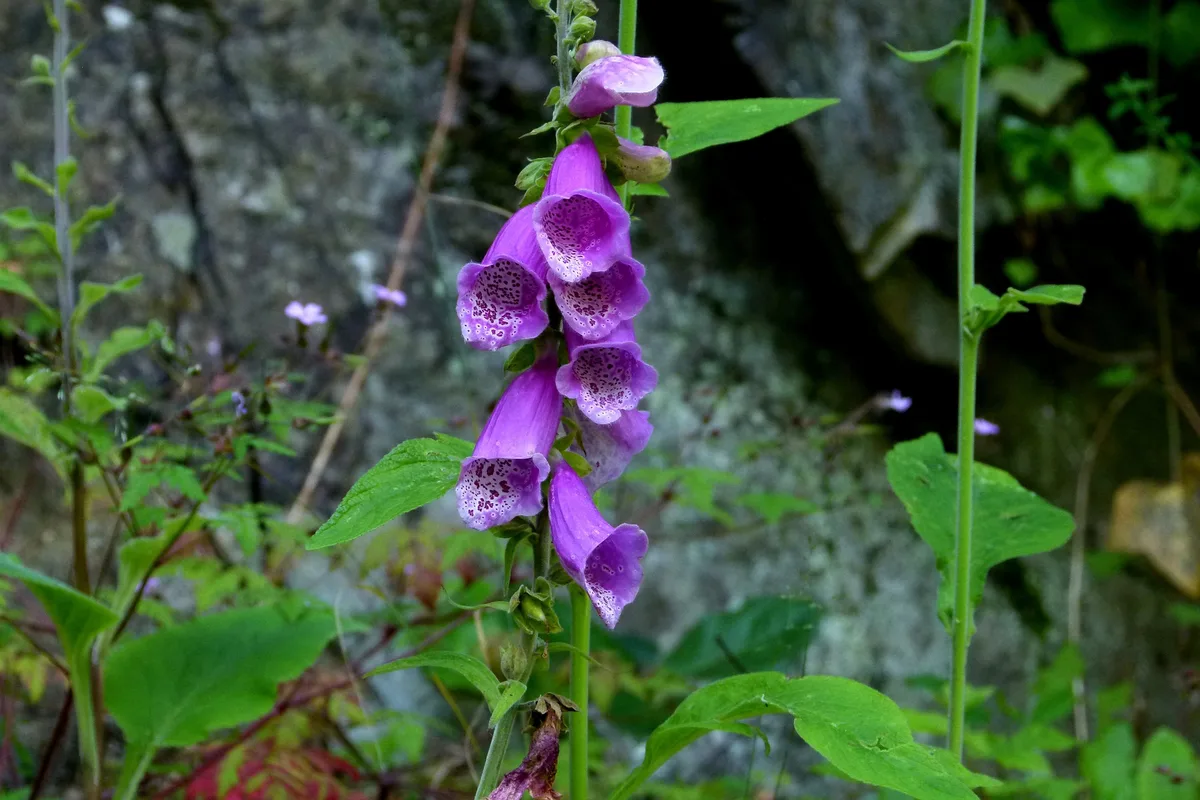
Harvesting
Cut stems for arrangements when lower flowers are just opening. Vase life is 10 to 14 days.
Pests and Problems
Foxglove Problems
Foxglove is a rabbit- and deer-resistant plant due to its toxicity, making it a dependable choice for many gardens.
However, poor growing conditions such as excessive moisture, poor drainage, or overcrowding can lead to issues. Foxglove prefers well-draining soil and good air circulation to stay healthy and produce strong blooms.
Foxglove Pests
Foxglove may occasionally be affected by a few common garden pests.
Aphids can gather on stems, leaves, and flower buds, feeding on plant sap and weakening growth.
Japanese beetles may chew on foliage, leaving skeletonized leaves behind.
Mealybugs can appear on stems and leaf joints, causing stress to the plant.
Thrips may damage flowers and buds, leading to distorted or discolored blooms.
Foxglove Diseases
Foxglove can be affected by several diseases, especially in wet or crowded conditions.
Anthracnose can cause dark spots on leaves and stems, leading to decline in plant health.
Southern blight is a soil-borne disease that may cause sudden wilting and stem rot at the base.
Leaf spot creates brown or black spots on foliage, reducing overall vigor.
Powdery mildew appears as a white, powdery coating on leaves, especially in humid conditions.
Crown and root rot develop in poorly draining soil and can quickly kill plants.
Verticillium wilt causes yellowing, wilting, and eventual plant collapse as it blocks water movement within the plant.
Types
There are many foxglove cultivars and a few hybrids commonly available. Here are a few of our favorites:
- ‘Alba’ has pure white flowers on 4-foot sturdy stalks
- ‘Apricot Beauty’ has apricot-pink flowers with spotted interiors; 3 to 4 feet tall
- ‘Camelot’ series is a variety that flowers in year one; in the South, they can be treated as cool-season annuals; flowers face outward instead of down in shades of lavender, rose and white; 3-foot stalks
- ‘Candy Mountain’ has strong 4-foot stalks with large, upturned flowers. The blooms change from rose to purple as they age.
- ‘Foxy’ also blooms reliably from seed the first year; blooms are white, cream, purple and rose; up to 3 feet tall
Wit and Wisdom
- Digitalis comes from the Latin word for finger (digitus), referring to the shape of the flower. Purpurea refers to the color of the flowers, which often is purple.
- Foxglove leaves were used in the treatment of heart failure in the 18th century and were once the source of heart stimulants.
- Each foxglove plant can produce 1 to 2 million seeds.
- Foxglove was often grown in cottage gardens in the Middle Ages.