
Snow? So What! Grow Hellebores for Winter Garden Color
Learn how to grow hellebores—winter-blooming perennials that thrive in shade, resist deer, and brighten up gardens with early, long-lasting color.
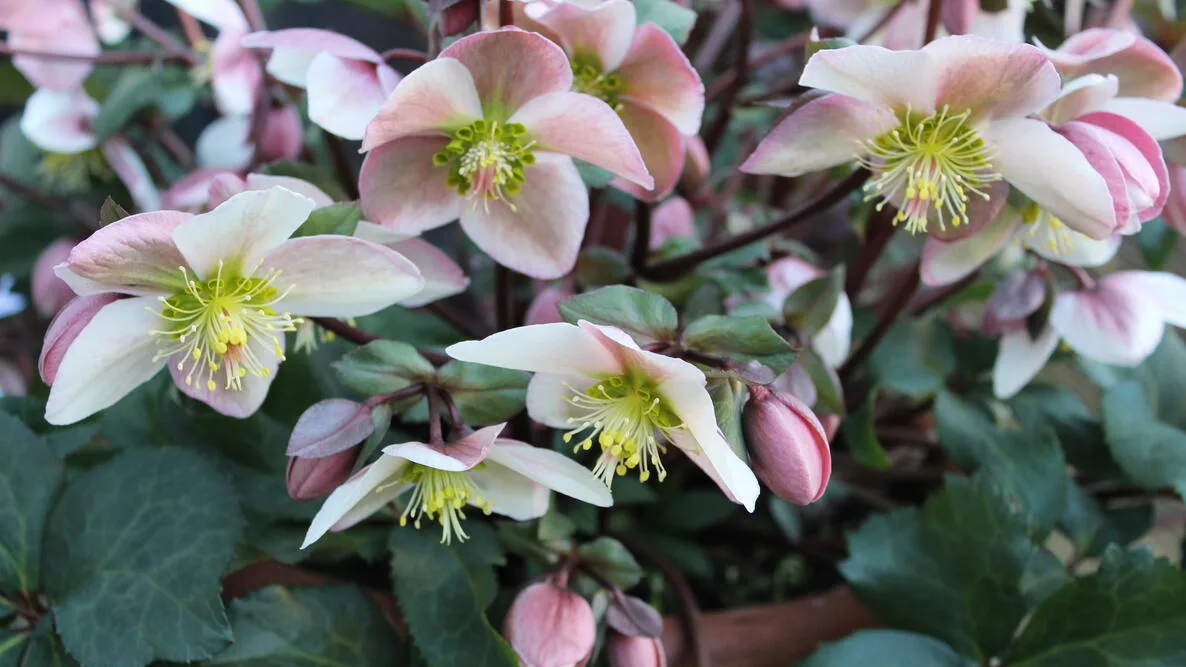
When the garden still sleeps under a blanket of snow, hellebores are already up and showing off. These winter-blooming wonders—also called Lenten Roses—bring color and joy to shady spots when nothing else dares to bloom.
With evergreen foliage, rose-like flowers, and a strong resistance to deer and voles, hellebores are the cold-season showstoppers you didn’t know you needed. Ready to welcome spring before the calendar does? Let’s dig in.
Hellebores bear glossy, evergreen leaves and rose-like flowers which bloom in winter or early spring. Though they are commonly called a “rose,” they are not in the rose family! Actually, they are more closely related to buttercups since both belong to the Ranunculus family.
Aristocrats of woodland gardens in Europe, hellebores enjoy a shady or partial-shade location. They also make a great ground cover for well-draining soil under the shade of trees.
Importantly, hellebores are resistant to deer and voles!
I grow mine near the back porch so that I can keep a close eye on the progress of these eagerly awaited blossoms. The flowers make up for their lack of fragrance by being long-lived, remaining on the plant into early summer.
At a time of year when every blossom is precious, you’ll find that there is nothing boring about hellebores!
Planting
Hellebores like the same conditions as many other early bloomers—cool, dappled shade and moist but well-draining, humusy soil. Take care to amend the soil with plenty of organic matter, such as well-aged leaf mold and/or compost.
They look great as understory plants with rhododendrons and azaleas, planted along a woodland path or in a shady mixed border.
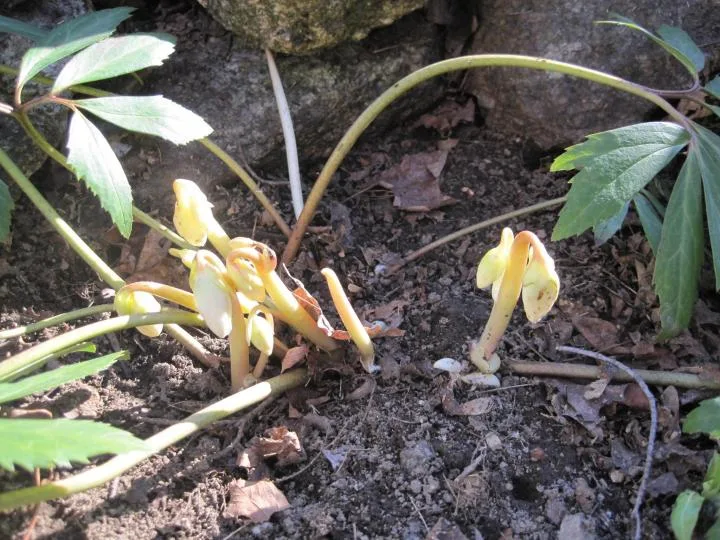
Photo: Robin Sweetser
Growing
Slow to become established, hellebores take a few years to settle in before they bloom, so you need to be patient. Like peonies, hellebores are long-lived and will eventually develop into large clumps with extensive root systems.
Cold hardy to Zone 4, they are more susceptible to loss if grown in a hot, humid environment. They are not heavy feeders; a yearly application of well-rotted manure or compost early in the spring will keep them satisfied.
Types
The Christmas Rose
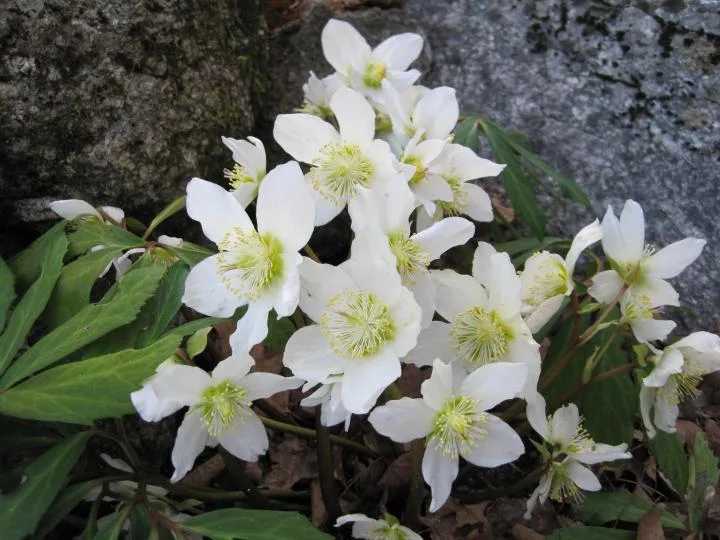
The Christmas rose (H. niger) will bloom from December through March. Snow may cover them up, but the flower buds and blooms will still be there when the snow melts! Their evergreen leaves look a little ratty after a long winter, but they are soon replaced with fresh new ones.
Their five-petaled, ivory-white blossoms are about 3 inches across and resemble large, single roses.
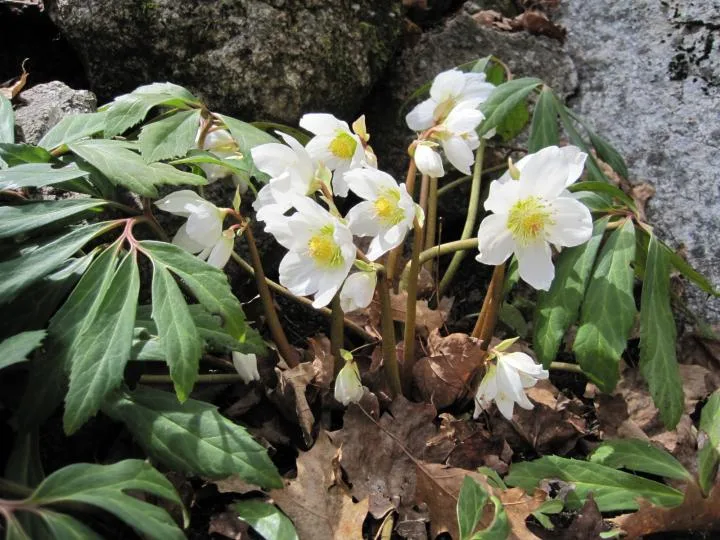
A well-established Christmas rose will stand about 12 to 15 inches tall and bear 20 stems of flowers. Some blossoms turn pink as they age, but mine mature to a yellow shade.
The Lenten Rose
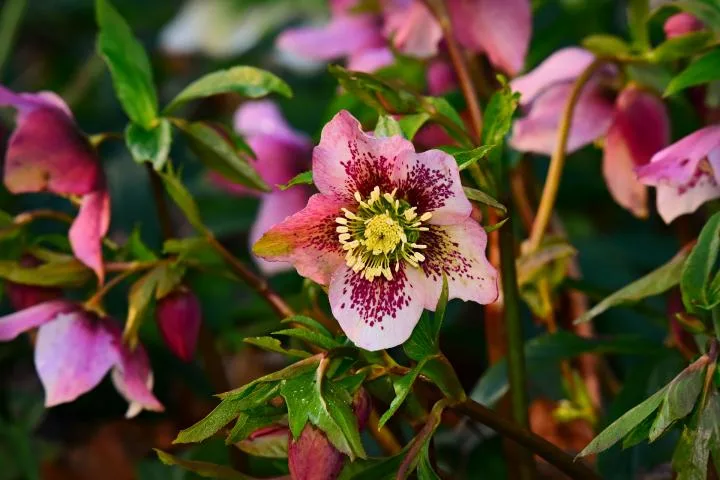
The Lenten rose (H. orientalis) blooms in April in my northern garden, so in most years, it technically blossoms during at least part of Lent. It is a little larger than the Christmas rose, standing about 24 inches tall, and produces up to 30 stems, each topped with two or three nodding blossoms. The flowers are about 3 inches across, but since they readily cross with other species of hellebores, they come in a wide array of interesting colors from white to pink, maroon, lilac, and deep purple.
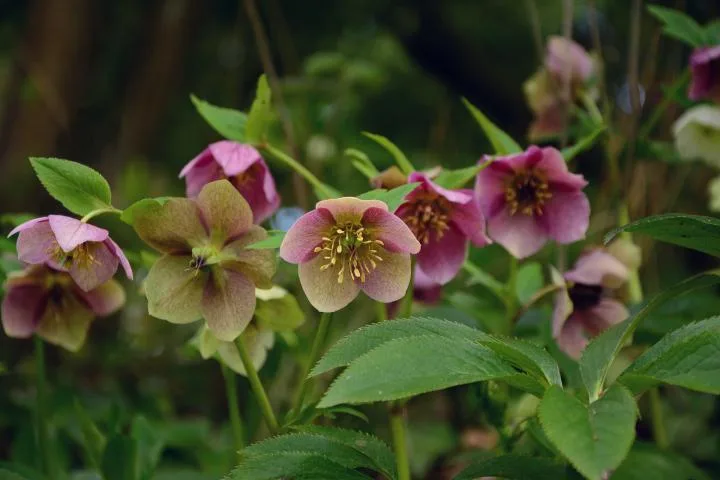
Many of the Lenten Rose’s blossoms have freckles, blushes of contrasting colors, or even stripes, and there are single and double forms. Let your plant go to seed, and in a few years, you will be able to harvest the hybrid seedlings that come up underneath the plant’s protective leaves.
Wit and Wisdom
- Their species name refers to the roots, which are black—and poisonous. In fact, the word hellebore in Greek means “food to kill,” so be cautious when working around them. Some experts recommend wearing gloves when cutting back the leaves and being sure to keep any plant-munching pets or children away from them.
- See more winter-blooming flowers!