
Inch Plant Care Guide: How to Grow Tradescantia Indoors (and Keep It Thriving!)
Inch plants (Tradescantia) are fast-growing, easy-care houseplants with purple-and-silver foliage. Learn how to grow, care for, and contain these trailing beauties.
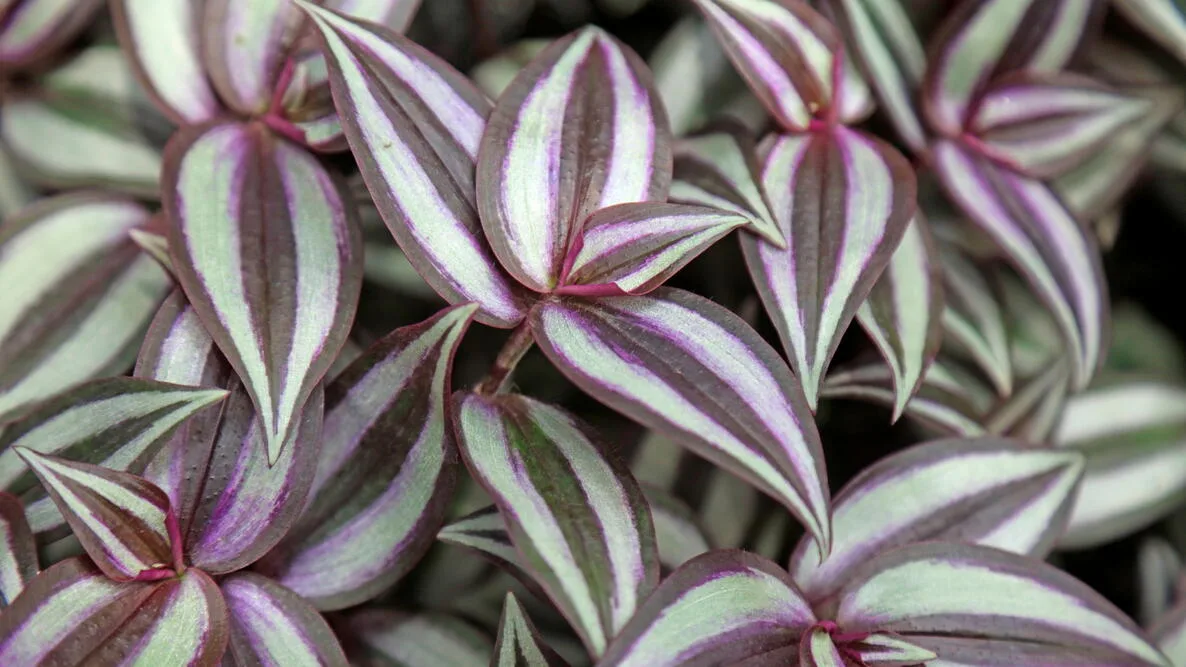
Inch plants (Tradescantia) are popular houseplants and outdoor container plants with attractive purple- and silver-striped foliage. They can survive any indoor environment and are perfect for wannabe green thumbs!
Learn how to grow and care for these easy-care, fast growers.
Why is it called inch plant?
Inch plants are creeping plants in the Tradescantia (pronounced trad-es-KAN-tee-uh) genus. They are fast-growing and have trailing stems. Other common names include variegated spiderwort.
Leaf nodes on the stem are supposed to be 1 inch apart, hence the common name inch plant. Each segment can produce a new plant, so Tradescantia can easily start from cuttings that readily root in moist growing medium.
While Tradescantia is a perennial plant in its native Mexico, it is treated as a houseplant in North America and commonly grown in a hanging pot.
It is considered an invasive species in warm regions outside of its home range (including parts of the southeastern U.S.). For this reason, we recommend growing inch plants indoors or restricting them to containers outdoors.
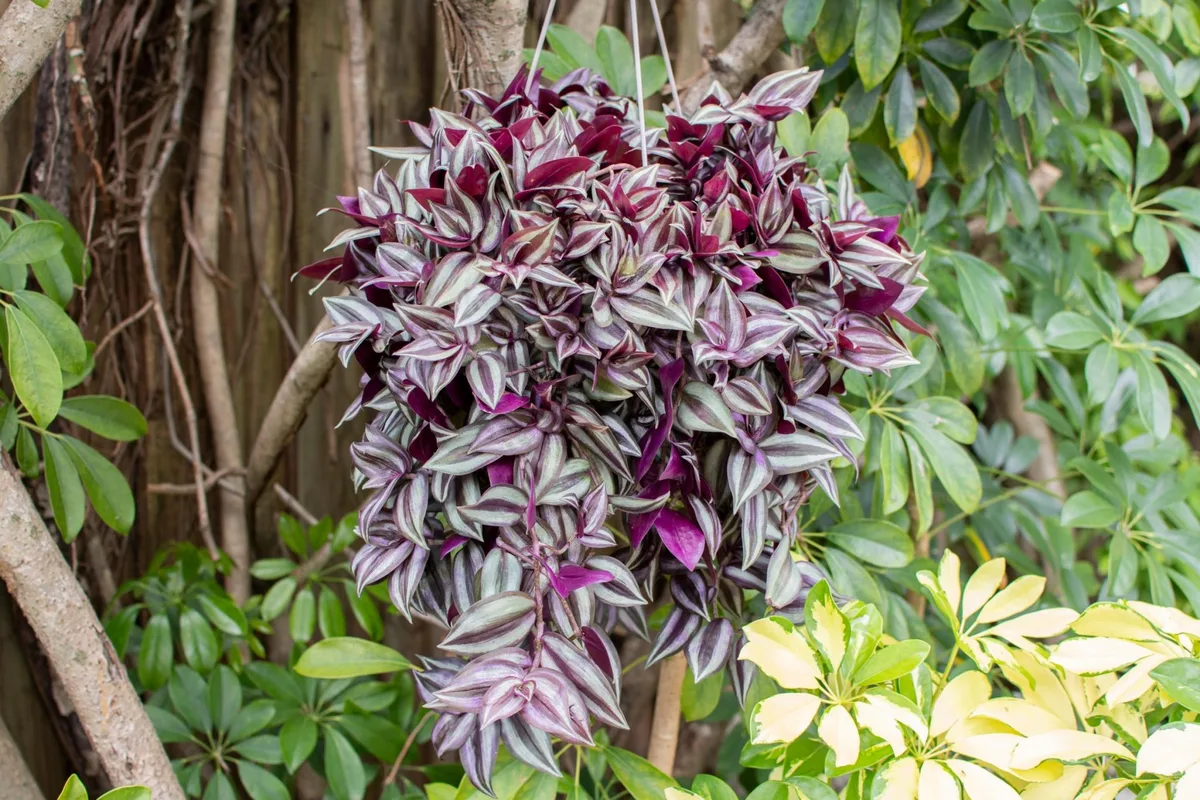
Planting
- Plant in all-purpose indoor potting mix in a pot or hanging basket.
- Select a location with filtered light. Keep inch plants out of bright direct light and out of dark areas; the latter will cause them to become leggy.
- The room temperature should be average (between 55° and 75°F).
Growing
- Water deeply, but allow the potting mix to dry partially before watering again. This plant doesn’t like to dry out, but it also doesn’t like to be constantly wet.
- Water less during the winter months, which is the plant’s resting period.
- Provide fertilizer twice a month in the spring and summer; don’t fertilize in fall and winter.
- Pinch back to keep this trailing plant contained and promote bushier foliage.
- Removed leggy growth also allows for cuttings that can be used for propagation.
- Plants can be pruned back hard every spring and taken outside on a protected patio in the summer.
Harvesting
Inch plants can easily be propagated by cuttings.
- Snip off a piece of the plant (the cutting should ideally be 3 to 4 inches long) and place the cut end in water.
- In about a week (or less), the cutting should produce roots.
- A week or so after that, plant the cutting in a pot according to the planting guidelines above.
Learn more about propagating houseplants.
Pests and Problems
- No serious insect or disease problems.
- Aphids tend to be a problem on the stems and leaves. Monitor for aphids (and other small insects), as they could become an issue if unchecked. To get rid of them, pinch off the infected stems and spray the plant with water.
- Root rot and stem rot can occur in soggy potting mix.
- Note that contact with plant sap causes skin irritations in some individuals.
Types
There are several types of popular inch plants:
- Tradescantia zebrina ‘Silver Inch Plant’ has beautiful purple and green variegated leaves with shiny silver stripes.
- T. pallida ‘Purple Heart’ has fuzzy, purple foliage instead of green!
- T. fluminensis ‘Quicksilver’ has variegated white-green foliage and sometimes produces white flowers.
- T. nanouk is a newer inch plant cultivar (patented in 2017) and has pretty pink, green, and white multicolored streaked leaves—it has become quite trendy!