
Planting and Growing Marigolds
Discover how to plant and grow marigolds easily in your garden. Learn the best tips for sun, soil, watering, and care to enjoy vibrant blooms all season long.
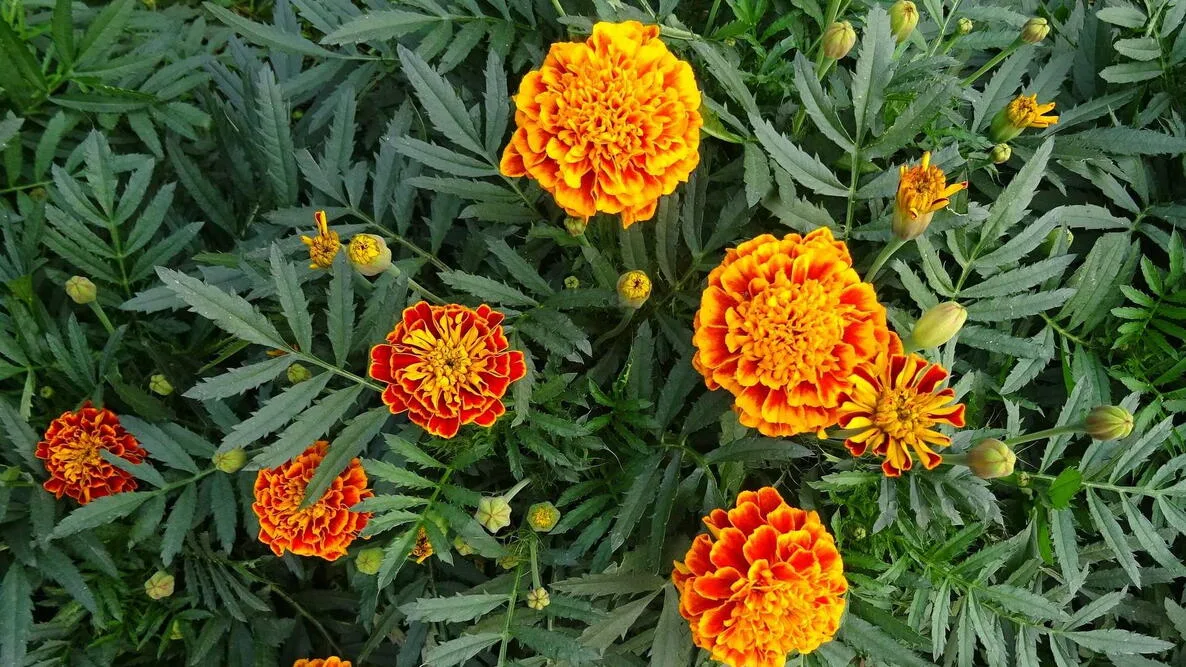
Native throughout the Southwestern United States, Mexico, and parts of Central America, marigolds are low-maintenance flowers that thrive in hot weather, can handle drought and many pests—and may just become your garden’s new golden MVP!
Whether you grow them in flower beds, borders, containers, or as bug-busting companion plants in vegetable gardens, this guide will teach you how to keep marigolds and enjoy their cheerful blooms from summer to fall!
Planting
When to Plant Marigolds
Young French and Signet marigolds can be planted from spring through midsummer, but tall African marigolds are slower to mature and should be planted as soon as the risk of spring frost has passed. Some growers plant marigold seeds directly in the garden, but I like to get a head start by sowing the seeds indoors about 6 to 8 weeks before my last frost date. Then, I harden the seedlings off when the weather warms and plant them outside when there’s no risk of frost.
Where to Plant Marigolds
Marigolds thrive in full sun and can withstand very hot summers. African and Signet marigolds are drought-tolerant, while French varieties can adapt to damper conditions. It’s best to keep these plants out of shady areas though, as low light can reduce flowering and increase the risk of powdery mildew.
While marigolds grow in almost any soil, they do best in moderately fertile, well-draining gardens. You can keep these plants in in-ground gardens, raised beds, or pots that are at least 8 to 12 inches in size. They make exceptional border plants too.
How to Plant Marigolds
French marigolds can easily be started from seed, while African marigolds are trickier to germinate and are best purchased as young plants. If you want marigolds to thrive, blend compost or a balanced or low nitrogen, slow-release fertilizer into the soil before planting and then use these planting tips!
- Starting marigolds from seeds: Fill pots, if you’re using them, with a quality seed-starting mix, then sow marigold seeds—indoors or out—by planting the seeds about 1/4 inch deep and spacing multiple seeds 1 inch apart. Keep the seeds well-watered and in bright light and thin them out to 8- to 10-inch spacing once they’re a few inches tall, or 10- to 12-inch spacing if you’re growing larger African marigolds.
- Transplanting started plants: Nursery-started marigolds don’t need hardening off, but seeds that you started indoors will. After transitioning your plants to outdoor living, dig planting holes that are as deep as your seedlings’ root ball, plant the seedlings using the spacing guidelines above, and water them deeply to help their roots settle.
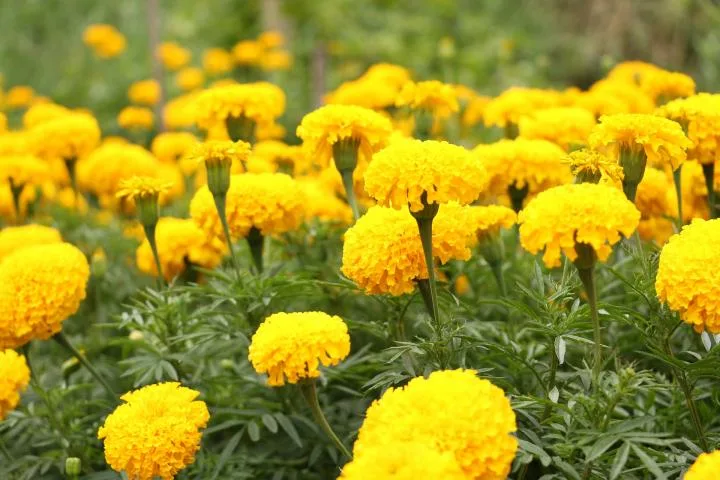
Growing
Watering
Marigolds are fairly drought-tolerant once established, but they appreciate consistent watering—especially during dry spells. I provide my plants with about 1 inch of water per week and water container-grown marigolds more frequently than the marigolds I’ve planted in my garden. Just be sure to let the soil dry out a bit in between waterings, and don’t water too much, as excess moisture can lead to root rot!
Fertilizing
When it comes to fertilizer, marigolds aren’t heavy feeders. In fact, too much nitrogen can lead to lush foliage with fewer flowers. A balanced, slow-release organic fertilizer at planting time or a light monthly feeding with liquid fertilizer throughout the growing season should do the trick.
Pruning and Maintenance
Marigolds don’t need major pruning, but regularly deadheading spent flowers will encourage these plants to flower more profusely. It’s also wise to add mulch around your plants and stay on top of weeding. Too many weeds can compete with marigolds for soil nutrients and sun and lead to stunted growth.
If you want bushier plants, you can take things a little further and pinch off the tops of young marigolds once they’re established in your garden. This keeps the plants from becoming leggy and encourages more frequent flowering.
Seasonal Care
Since marigolds are typically grown as annuals, you don’t need to worry much about overwintering them. Just pull spent marigolds out of your garden when they die back with frost and chuck them into your compost pile. If desired, you can also collect marigold seeds in autumn for future plantings.
Harvesting
When to Harvest
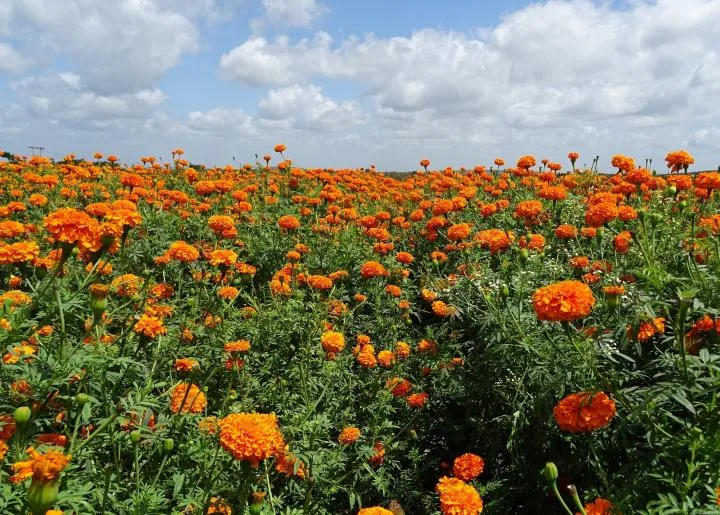
Once they’re mature, marigolds are bountiful bloomers, which can be left as is in the garden or harvested for cut flowers. If you’d like to make a marigold bouquet, the best time to pick flowers is in the afternoon when the blooms are half open or less. Marigold flowers that are fully open tend to shed petals fast and don’t last long in vases.
How to Harvest
To harvest, simply snip marigold stems off at a leaf node using sharp, sterilized pruners or scissors. This will encourage your plants to branch out and flower more. To avoid plant stress, don’t harvest more than 1/3 of the plant’s blooms at once.
Storage and Preservation
After harvesting, place marigold flowers in a vase ASAP and remove any leaves that sit below the waterline. Cut marigold flowers typically last about 7 to 10 days in a vase, but you can also hang them upside down to dry and keep the preserved flowers even longer.
Pests and Problems
Marigolds are tough plants that are often interplanted among veggies and flowers as natural pest deterrents. But while marigolds aren’t troubled by many pests and other issues, they can still be vulnerable to a few potential problems.
Common Problems
- Reduced flowering can occur if marigolds are grown in low light or if they’re overfertilized with high nitrogen fertilizers.
- Pests can also target marigolds, which is why they’re sometimes used as “trap crops” to draw aphids and other critters away from neighboring veggies.
- Mildew can leave a powdery coating on marigold leaves and weaken plants over time.
- Yellowing leaves may occur naturally as the leaves age, but it can also indicate that plants are struggling with low light or watering issues.
Common Pests
Marigolds have few pests overall, but spider mites and aphids sometimes infest them. Usually, a spray of water or a weekly application of organic insecticidal soap is all it takes to get rid of these pests.
Plant Diseases
Marigolds may be affected by fungal diseases such as powdery mildew if conditions are too wet or air flow is poor. To prevent these problems, avoid getting water on marigold leaves, keep weeds down, and plant in well-draining soil.
Types
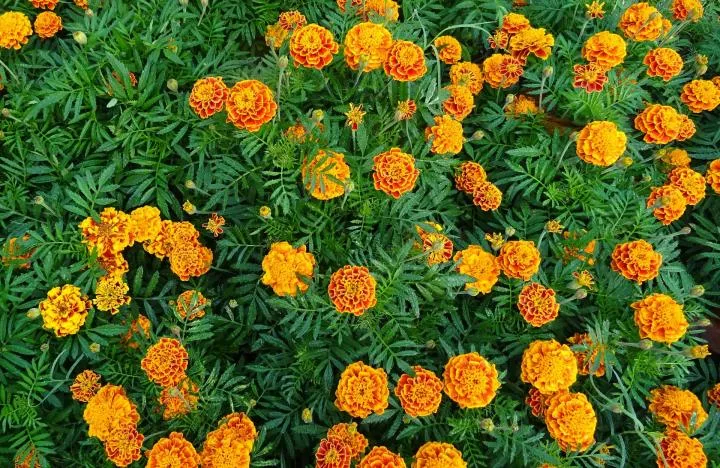
When most people think of marigolds, they envision small plants with orange or yellow flowers. But marigolds come in a tremendous variety that can vary in fragrance level, flower shape and number, bloom time, and more. Here are the main types of marigolds that you may find at local plant nurseries and what sets each apart!
- African marigolds, American marigolds, or Mexican marigolds (Tagetes erecta): These marigolds grow the tallest with big, full flowers on upright stems that stretch 3 to 4 feet in height. Despite the name, these plants are native to Mexico and Central America and thrive even under drought-like conditions. Try out plants like ‘Jubilee’ and ‘Safari’.
- French marigolds (T. patula): This species of marigolds is smaller, bushier, and more compact and typically stays under 2 feet in height. Better suited to rainy conditions than other marigolds, French marigolds have more subtle flowers, but they still catch the eye. Try out plants like ‘Bonanza’ and ‘Aurora’.
- Signet marigolds (T. tenuifolia): These petite marigolds do well in hot, dry sites and make beautiful edging plants as they rarely reach over a foot in height. Try out plants like ‘Starfire’ and ‘Lemon Gem’.
Wit and Wisdom
- In the late 1960s, Burpee president David Burpee launched an energetic campaign to have marigolds named the national flower, but roses won in the end.
- For years, farmers have included the open-pollinated African marigold ‘Crackerjack’ in chicken feed to make egg yolks a darker yellow.
- Marigolds are the birth flower for the month of October.
- Although calendula plants (Calendula officinalis) are often called “pot marigolds,” they aren’t true marigolds! Like marigolds, calendula is a fantastic companion plant for many veggies, but its bright yellow flowers are edible and have a slightly tangy and peppery taste!
- According to the language of flowers, marigold blooms symbolize grief and jealousy.