
How to Grow Milkweed: Planting, Care, and Best Native Varieties
Learn how to grow milkweed, including butterfly weed and other native varieties. Planting tips, care advice, and species selection to support monarch butterflies and pollinators.
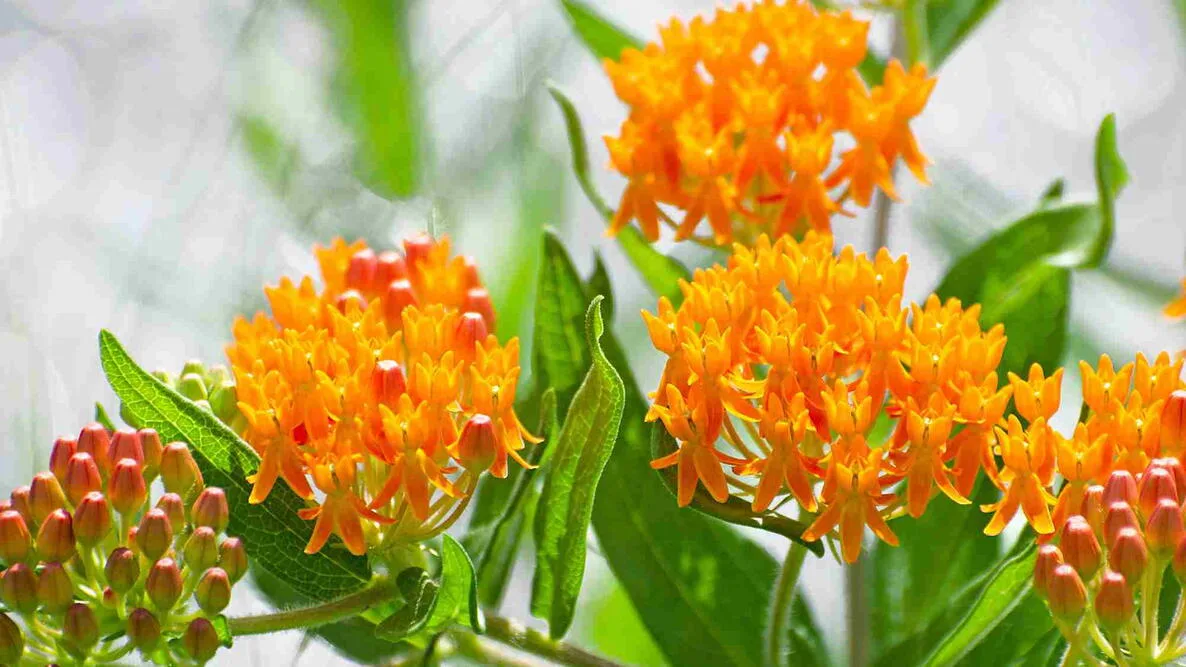
Milkweed (Asclepias species) is essential for monarch butterflies and a foundational plant in native pollinator gardens. As the only host plant for monarch caterpillars, it plays a critical role in their life cycle, while nectar-rich flowers attract bees and other beneficial insects.
This guide explains how to select, plant, and care for milkweed to grow healthy, long-lived plants in your garden.
Over 100 species of milkweed (Asclepias) are native to North America and thrive in sunny, open landscapes such as prairies, meadows, and roadsides. Matching the species to your local climate and soil type will improve establishment and long-term performance.
Several milkweed species are well-suited to home gardens. Common milkweed (Asclepias syriaca) is among the most widely recognized, but gardeners can also grow butterfly weed, swamp milkweed, showy milkweed, and other regional species. Choosing the right variety for your region and soil conditions is key to success.
Milkweed supports monarch butterflies at every stage of their life cycle. Monarchs lay their eggs on milkweed leaves, and the emerging caterpillars feed exclusively on the foliage. In addition to monarchs, milkweed provides nectar for bees, native pollinators, and other butterflies and moths.
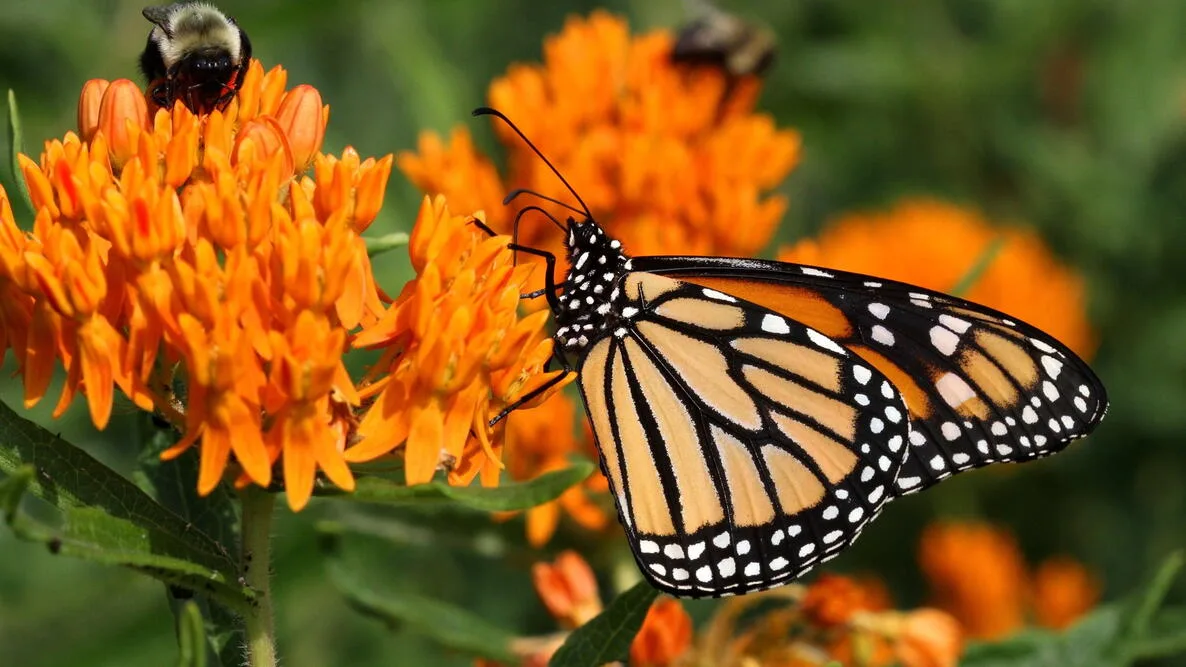
Milkweed works well in native plant borders, meadow-style plantings, and pollinator gardens. Taller species such as common and swamp milkweed are best placed toward the back of beds, while compact butterfly weed fits neatly into perennial borders or mixed with drought-tolerant natives like coneflowers, black-eyed Susans, and blazing star. Because many species have deep taproots and naturalize over time, choose a sunny, permanent location where plants can grow undisturbed.
For more ideas on designing a butterfly-friendly space, see our guide to making a butterfly garden that thrives.
Planting
When to Plant Milkweed
Milkweed is best planted when the soil is cool and moist, allowing seeds or young plants to establish before summer heat.
Planting from seed:
- Fall is ideal across most of the U.S. Fall sowing allows seeds to experience winter cold and undergo natural cold stratification, which improves germination rates for many native species.
- Early spring planting is also possible once the soil is workable, but seeds should be cold-stratified in the refrigerator for 30 to 60 days before sowing. If you wish, start seeds indoors 4 to 8 weeks before your last spring frost.
Planting young nursery-grown starts:
Spring is the best time to transplant milkweed in most regions, giving roots time to establish before hot weather. In warmer climates, early fall planting is also successful.
Note: Planting windows vary by region—use the general month ranges below as a guide.
| Region | Best time to sow seed outdoors | Best time to plant nursery starts |
|---|---|---|
| Southern (e.g., Texas, Gulf Coast) | Oct–Dec | Feb–Apr or Sep–Oct |
| Central (Mid-Atlantic, Midwest transition zones) | Sep–Oct | Apr–May |
| Northern (Upper Midwest, Northeast, Northern Plains) | Sep–Nov | Apr–Jun |
Where to Plant
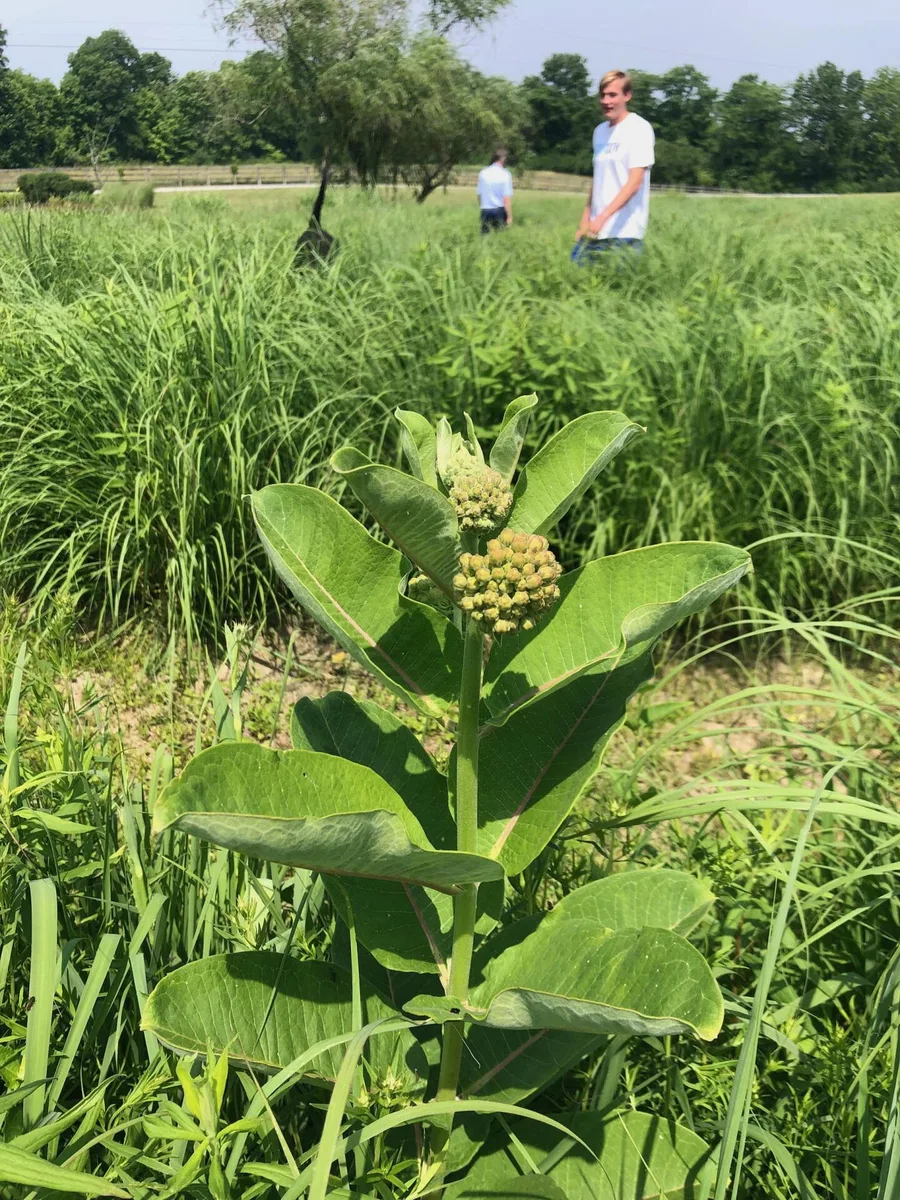
Plant milkweed in full sun for best flowering and sturdy growth. Most species prefer well-draining soil, though swamp milkweed thrives in consistently moist locations. Because milkweed develops deep taproots and spreading root systems, choose a permanent site where plants will not need to be moved. Many species resent transplanting once established.
How to Plant
Sow seeds ¼ inch deep and keep soil lightly moist until germination, which typically occurs within 7 to 14 days, depending on soil temperature.
Thin seedlings to allow 18 to 24 inches of space between plants.
When planting nursery-grown milkweed, gently loosen the root ball before setting it in a hole twice as wide as the root ball. Position the crown level with the surrounding soil, backfill, and water thoroughly. Avoid over-amending soil, as overly rich conditions can reduce flowering.
Growing
Milkweed emerges later than many perennials, often leafing out in late spring or early summer. Be patient before assuming plants have failed to return. During dormancy, avoid overwatering.
Once established, most native milkweed species are drought-tolerant and require little supplemental irrigation. Butterfly weed and common milkweed prefer drier soils, while swamp milkweed benefits from regular moisture. Avoid fertilizing, which can encourage excessive foliage growth at the expense of flowers and may reduce the plant’s natural resilience.
Propagating Milkweed
Milkweed can be grown from seed or stem cuttings. Many native species benefit from cold stratification before spring planting.
To propagate from cuttings:
- Take fresh green stems about ⅓ inch thick.
- Recut stems underwater and dip in rooting hormone.
- Place in moist sand or potting mix.
- Roots typically form within 6–10 weeks.
Avoid dividing mature plants, as their deep taproots are easily damaged.
Harvesting
Milkweed is not typically harvested for food or flowers in ornamental gardens, but you may choose to collect seed pods for propagation or to control self-seeding.
To collect seeds, remove pods just before they split open in late summer or early fall. Allow pods to dry fully before separating seeds from the silky floss. Store seeds in a cool, dry location until planting time.
If you prefer to prevent self-seeding, remove developing pods before they mature. Established plants should not be divided or transplanted, as milkweed resents root disturbance.
Pests and Problems
Milkweed is generally resistant to serious pests and diseases. Aphids may cluster on stems and buds; a strong spray of water is usually sufficient control. Always inspect plants carefully for monarch eggs and caterpillars before treatment.
Common visitors include:
- Aphids
- Milkweed leaf beetles
- Milkweed tussock moth caterpillars
- Red and black milkweed bugs
Types
Several native milkweed species are suitable for home gardens. Choose a variety adapted to your region, soil, and available space.
How to Choose the Right Milkweed for Your Site
Select species based on soil moisture, sun exposure, and winter hardiness. Butterfly weed (Asclepias tuberosa) thrives in dry, well-drained soil and full sun. Swamp milkweed (A. incarnata) prefers consistently moist soil and tolerates heavier conditions. Common milkweed (A. syriaca) adapts to a wide range of soils but spreads vigorously. Always choose species hardy in your USDA growing zone for the best long-term performance.
Common Milkweed (Asclepias syriaca)
A hardy perennial native to much of eastern and central North America. Plants reach 2 to 6 feet tall with broad gray-green leaves and fragrant pale pink to purple flowers in summer. This vigorous species spreads by underground rhizomes and is best planted in naturalized areas rather than small flower beds.
Hardiness Zones: 3–9
Learn more about traditional uses and historical applications of common milkweed.
Butterfly Weed (Asclepias tuberosa)
A compact, garden-friendly species growing 1 to 2½ feet tall. It produces bright orange (sometimes yellow) flowers and prefers full sun and well-drained soil. Unlike common milkweed, it forms clumps and is less aggressive.
Hardiness Zones: 3–9
Swamp Milkweed (Asclepias incarnata)
An upright species reaching 2 to 4 feet tall with narrow leaves and rose-pink to mauve flowers. It thrives in moist soil but adapts to average garden conditions. Forms tidy clumps rather than spreading aggressively.
Hardiness Zones: 3–9
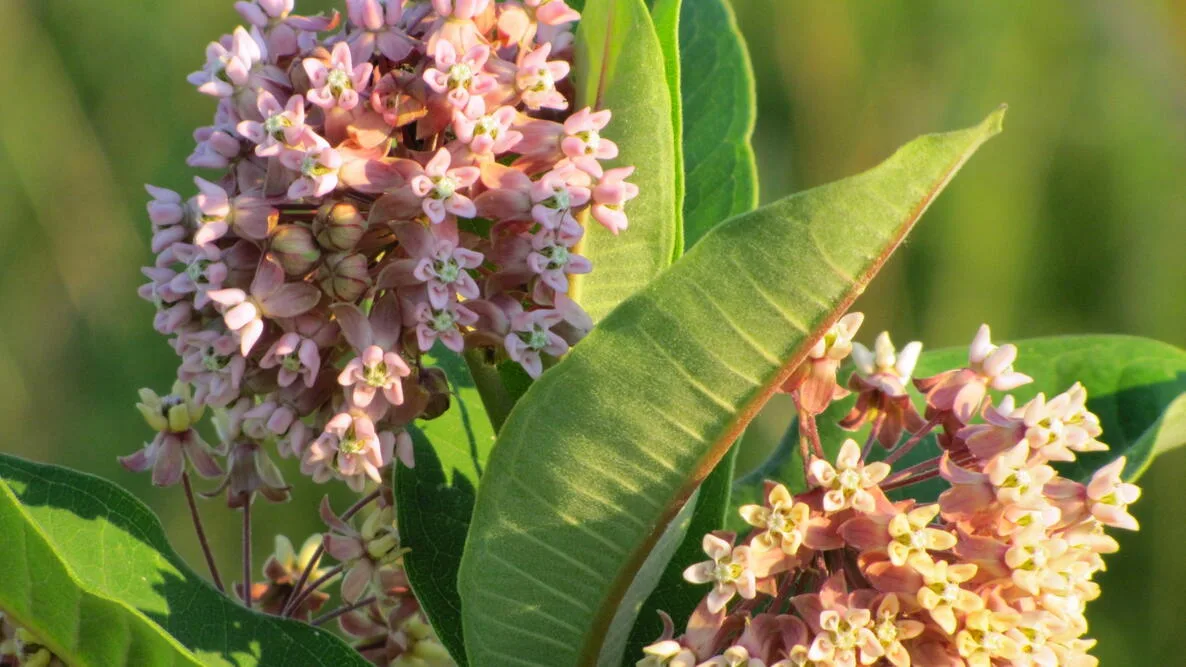
Showy Milkweed (Asclepias speciosa)
Native to western and central North America, this species grows 2 to 4 feet tall and bears soft pink, star-shaped flowers. It tolerates drought once established and performs well in prairie and meadow plantings.
Hardiness Zones: 3–9
Not sure which species to plant? See our guide to the best milkweed varieties for monarch butterflies to compare native options by region.
Wit and Wisdom
- The genus name Asclepias honors Asklepios, the Greek god of medicine.
- Indigenous peoples across North America traditionally used milkweed for food, fiber, and medicinal purposes. See uses and natural remedies for milkweed.
- The milky-white sap was applied topically in traditional remedies, and preparations of roots and leaves were used in herbal medicine. (Milkweed contains compounds that can be toxic if improperly prepared and should not be consumed without expert guidance.)
- The stems’ tough, stringy fibers were twisted into strong twine and rope or woven into coarse fabric.
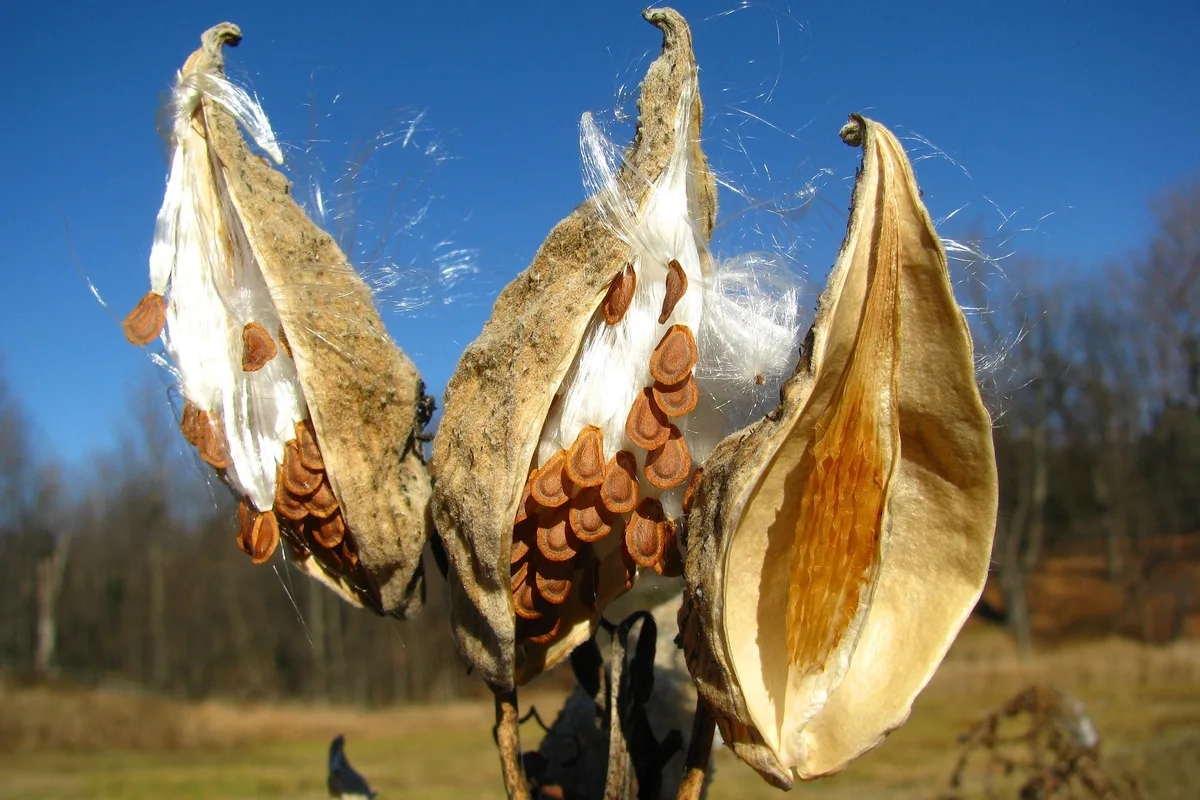
- During World War II, milkweed floss was used as a substitute for kapok in life jackets because it is highly buoyant.
- Milkweed is the state wildflower of Illinois.
Interested in saving the monarchs? Join conservation groups like the Monarch Joint Venture.