
Planting and Growing Peanuts
Learn how to grow peanuts in your own backyard! From planting and growing to harvesting and storing, this complete guide will help you enjoy homegrown, nutritious peanuts—even in northern climates.
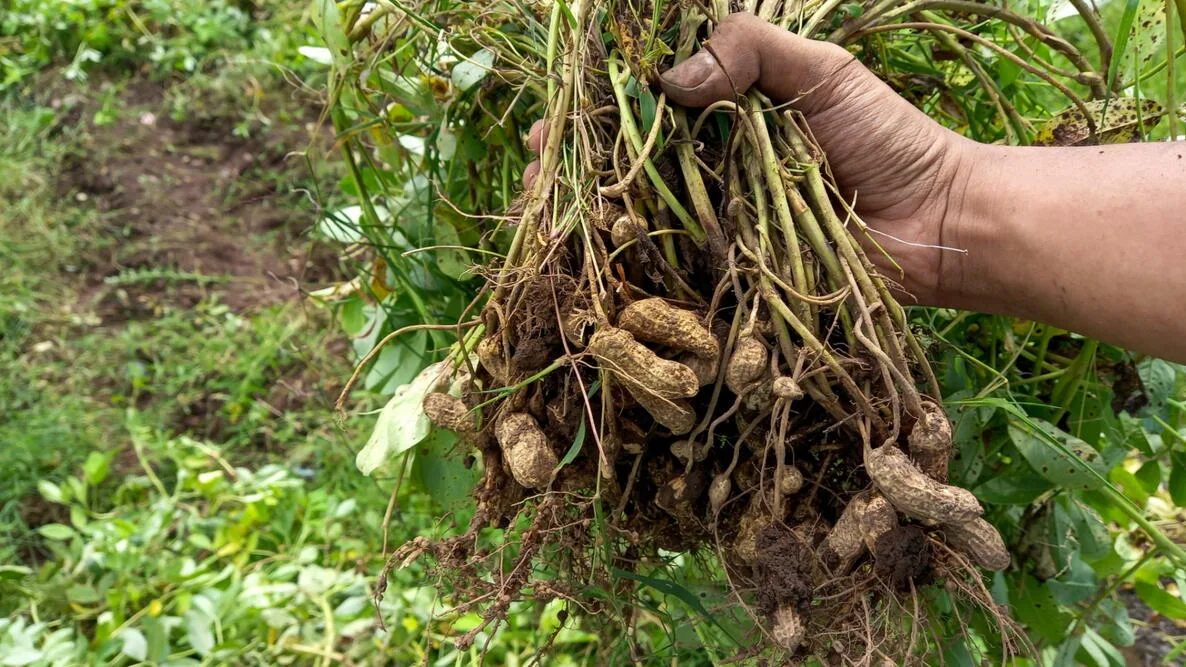
We dig peanuts—literally! While they may be your go-to snack at ball games or in trail mix, peanuts are actually legumes that grow underground like buried treasure. With their pretty yellow flowers and quirky growth habit, these plants are as fun to grow as they are to eat.
Whether you’re in the South or trying a short-season variety up North, this guide will show you exactly how to plant, grow, and harvest peanuts from your own garden. Let’s get nutty!
People are often surprised to learn that peanuts (Arachis hypogaea) are not nuts at all. Actually, they are legumes related to peas and beans. The peanut plant is unique because its flowers grow above ground, yet the “fruit” (peanuts) grows below ground.
Peanuts, which originated in South America, have a long growing season. Depending on the variety, between 100 and 140 frost-free days are required. Therefore, they tend to be grown in the southeastern U.S. (especially Georgia). Still, some peanut varieties (with shorter growing seasons) thrive as far north as southern Canada.
Peanut plants look like small bushes with pea-like yellow flowers that self-pollinate. Once fertilized, the delicate petals fall away. Then flower stalks (“pegs”) grow longer and bend toward the earth, pushing the flower’s ovary or pistil into the soil 1 or 2 inches. While underground, the ovary at the tip of each stalk enlarges to form a peanut pod. Once all of the peanut pods are mature, they are lifted out of the ground.
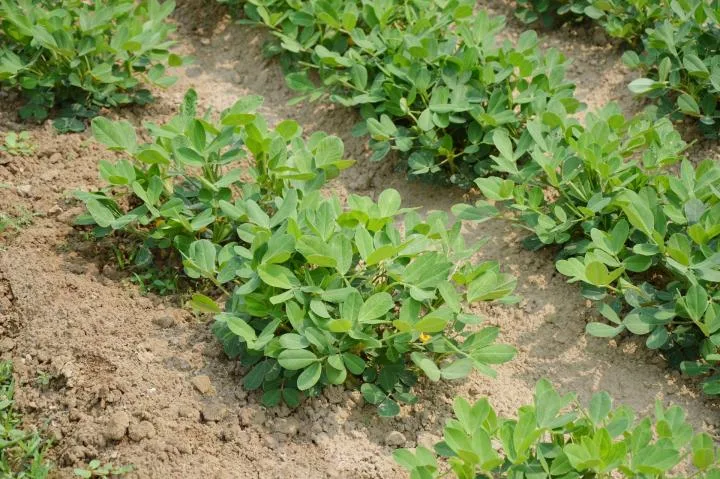
Planting
When to Plant Peanuts
- Traditionally, they are planted a few weeks after the average last frost date (in April or May) when the soil is warm and moist—or when soil temperatures reach 65° to 70°F. They are often dug up anytime after the first of September.
- The trick to raising them in the North is to choose an early-maturing variety, such as ‘Early Spanish’ (100 days), and plant them on a south-facing slope, if possible. You could also get a head start to the season by sowing peanuts indoors for 5 to 8 weeks before transplanting outside.
Where to Grow Peanuts
Peanuts grow in deep, loose, sandy soil. In the spring, till the soil to a depth of 8 to 12 inches. Till in compost or organic matter, but break up any clods and ensure the soil is loose and light. According to the University of Florida, peanuts prefer neutral to slightly acidic soil pH (between 6 and 6.5). If your soil is too acidic, you’ll need to add lime, or the quality of your peanuts will suffer.
Plastic row covers are recommended to protect young plants from spring frosts.
How to Plant Peanuts
- To grow peanuts, you must start with fresh, raw, uncooked peanuts still in their shells.
- To plant outside, place the peanut seeds 2 inches deep. If sowing in rows, sow five shells per foot. Space the rows at least 20 inches apart.
- For those starting early inside, fill a large, 4-inch-deep plastic bowl 2/3 full of moist potting soil. Shell four peanuts and place them on top of the soil; then cover with 1 inch of soil. Plants will sprout quickly. Transplant seedlings outside after the threat of frost has passed.
Growing
Watering
Water is critical for peanut production. Keep the soil moist after planting to ensure uniform germination. Water at soil level, and do not get the leaves wet.
The plant will continue to grow quite slowly for the first 40 days. It should flower in 25 to 40 days.
Then, it’s critical to water the plant during the time when the pegs enter the soil (60 to 110 days) and pods develop. But stop watering 10 days to 2 weeks before harvest.
Fertilizing
Peanuts do not need fertilization (and can get fertilization burn). However, it’s recommended to inoculate peanut seeds when planting with a bacterial inoculant found at seed stores.
Hilling and Mulching
After planting, the plant will germinate in 5 to 10 days. When the plants are 6 inches high, carefully cultivate around them to loosen the soil so the pegs will penetrate it easily. Then, hill them like potatoes and mulch with 2 inches of straw or grass clippings.
Harvesting
Based on your variety’s growing season length, check for maturity about 15 days before the predicted harvest date. Harvesting occurs often in September and October.
The first indicator is to see some yellowing of the leaves. But the best way is to dig up a plant or two with a spading fork. Break the pods open and see if they’ve filled the pod completely and if the shell is thin.
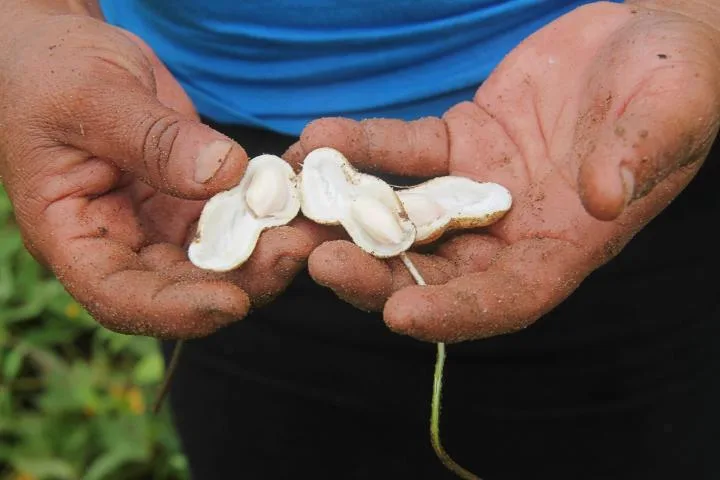
It’s best to harvest before the plants flop over, or your peanuts could rot in the soil.
- Take a big spading fork, loosen the soil around the plants, and gently lift them out so the pods are still attached.
- Carefully shake off the loose soil from the plants and pods. Then let the pods dry in the sun for about a week.
- After a week or so, remove all the pods and spread them out in a cool, dry area for a few more weeks. Avoid humid areas, or the peanuts could rot.
- Store the peanuts in loosely woven containers, or hang them in a cold, dry area away from rodents.
- The “nut” can be enjoyed raw, roasted, or boiled!
Pests and Problems
Leaf-feeders chew on the leaves above the ground. In addition, black spots indicate a leaf spot disease. Below the ground are soil insects.
In general, diseases can be avoided by buying resistant varieties, practicing crop rotation (don’t plant in the same bed as legumes from the prior year), keeping water off the leaves, and using fungicides when necessary.
Types
There are several common types of peanuts.
- Virginia types are the best all-around choice. They are the “ballpark” peanuts with nice big shells and are great for snacking. Virginia types produce high yields and have excellent flavor.
- Valencia types are often boiled because of their distinctive flavor, 3 to 5 seeds per pod, and attractive red seed coats. Valencia types produce smaller kernels and yield less than Virginia types.
- Spanish-type peanuts are smaller and often used in peanut candies and snack packs. They have smaller kernels covered with reddish-brown skin. They also have a high oil content.
- Runner types, as the name suggests, have a prostrate or running growth habit. These are the “peanut butter” peanuts, which are generally small but have excellent flavor. They contain two medium-sized seeds per pod.
If growing in Northern climates, select varieties with a time to harvest of no more than 110 days. Early varieties of Valencia and Spanish peanuts do well in places as far north as Minneapolis.
Wit and Wisdom
Did You Know: It takes about 540 peanuts to make a 12-ounce jar of peanut butter.
Whether eaten raw, roasted, or spread on bread, peanuts are an excellent source of fiber, vitamins, and minerals. They have no cholesterol and contain more protein than many meats.
Peanuts are thought to have originated in South America, where Peruvian Indians cultivated them at least 3,500 years ago. Besides valuing peanuts as food, the Peruvians considered them a status symbol. They even used them as money—which isn’t surprising when you consider the phrase “working for peanuts.”
Ever wondered where popcorn comes from? It’s also a seed plant! See our growing tips for popcorn.