
Planting and Growing Plumbago
Plumbago, also called cape leadwort, is prized for its ethereal blue flowers. Keep reading to learn more about this butterfly magnet.
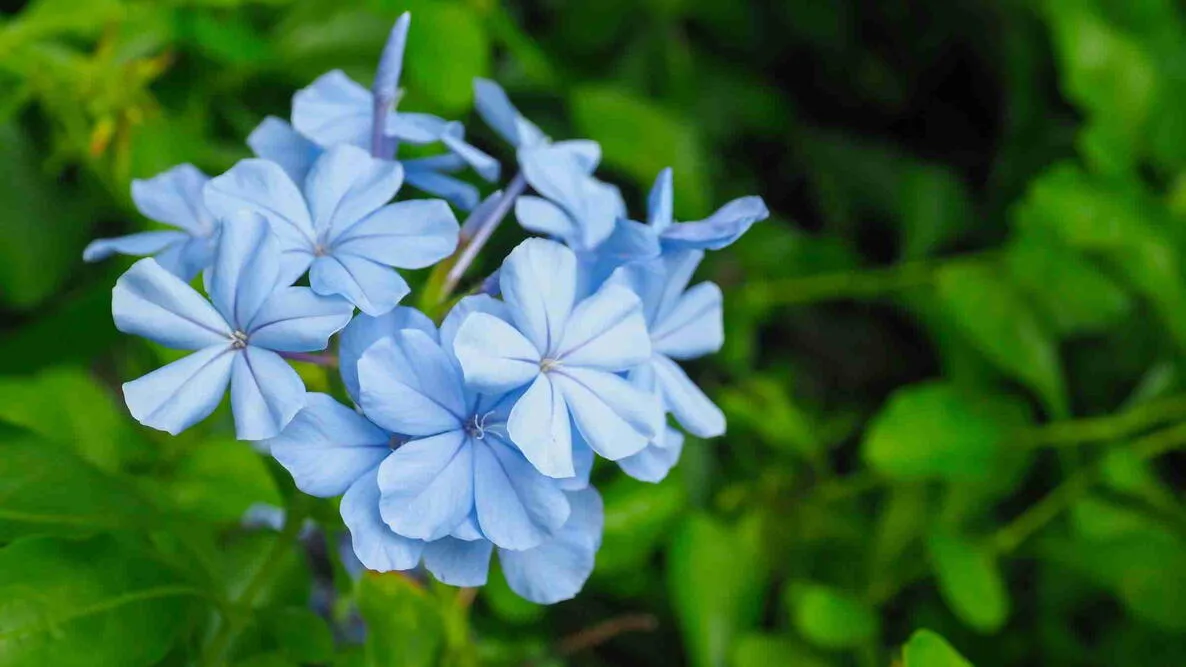
What plants have unrivaled pale blue blossoms that host a unique blue butterfly? We’re talking about plumbago, also called Cape leadwort. Prized for its profuse phlox-like flowers, this butterfly magnet can be grown as a shrub, vine, or potted plant. Learn more about planting and growing plumbago plants.
Here at the The original publication, we adore true blue blossoms, the rarest of all the flower colors. And it’s even more exciting when you find such ethereal blue flowers on a gorgeous shrub that will bring beauty to your garden.
About Plumbago
There are many members of the Plumbaginaceae family and several types of plumbago, but Plumbago auriculata is generally the one most commonly grown in the United States. It’s also called Cape leadwort, Cape plumbago, and blue plumbago. Note: Do not confuse this plant with hardy blue plumbago, (Ceratostigma plumbaginoides), a low-growing ground cover with darker blue flowers.
Plumbago auriculata is an herbaceous shrub. It has a mounding habit with gracefully arching, semi-woody stems with evergreen leaves. The blue flowers grow in clusters (terminal racemes) of five-petaled blue flowers similar to phlox. They bloom from spring through fall and are beloved by bees and pollinators; specifically, plumbago hosts the larvae of the Cassius blue butterfly (Leptotes cassius). After flowering, the plant produces barbed fruit capsules. It spreads via rhizomes (underground stems) but isn’t considered invasive.
Best of all, plumbago is easy to grow and drought-tolerant; it requires little watering. It has few pests or diseases. Deer will not usually eat it. However, it’s toxic to humans and animals; while animals know enough not to chew on the shrub, humans should wear gloves when pruning to protect their skin from any irritation.
Where to Grow Plumbago
Where and how you grow this shrubby plant depends on your hardiness zone.
- In warm USDA Zones 8 through 11, grow outdoors as a perennial shrub that reaches 5 to 7 feet tall. Plumbago is a favorite of gardeners in southern parts of Texas and Florida. It’s native to tropical climates in South Africa and is quite heat-tolerant. You can also train plumbago like a vine to climb up a trellis.
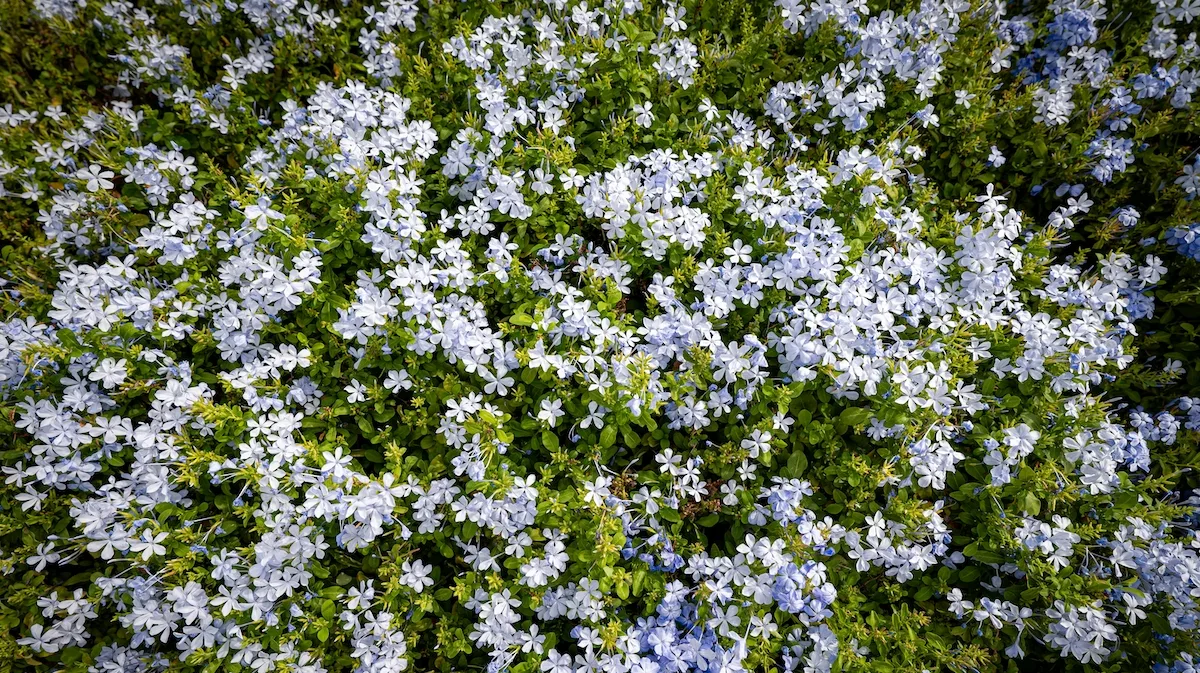
- In other climates, grow as an annual plant in your yard. Or, in any zone, plant plumbago in a pot or container; it will typically grow 1 to 3 feet per year and can be kept compact through periodic pruning. If you wish to keep it year-round, transfer the pot indoors when the weather gets chilly.
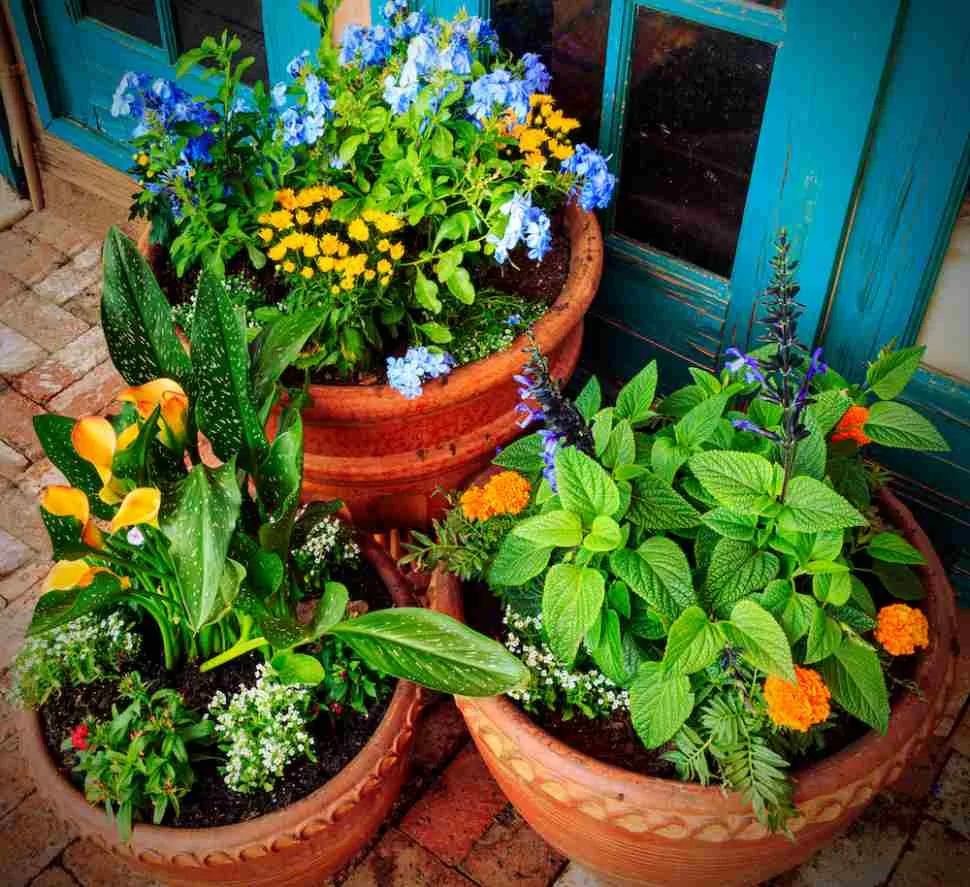
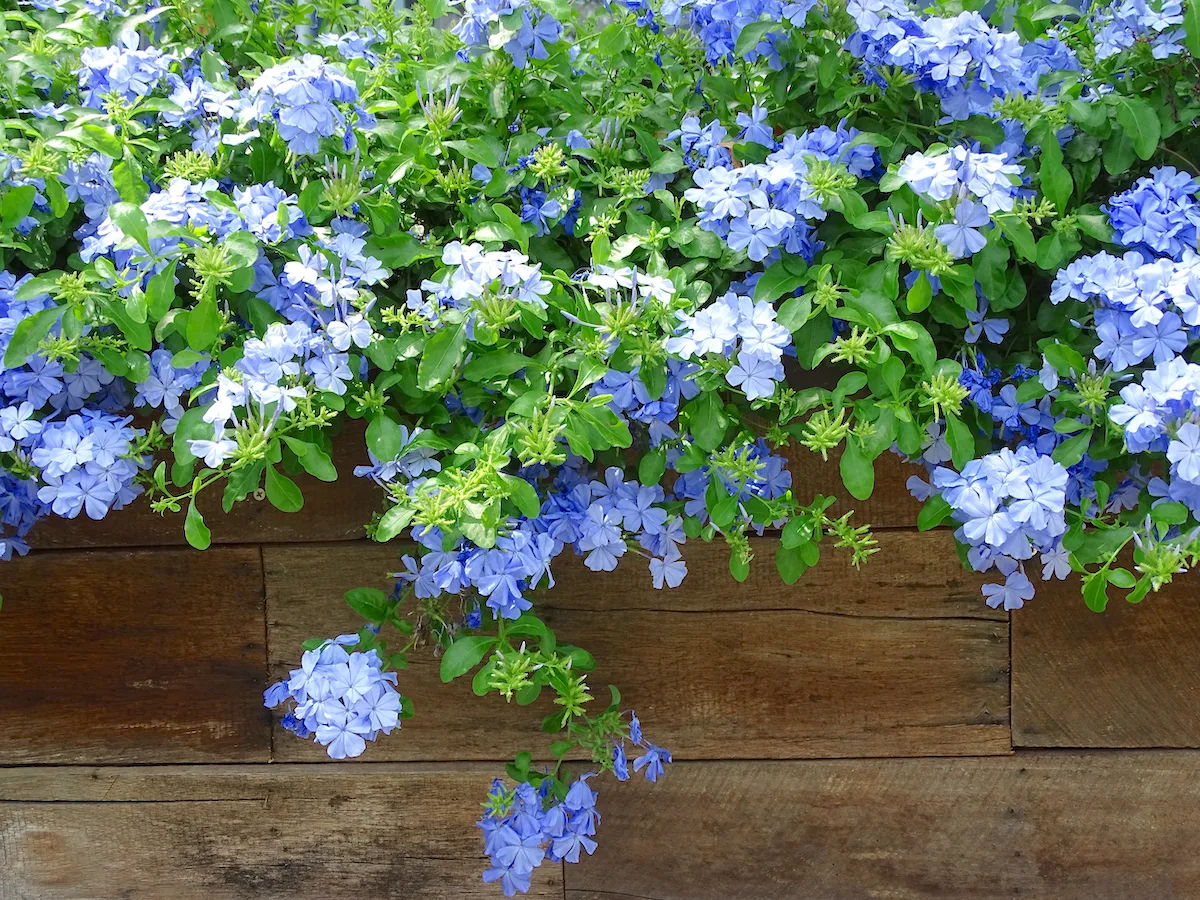
Plumbago makes an excellent foundation plant, low hedge, border, or decorative row along a patio or fence. Or, plant en masse and watch the butterflies gather! When trellised or grown along a wall, it creates a beautiful waterfall effect. In a container, plumbago looks stunning on the patio or deck outdoors.
Planting
Plumbago is an easygoing plant that isn’t particularly fussy about its conditions but will thrive when provided with the ideal situation. Plant in full sun to partial shade in fertile, well-draining soil. It prefers a soil pH that is slightly acidic to neutral.
When to Plant
- If buying as a container plant, transplant in early spring to enjoy the spring and summer warmth. As a perennial in Florida or Zones 8 to 11, you can plant them at any time of the year.
- If planting by seed in the spring, it’s also best to plant in the early spring. Note that plants grown from seed generally will not flower until the second year.
- Propagating by division is best done in the fall.
- Stem cuttings are a good project for spring.
How to Plant
- In the garden, space the transplants 3 to 5 feet apart. They need plenty of room to sprawl, so don’t crowd.
- When planting from seed, choose large containers and plant just one seed in each; plant approximately ¼ inch deep and cover with soil. Germination may take time (possibly over 2 weeks), so be patient!
- Stem cuttings and root cuttings are somewhat more complicated forms of propagation but can be quite successful. Purdue University outlines the steps for both methods here.
- Division is another easy way to propagate plumbago.
Growing
Plumbago doesn’t need a lot of maintenance.
- Water regularly while establishing young plants, but mature plants are drought-tolerant and require minimal watering.
- Plumbago will grow more slowly in a container, and it will require periodic trimming to keep it to a compact size.
- Deadhead faded or spent blooms regularly throughout the growing season.
- Plumbago will be happy to climb a trellis (with a bit of help from you). Tie its arching plants and cut back if the plant gets too leggy.

Pruning Plumbago
Aim to prune in late winter or early spring for a more pleasing appearance. Do not prune in summer because flowers form on new growth.
However, you can prune off dead or diseased branches any time during the year. Also, get rid of any errant suckers that grow near the plant’s base.
If your plumbago is old or out of control, prune back to one-third of its size. Don’t worry; this plant grows quickly and will recover.
Propagating Plumbago
It’s easy to create new plumbago plants from the mother plant! During the growing season, choose healthy, flexible stems. Cut off 4 to 6 inches in length with a clean, sterile clipper, cutting just below a set of leaves. Dip the lower third of the stem in rooting hormone and put it in a small pot with potting soil. Water and cover in plastic. New shoots should appear in a few weeks. Pot up in a larger container.
If you’re planting outside, then harden off and plant out in the spring. If you’re keeping it in a container, repot every few years in a larger pot with fresh potting mix.
Overwintering Plumbago
If you plan to overwinter in a container, you can treat it as a houseplant or dormant plant.
- As a houseplant, bring indoors before the first fall frost. Set in a bright, sunny room. Water sparingly.
- As a dormant plant, cut it back (as you would as a perennial) and store in a cool, dark basement or garage.
Pests and Problems
Plumbago is known for being relatively unbothered by pests and diseases, but chili thrips, cottony cushion scale, whiteflies, spider mites, and mealy bugs can sometimes be present, especially on plumbago plants grown indoors as houseplants.
Types
- ‘Monott’ is a smaller (up to 3 feet tall) variety with blue flowers.
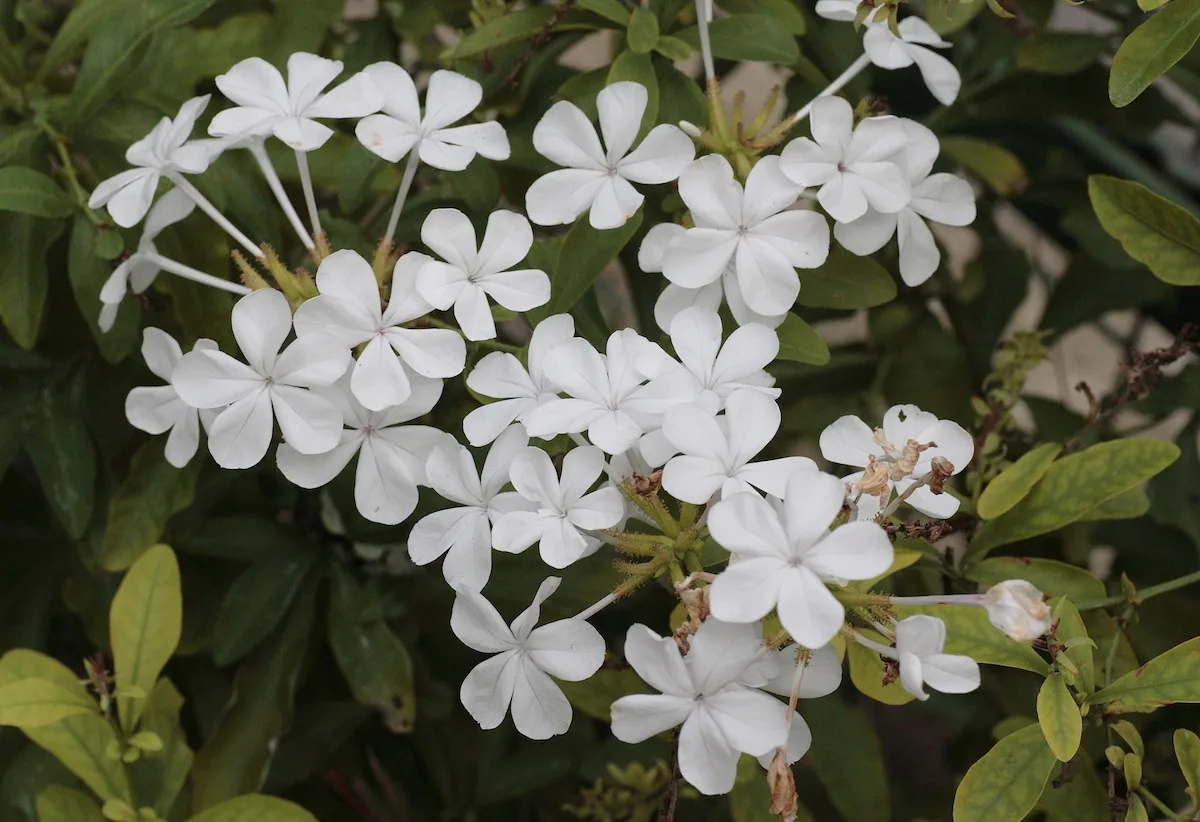
- While plumbago is widely known for producing blue flowers, a white variety called ‘Alba’ is also available.
Wit and Wisdom
- Plumbago isn’t a carnivorous plant, but it does have hairy flowers that insects can become trapped in. As such, it’s sometimes classified as a “murderous plant.”
- The plant’s name goes back to ancient Rome and the famed early naturalist Pliny the Elder. It was once used as a cure for lead poisoning, and the name plumbago refers to “lead.” This is also where the alternate common name of leadwort comes from. The species name refers to its ear-like leaf base.
- As early as the 1780s, plumbago was transplanted to the East Indies, used in gardens.
- Plumbago was used in Africa to make dye and was medicinal for wounds, warts, and other issues. (However, please remember that plumbago is known to be toxic.)
- Plumbago symbolizes “hope,” which fits well with its heavenly, sky-blue hues.