
How to Grow Queen Anne’s Lace: A Beautiful and Beneficial Garden Filler
Discover how to grow Queen Anne’s lace, a charming wildflower that attracts pollinators, fills out floral bouquets, and adds beauty to garden beds.
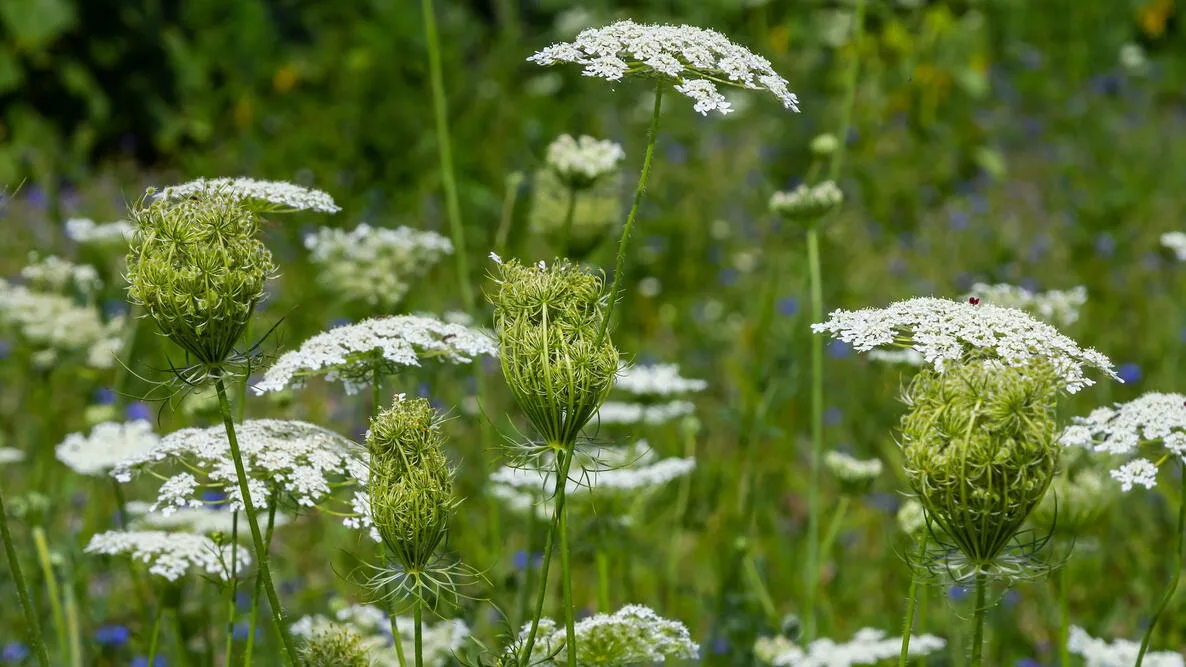
Queen Anne’s lace is an excellent choice for a cut flower. The name might make it sound like a royal affair, but this lacy bloom is as down-to-earth as they come! A cousin to the humble carrot, this wildflower is a favorite among pollinators and floral designers alike.
Whether you’re filling out a cutting garden or inviting beneficial bugs, Queen Anne’s lace brings both charm and function to your backyard bouquet. Just don’t confuse it with its poisonous lookalikes. We’ll help you grow it like a pro.
Queen Anne’s lace is often called “wild carrot,” and if you’ve ever let a carrot in the garden stay over winter to flower the next year, you’ll see why. The foliage looks similar, and the plant has a taproot like our garden carrots. Our tasty orange vegetables had their roots, so to speak, in Daucus carota, also known as Queen Anne’s lace. In fact, those root veggies we love are actually a subspecies, D. carota var. sativus.
Gardeners grow this biennial for its lacy flower heads, not the roots.
- During its first year, it makes a basal rosette of leaves and focuses on storing energy.
- During the second year, the flowers bloom in late spring and early summer. They each begin as a round, goblet-shaped gathering of stems before opening to an umbel, with hundreds of florets on each.
- After pollination, the flower closes again to resemble a bird’s nest.
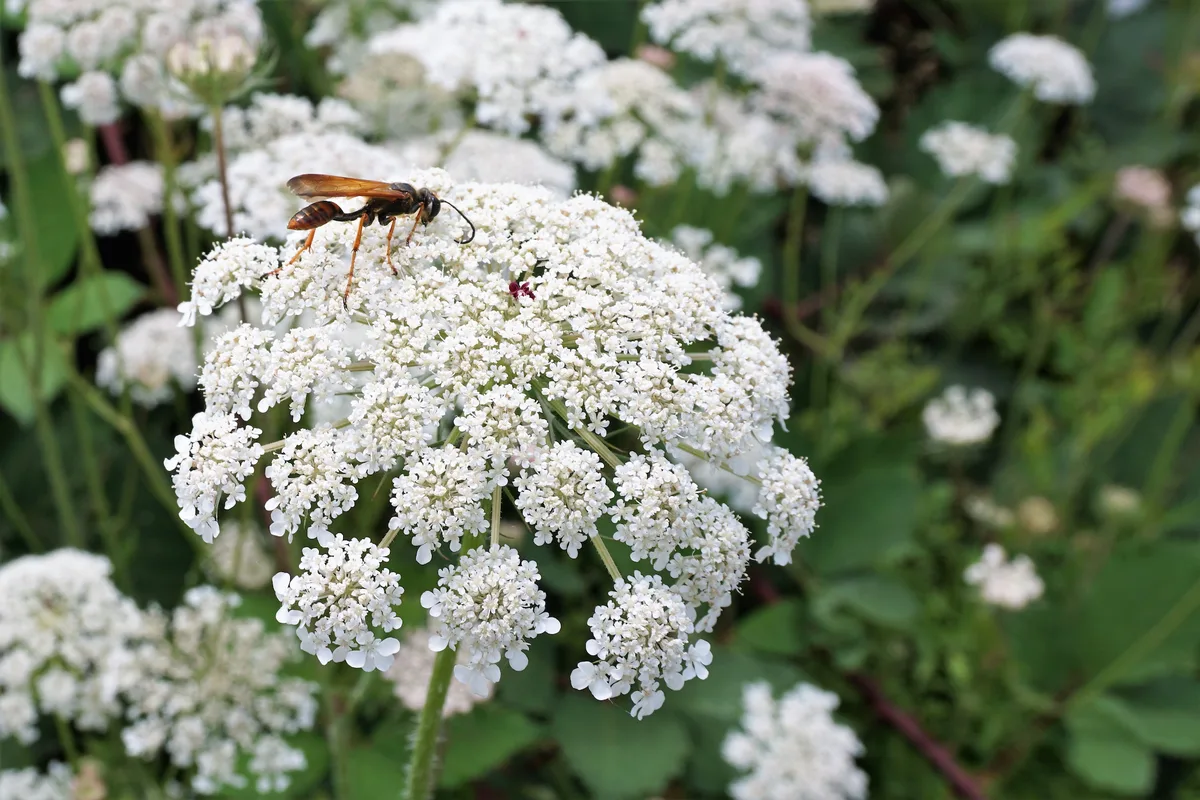
The entire plant looks similar to dill and is often mistaken for other plants, including angelica, cow parsnip, false Queen Anne’s lace, giant hogweed, and poison hemlock.
Note: Queen Anne’s lace is considered an invasive or noxious weed in some areas of the country. Check with your local agricultural office and your state’s invasive species list. If Daucus carota is a no-go in your area, consider false Queen Annes lace, Ammi majus or Ammi visnaga, which are less weedy and invasive.
Planting
When to Plant Queen Anne’s Lace
Direct seed Queen Anne’s lace in spring after the last frosts, or start them indoors 4 to 6 weeks prior to transplanting. Southern gardeners can also sow them in autumn. The seedlings establish more quickly in cooler temperatures.
Where to Plant Queen Anne’s Lace
Select a site with good drainage and full sun for the best blooms. This plant doesn’t mind poor, less fertile soils (part of the reason it’s invasive in many areas) and will tolerate most conditions.
The mature plants are susceptible to windthrow. Avoid unsheltered locations or local wind tunnel effects, such as between a shed and the garage.
How to Plant Queen Anne’s Lace
- Cold treat the seeds for 2 weeks at 35° to 40℉.
- Prepare the bed or seed tray. If planting outdoors, removing the weeds and raking the surface smooth is sufficient.
- Sow seeds shallowly. Instead of making trenches or holes, sprinkle the seeds in rows or into cells and lightly cover them.
- Keep moist until germination.
- Thin seedlings when the first true leaves begin to appear.
- If transplanting, harden off and then use a final spacing of 6 to 12 inches between plants.
Growing
Queen Anne’s lace won’t need much help from you to grow. After seedlings are established, they prefer slightly drier conditions and often won’t need watering. No fertilizer is necessary. Depending on soil conditions, the stems can flop over after a heavy rain or storm. A little preemptive staking goes a long way toward keeping these tall plants upright and out of garden aisles.
To prevent Queen Anne’s lace from escaping the garden, snip the flower heads as soon as the blooms fade to prevent them from forming mature seeds. For cut flower use, harvest umbels when they have almost fully opened. If they’re cut early, they often wilt.
Harvesting
The lacy flower heads and crisp green-white color provide an invaluable filler for bouquets.
Queen Anne’s lace is also very productive. The more you pick, the more it flowers!
Please note: Be careful as the sap in the stems can cause contact dermatitis in sensitive individuals. Wear gloves while harvesting.
Pests and Problems
- Queen Anne’s lace rarely has serious pest or disease problems.
Types
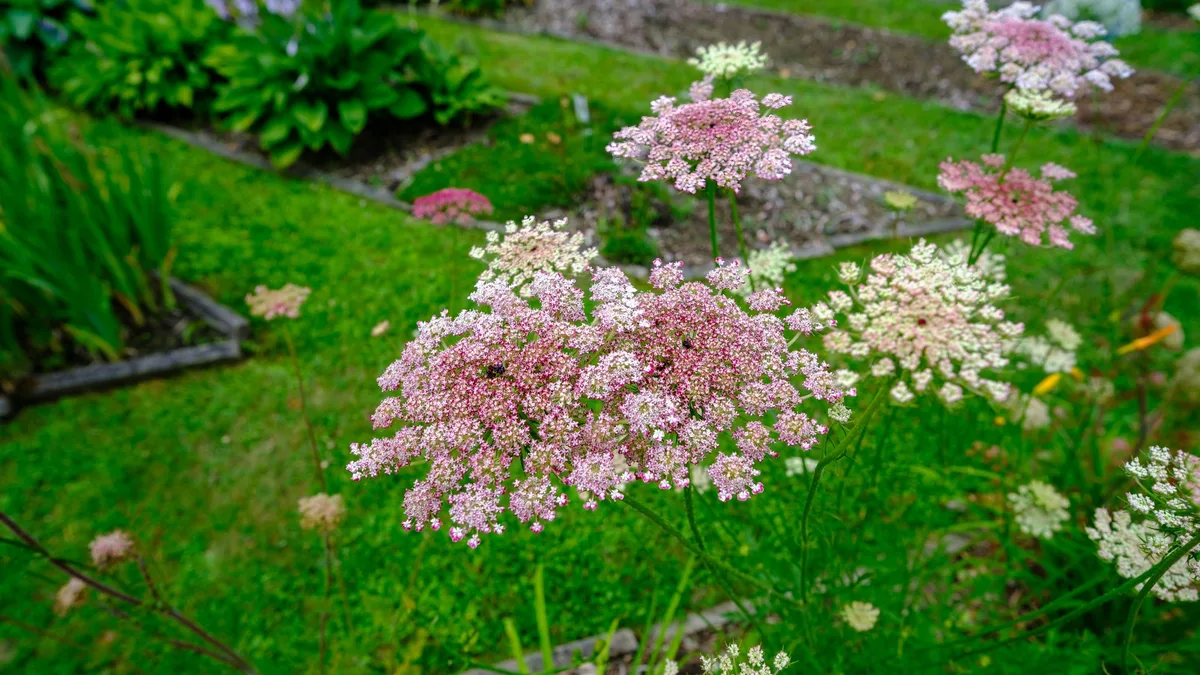
Queen Anne’s lace is generally white, which provides an outstanding contrast in most bouquets. However, there are some color varieties.
- Chocolate Queen Anne’s lace is a distinctive variety. Its color starts as a deep burgundy, transitions to light cocoa as the flower matures, and ends as a bright white. Even after the blooming phase concludes, the seed heads transform into enchanting, whimsically curled structures resembling miniature perches for traveling fairies.

- ‘Purple Kisses’ is another variation on Queen Anne’s lace. It comes in beautiful shades of pink, dark purple, and white. And it’s another outstanding cut flower that’s long-lasting.

Wit and Wisdom
- Many stories claim the common name for this plant comes in some fashion from Queen Anne II of England, who was skilled at lacework. The drop of red in the center of the flower is symbolic of a finger she pricked while she was tatting.
- Keep up with deadheading before the plant sets seed. Trying to root out an escaped patch can be a lot of work.
- This plant is potentially poisonous to livestock.