
Planting and Growing Rhubarb
Learn how to grow rhubarb, a low-maintenance perennial that thrives for 10+ years. Discover when to plant, how to care for, and tips for harvesting this tart, versatile vegetable!
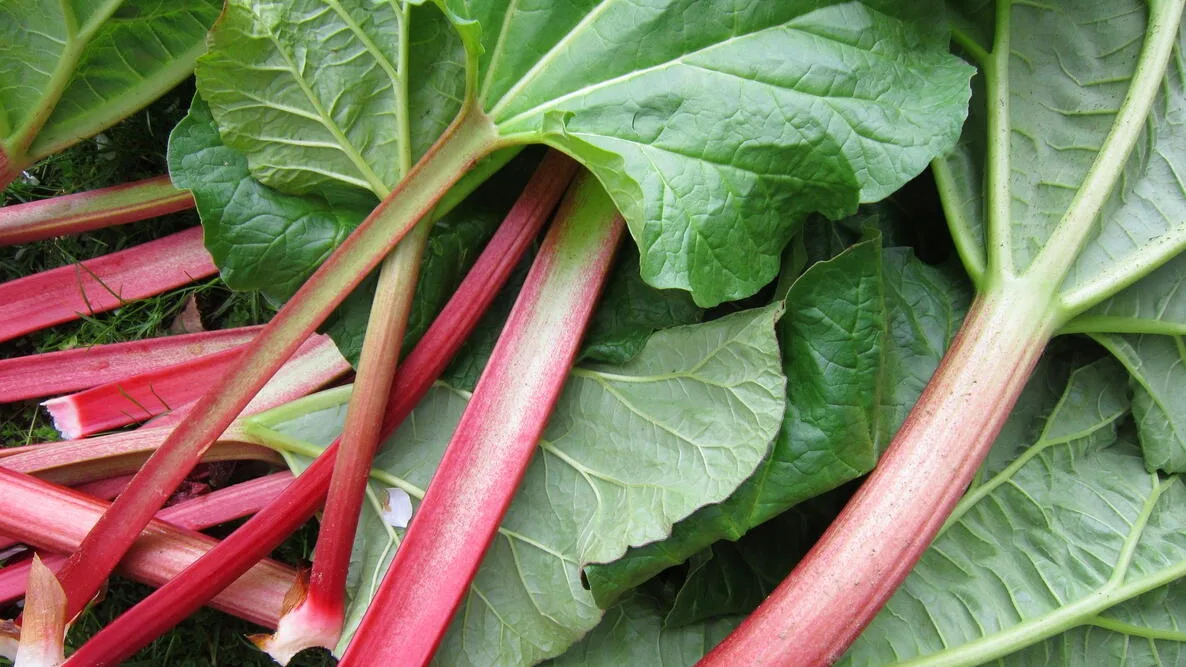
What grows for 10 years or more, suffers from almost no pests, and is refreshingly easy to care for? It’s rhubarb! This perennial vegetable has tart-flavored ruby or green stems used to make pies, crumbles, cakes, jams, and sauces. Learn how to plant, grow, and pick rhubarb correctly.
Rhubarb is easy to grow but needs a dormancy period to thrive and produce an abundance of huge stalks. Rhubarb does best where the average temperature falls below 40ºF (4°C) in the winter and below 75ºF (24°C) in the summer.
What’s lovely about rhubarb is that it’s a perennial: A healthy plant will remain productive for 10 years or more. For that reason, rhubarb should be planted in its own space in any corner of the garden where it can grow undisturbed. Rhubarb grows well in soil amended with plenty of well-rotted manure or compost; this has inspired some gardeners to plant it near their compost piles!
Planting
When to Plant Rhubarb
- Rhubarb can be planted in late fall or early spring.
- Plant rhubarb crowns after dormancy has set in in the fall, and you’ll have rhubarb cropping in the spring!
- In spring, plant crowns when the soil is workable, when the roots are still dormant, and before growth begins (or as plants are just beginning to leaf out). If you have a temperature gauge, soil temperature should be 50°F minimum.
Where to Plant Rhubarb
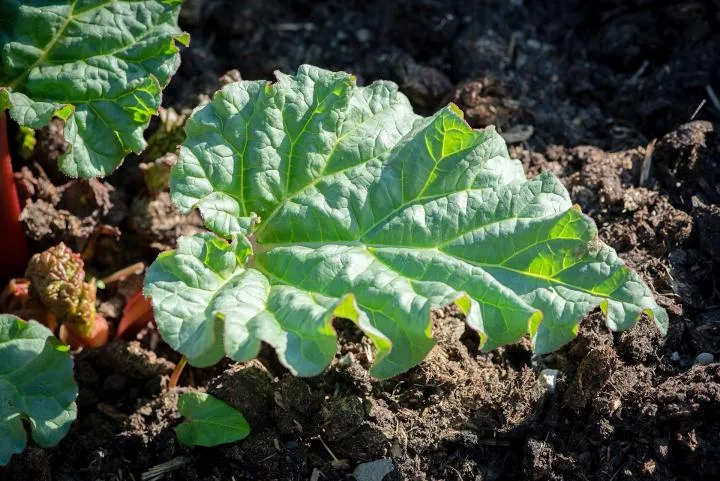
Rhubarb grows best in full sun but will tolerate partial shade.
Choose a site with soil that is well-draining and fertile. Good drainage is essential, as rhubarb will rot if kept too wet. Mix compost, rotted manure, or anything high in organic matter into the soil. Rhubarb plants are heavy feeders and need this organic matter. Learn more about soil amendments and preparing soil for planting.
Rhubarb gets big! It can grow to 2 to 3 feet tall and wide. Make sure you choose a site where it won’t be crowded.
How to Plant Rhubarb
- Plant 1-year-old rhubarb crowns, which you can find at a garden center or nursery, or order online. Plants will be sold as bare-rooted specimens or young plants already growing in pots, ready for transplanting. (Rhubarb can be grown from seed, but this is not recommended.)
- Before planting, eliminate all perennial weeds in the planting site.
- Dig large, bushel-basket-size holes.
- Space rhubarb plants about 2 to 4 feet apart and 3 to 4 feet between rows.
- Plant crowns so the eyes are about 2 inches below the soil surface with buds facing up.
- Water well at the time of planting.
Check out this video to learn more about how to plant rhubarb:
Growing
Overcrowding is a common problem with rhubarb and can lead to subpar growth. Dig and split rhubarb roots every 3 to 4 years. Divide when plants are dormant in early spring (or late fall). Divisions should have at least one large bud on them.
- Mulch generously with a heavy layer of straw to retain moisture and discourage weeds.
- Water your plant well and consistently. Rhubarb needs sufficient moisture, especially during the hot, dry summer days.
- Remove seed stalks as soon as they appear, as they will only drain energy from the plant that could be used to produce stalks or roots.
- Each spring, apply a light sprinkling of fertilizer (10-10-10) when the ground is thawing or has just thawed. See your local frost dates.
- In the fall, remove all plant debris. Once your ground freezes, it’s best to cover rhubarb with 2 to 4 inches of organic mulch, preferably well-rotted compost. By adding nitrogen to the soil, you’re preparing the rhubarb plants for a good spring season.
Harvesting
Do NOT harvest any stalks during the first growing season. Harvest sparingly in the second year. This allows your plants to become properly established.
- After a plant’s third year, the harvest period (rhubarb season!) runs 8 to 10 weeks long, lasting through mid-summer.
- Harvest stalks when they are 12 to 18 inches long and at least 3/4-inch in diameter. If the stalks become thin, stop harvesting; the plant’s food reserves are low.
- Grab the base of the stalk and pull it away from the plant with a gentle twist. If this doesn’t work, you can cut the stalk at the base with a sharp knife. To prevent the spread of disease, be sure to sanitize the knife before cutting. Discard the leaves.
- Always leave at least two stalks per plant to ensure continued production. You may have a bountiful harvest for well over 10 years without replacing your rhubarb plants.
- It was once believed that the entire rhubarb plant became toxic as summer temperatures rose. This isn’t true, although summer-harvested stalks usually have a tougher texture than those picked in the spring. Nevertheless, after midsummer (July), it’s best to leave stalks on the plant to allow them to gather energy for next year’s growth.
How to Store Rhubarb
Cut the rhubarb stalks and refrigerate in a covered container. Or, tightly wrap stalks in plastic or aluminum foil and refrigerate. Rhubarb can be kept fresh in the refrigerator for a couple of weeks.
Cut rhubarb stalks into pieces, place them in a covered container or zip-type plastic bag, and put them in the freezer. Frozen rhubarb will last about a year.
Pests and Problems
Pests and diseases are rarely an issue with rhubarb, but it may be affected by the following problems.
| Pest/Disease | Type | Symptoms | Control/Prevention |
|---|---|---|---|
| Botrytis (gray mold) | Fungus | Varies; yellow/ brown/gray spots with water-soaked margins on leaves/flowers; gray mold; buds remain closed; stem lesions; wilt/rot; scorched appearance (“fire”) in some plants | Destroy infected parts/severely infected plants (do not compost); remove plant debris regularly; disinfect tools; good air circulation/sunlight; avoid overhead watering; prevent plant stress/injury; weed; rotation |
| Fungal leaf spot | Fungus | Varies; leaf spots on lower leaves enlarge and turn brown/black; fuzzy growth or pustules in lesions; disease progresses upward; leaves die | Destroy infected leaves/ severely infected plants (do not compost); remove plant debris regularly; disinfect tools; resistant varieties; good air circulation; avoid overhead watering |
| Phytophthora crown and root rot | Oomycete | Leaves discolor/ wilt; dieback; oozing cankers near base; reddish brown discoloration of inner bark/wood; roots rot; plants slow-growing/stunted/die | Destroy infected plants and surrounding soil (do not compost); prune out branch cankers; remove plant debris regularly; plant resistant varieties; prevent plant stress/injury; provide good drainage/do not overwater |
| Rhubarb curculio | Insect | Weevil-like beetle that bores into stalks/crowns; notches on stalks/leaves; holes in stalks leak sap; plants wilt/decay | Handpick adults (appear in mid-May); destroy nearby host plants (sunflowers, thistle, dock) in mid-summer (July) |
| Slugs/snails | Mollusk | Irregular holes in leaves; slimy secretion on plants/soil; young stems “disappear” | Handpick; avoid thick bark mulch; use copper plant collars; avoid overhead watering; lay boards on soil in evening, in morning lift and dispose of pests in hot, soapy water; drown in deep container of 1/2 inch of beer or of sugar water and yeast sunk to ground level; apply 1-inch-wide strip of diatomaceous earth |
Types
These common varieties have attractive red stalks and excellent growers:
- ‘Canada Red’
- ‘Crimson Red’
- ‘MacDonald’
- ‘Valentine’
In addition to the previous four, there is a reliable, green-stalked cultivar named:
- ‘Victoria’
Wit and Wisdom
Rhubarb originally came from Asia. It was brought to Europe in the 1600s and to America shortly thereafter. It thrives in areas with a cooler climate, making it popular in northern gardens.
Rhubarb has many other uses, from medicinal to cosmetic. See how to naturally lighten your hair with rhubarb.