
How to Grow Verbena: Planting, Caring, and Growing Vibrant Blooms
Grow stunning verbena flowers! Learn how to plant and care for long-blooming verbenas in beds, baskets, and borders with this easy gardening guide.
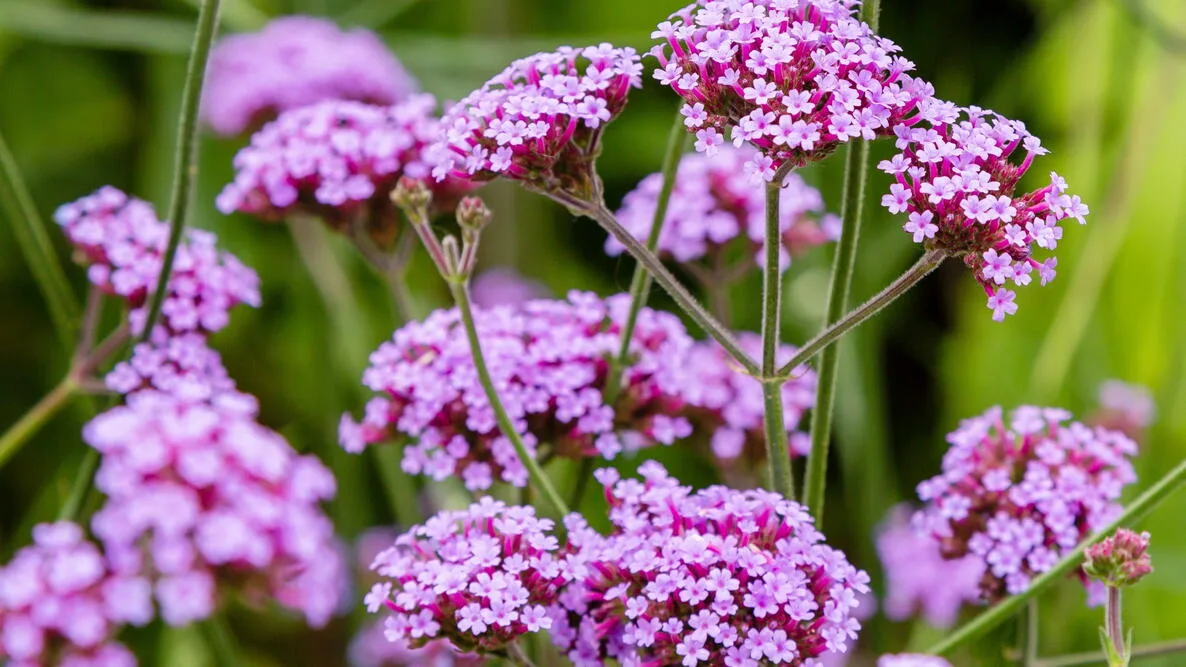
Looking to add a splash of color that just won’t quit? Meet verbena—the flower that keeps blooming long after others have called it quits for the season. Whether trailing from a hanging basket or blanketing your garden beds, these little powerhouses are pollinator magnets and sunshine lovers.
From upright showstoppers to low-growing bloom carpets, verbenas are the garden MVPs you didn’t know you needed … until now. Let’s dig in and get those blooms going!
Verbena, also known as vervain, is a long-blooming, heat-tolerant tender perennial. Verbenas come in many colors and sizes; some grow up to 6 feet tall, while other varieties are short ground covers that reach no higher than a foot. The tiny flowers are grouped into rounded clusters.
Many perennial varieties are relatively short-lived and can be grown as annual plants since they will bloom readily during their very first season in the ground. Bedding-type annual verbenas grown from seed do not do well in hot and humid regions. Verbenas are perfect for containers, hanging baskets, and window boxes.
Planting
When to Plant Verbena
- Start seeds indoors about 8 weeks before your last frost date.
- Plant transplants outdoors when the soil has warmed to at least 60°F (15°C) in the spring and the threat of frost has passed.
Where to Plant Verbena
- Select a spot in full sun.
- Make sure the soil drains well. Heavy clay soils will cause root rot. Dig in compost to lighten up your soil.
How to Plant Verbena
- Pinch the tips of the branches at planting time to encourage branching and a fuller plant.
- Keep the soil moist until plants are established.
Growing
How to Care for Verbena
- During their blooming period, water the plants once a week if they do not receive an inch of rain that week.
- When bloom slows during the summer, trim the whole plant back by about one fourth of its height. Water thoroughly. Rebloom will occur within 2 to 3 weeks.
- Apply a complete fertilizer (16-4-8) in mid- to late spring and again after trimming back.
- In the fall, you can trim back the plants lightly to give them a neater appearance, but do not cut severely until spring, when new growth begins to appear.
- Some varieties will reseed and naturalize in the garden.
Propagating Verbena
- Perennial verbena are relatively short-lived, typically lasting 2 to 3 years in the garden. Divide mature perennial clumps in the spring.
- Take stem cuttings in late summer or early fall. Remove the bottom pair of leaves right at the stem. Dip the bottom of the stem in rooting hormone and plant about 1 inch deep in a container with moist potting soil. Place the container on a sunny windowsill to root.
- Save seeds in the fall and plant in the fall or spring.
Harvesting
Verbenas as Cut Flowers
The taller varieties of verbena with stiff slender stems and airy clusters of flowers last a long time in flower arrangements.
Pests and Problems
Spider mites
Leaf miners
Snails/slugs
Verbena is rabbit and deer resistant.
Types
- Purpletop Vervain (Verbena bonariensis): 4 to 5 feet tall with clusters of small lavender flowers. Short-lived perennial that will self-sow.
- Blue Vervain (V. hastata): 2 to 5 feet tall; resembles V. bonariensis but is more tolerant of cold and moist soil. Blue-violet flowers.
- Rigid Verbena (V. rigida): The plant spreads by long rhizomes (underground stems) in all directions and forms a thick groundcover. The plant is hardy and drought-resistant. ‘Santos’ grows to about a foot tall with pinkish-purple blooms.
- Moss Verbena (V. Tenuisecta): Moss verbena has finely cut leaves and a very low-growing habit. Many of the cultivars are hybrids with other species. Tapien Series plants have lacy foliage and small flowers in many colors that cover the plant from early summer until the first frost. The plants are resistant to powdery mildew. ‘Edith’ is a compact long-flowering plant with fragrant lavender-pink flowers.
- Trailing Verbena (Glandularia canadensis): These low creeping plants are tolerant of heat and drought and will flower all summer. ‘Homestead Purple’ has dark purple flower clusters. ‘Appleblossom’ has long-flowering large, pink flowers with a white center. ‘Taylortown Red’ is a vigorous plant with red flowers.
- Annual Verbena (G. x hybrida): This is a common garden bedding plant. Most varieties will decline once summer heat increases. ‘Texas Rose’ has reddish-pink flowers. ‘Blue Princess’ bears deep blue flowers. ‘Tuscany Orchid Frost’ features extra-large pink flowers.
Verbena vs. Lemon Verbena (Aloysia citrodora)
Lemon verbena, a small shrub with lemon-scented leaves, is popular as an herb garden plant; its leaves are used to flavor a number of dishes, from seafood to yogurt dips. Although lemon verbena is in the verbena family, Verbenaceae, it’s classified in a separate genus as true verbena (Verbena) and Glandularia.
Wit and Wisdom
- Verbena is Latin for “sacred plant.”
- When the Romans sent messengers of peace to other nations, they attached stems of verbena to their clothes.
- In folk medicine, a mixture of verbena leaves boiled in vinegar was used to treat rheumatic pains, lumbago, and pleurisy.