
Planting and Growing Wishbone Flowers
Wishbone Flower (Torenia fournieri) is a shade-loving annual with vibrant blooms and unique wishbone-shaped stamens! Discover how to grow them from seeds or transplants, their care needs, and interesting lore behind the name.
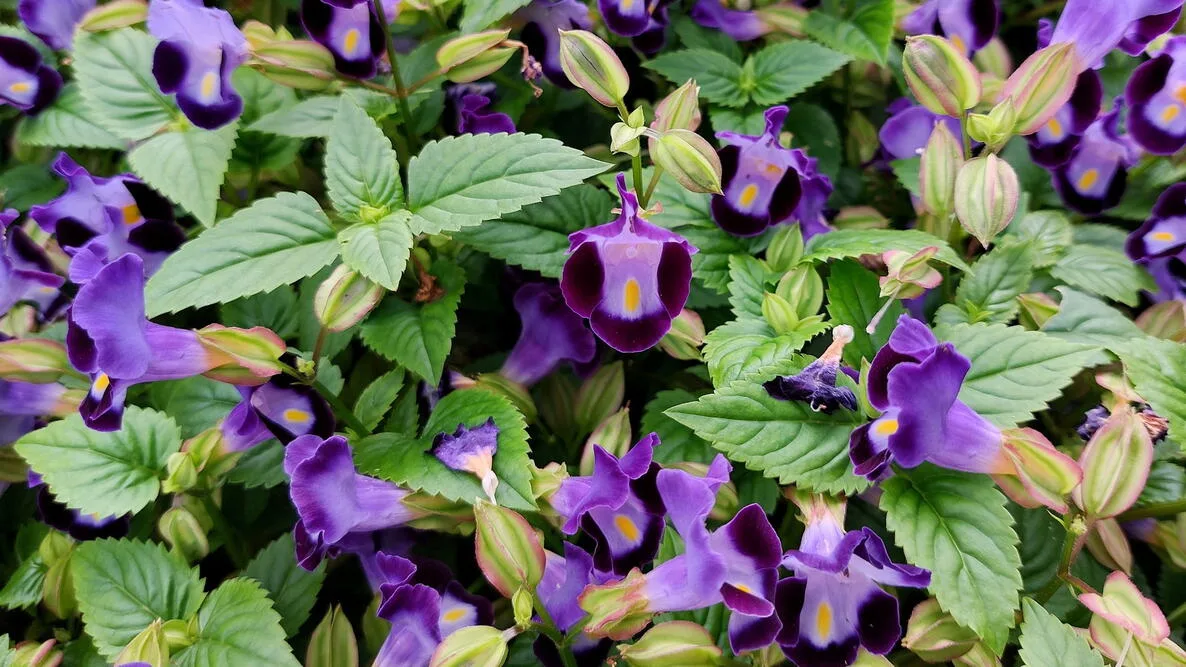
Bring vibrant color and a touch of whimsy to your garden with the wishbone flower! This easy-care annual thrives in shade or partial shade, boasting unique trumpet-shaped blooms and colorful foliage. Learn how to grow wishbone flower from seeds or transplants, and discover its surprising namesake feature.
Wishbone flower grows well in shade or semi-shade (even indoors) if adequate moisture is maintained; legginess is a clue that more light is needed. Note that most cultivars are intolerant of sun and high heat. (The greater the amount of light that a wishbone flower can receive and tolerate, the wider the choices available as companion plants in containers; growth habits should be compatible.)
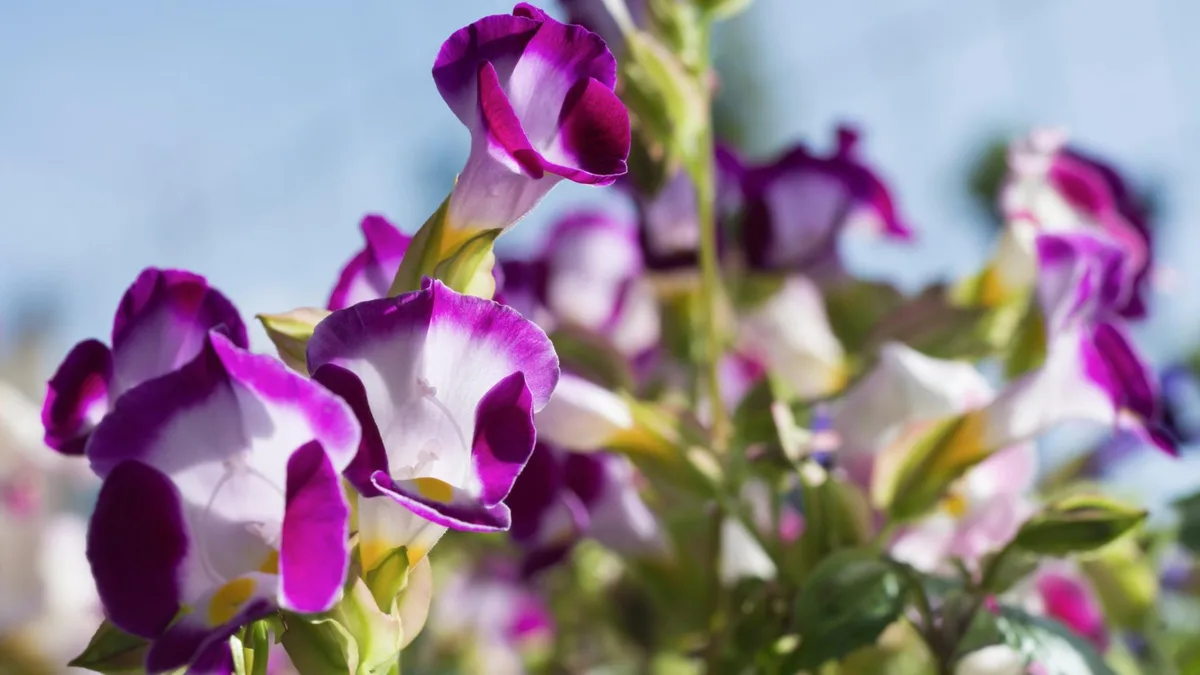
No bones about it: This plant makes wishes come true. Look closely at the trumpet-shaped flowers for the plant’s eponymous feature: A pair of stamens unite at the anthers in a way that resembles a wishbone, a part found in chickens, turkeys, and other birds.
Wishbone flower’s color appears not only in its blooms—its foliage can turn red or bronze in unseasonably cold weather.
Planting
Purchasing wishbone flower or starting its seeds indoors 8 to 12 weeks before the last spring frost in a 70° to 75°F environment are options. For the latter, do not cover: Light aids germination, which can take 7 to 15 days.
Plant 1 to 2 weeks after the last spring frost date. Provide a well-draining medium; use a potting mix amended with organic matter (compost and/or aged manure). See our guide to using manure in the garden.
Growing
Place the wishbone flower where it will be in partial to full shade.
Water for consistent moisture, not saturation. Apply a balanced fertilizer every 2 weeks during the growing season.
Deadheading is not necessary; plants are self-cleaning.
Failure to bloom usually indicates too much shade and a need for sunlight. If trailing, avoid pinching, as this promotes bushy growth.
Pests and Problems
Diseases: powdery mildew, Pythium root and stem rot, viruses.
Pests: aphids, whiteflies.
Types
- ‘Moon’ series (Torenia fournieri): purple and yellow shades
- ‘Panda’ series (T. fournieri): wide range of colorful flower hues; compact, 4 to 8 inches tall
- ‘Summer Wave’ series (T. fournieri): tolerant of heat and drought; blue, rose, silver, and violet shades
Wit and Wisdom
- The tradition of treasuring the furcula (“little fork” in Latin)—the forked bone found at the front of most birds’ breasts—dates from the Etruscans, members of an ancient Italian civilization. They believed poultry to be oracles and this bone the key to a bird’s prescience. After a bird died, they would dry the bone in the sun; later it could be picked up and rubbed by those who passed by in order to have wishes granted—hence, the “wishbone.” You can also predict the weather with a wishbone!
- Also known as bluewings, Torenia fournieri is a perennial grown as an annual.
- “Torenias hail from tropical portions of Asia and Africa and are named after Olof Toren (1718–53), who traveled in China as a chaplain for the Swedish East India Company in the middle of the 18th century,” explains Gerald Klingaman, a retired extension horticulturist at the University of Arkansas Division of Agriculture.