Pest
Aphids
Small sap-sucking insects on new growth and leaf undersides
Overview
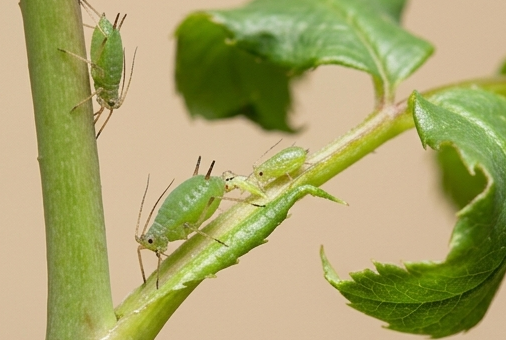
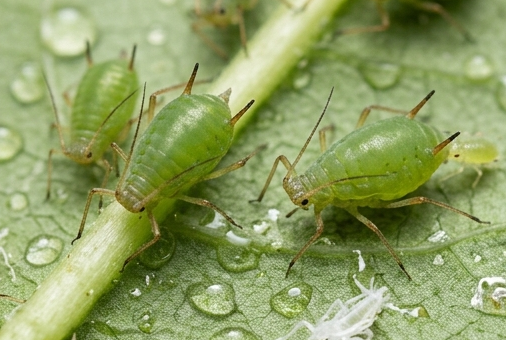
Aphids are among the most common garden pests — tiny (1-3mm) pear-shaped insects in green, black, or brown colors, gathering on tender new shoots, flower buds, and leaf undersides to suck sap. They reproduce extremely quickly: a single female can produce dozens of nymphs through parthenogenesis, and a colony can explode within a week. Beyond direct damage from sap feeding, the honeydew they secrete promotes sooty mold.
Symptoms
Dense clusters of tiny insects on new shoots and flower buds; leaves curl, crinkle, and growth stalls. Sticky transparent honeydew coats leaf surfaces. Severe infestations lead to black sooty mold growing on the honeydew, blocking photosynthesis. Ants actively moving on the plant are an indirect sign — they 'farm' aphids for honeydew.
Treatment
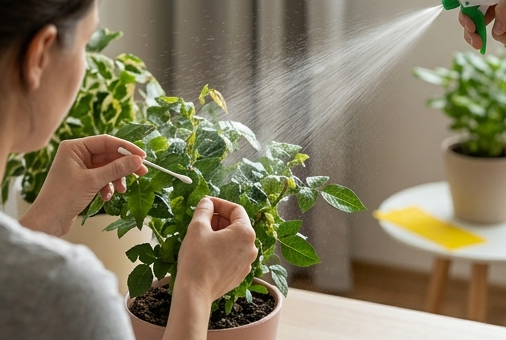
For small numbers: wipe off with damp cotton swabs or toothpicks, or wash off leaf undersides with a strong water spray. For moderate infestations: spray with 1:500 diluted matrine or pyrethrin, focusing on leaf undersides and new shoots, every 3 days for 3 treatments. For severe outbreaks: first prune heavily infested branches, then apply imidacloprid as a soil drench (systemic — the plant absorbs it and aphids die feeding). Isolate the treated plant during treatment.
Prevention
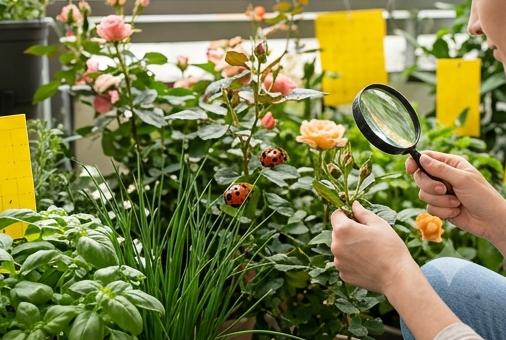
Regularly inspect new shoots and leaf undersides; remove individual aphids immediately upon discovery. Place yellow sticky traps near plants for monitoring. In home gardens, interplant with insect-repelling herbs like mint or basil. Thoroughly clean up dead leaves in winter to reduce overwintering eggs.