Stem
Black Rot
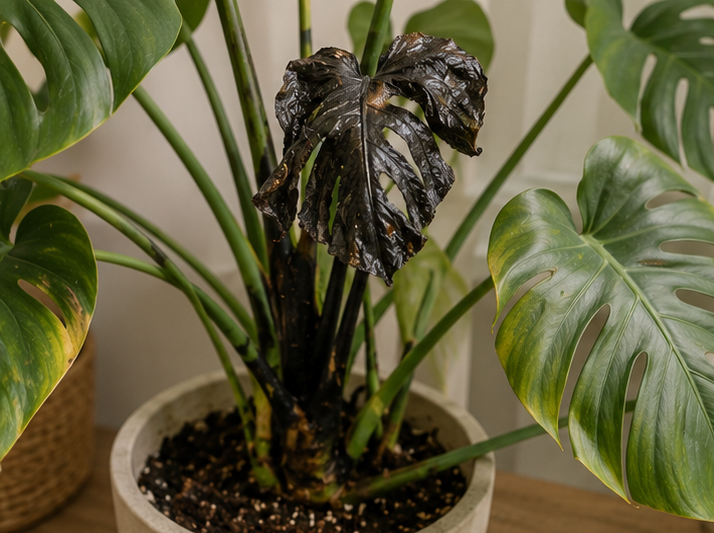
Black water-soaked rot on stems and leaf centers
Overview
Black rot is a fast-spreading rot disease common in succulents and Araceae plants (like monstera and pothos). Causal agents include Erwinia bacteria and Phytophthora fungi, entering through wounds and rapidly spreading through the plant's vascular system. Black rot progresses extremely fast, spreading from a local spot to the whole plant within days. Once it reaches the growing point, the entire plant is usually lost.
Symptoms
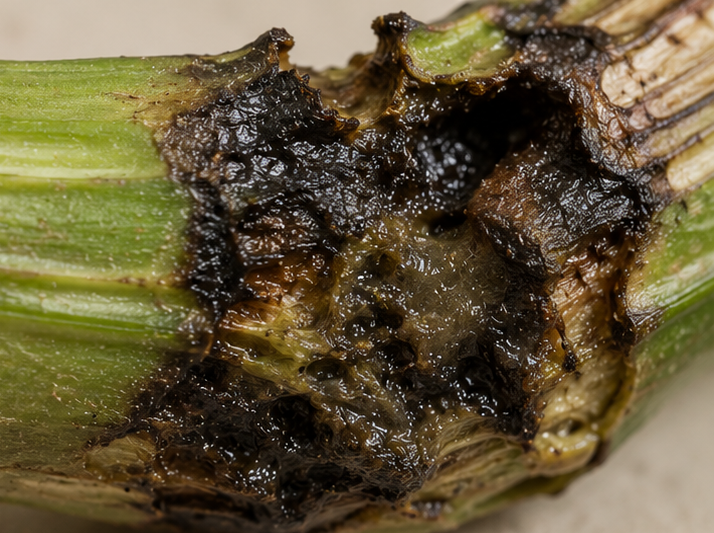
Black or dark brown water-soaked soft rot appears on stems or leaf centers, feeling soft and wet to the touch. The rot expands rapidly, accompanied by lower leaves turning black and soft. Cross-sectioning the stem reveals brown-stained vascular bundles. Infected areas may ooze brown liquid with a sour smell (a classic sign of bacterial soft rot).
Treatment
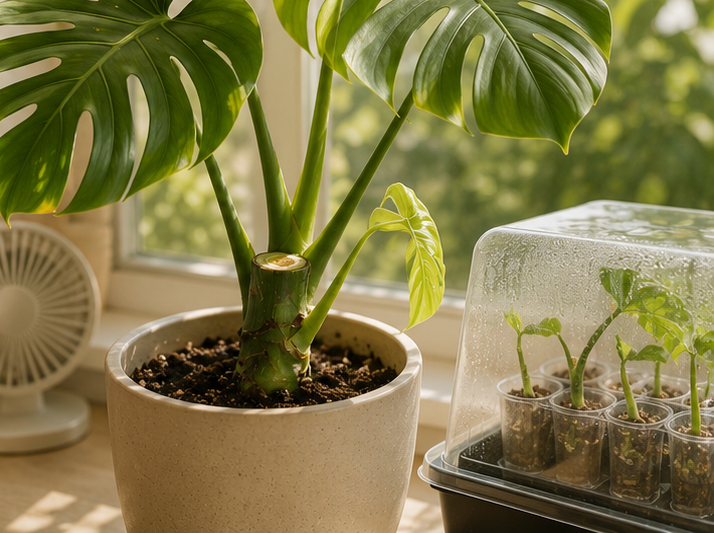
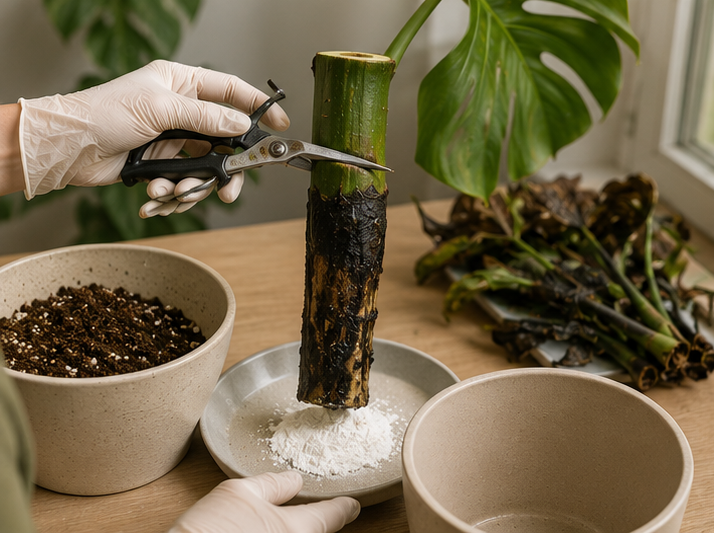
Immediately isolate the infected plant. Cut away all rotted tissue until only healthy tissue remains, sterilizing tools with alcohol between every cut. Dust the cut surface with hymexazol or carbendazim powder. Repot in fresh clean potting mix or use clean medium to root healthy cuttings. Withhold water for 5-7 days, keep the soil dry, and maximize ventilation. Plants with more than 2/3 rot have a very low chance of survival.
Prevention
Avoid allowing water to pool on leaves and stems. Use sharp, sterilized tools for pruning. Avoid splashing water onto stems and leaf centers when watering. Increase ventilation and reduce watering frequency during hot, humid seasons. Quarantine new plants for one week.