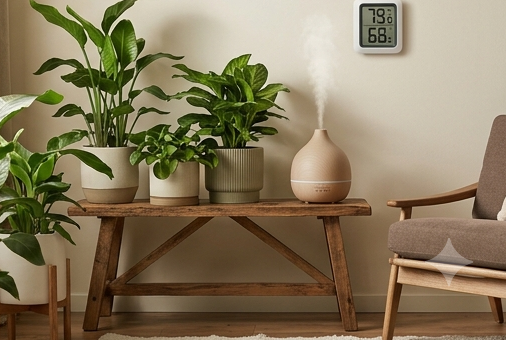
Leaf
Leaf Curling
May be caused by dehydration, pests, or environmental stress
Overview
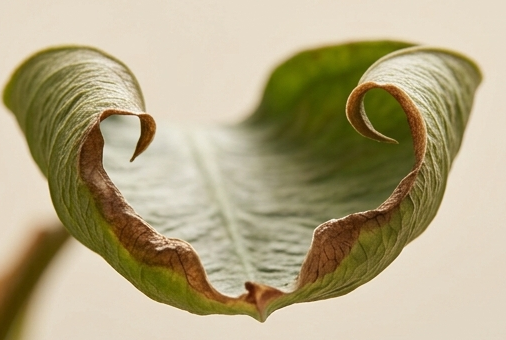
Leaf curling is a common stress response where leaf edges roll upward or downward and leaves appear crinkled. Causes vary: dry air causes water loss and curling; sap-sucking pests like aphids and thrips cause new leaf distortion; high heat or intense direct sunlight can also scorch leaf edges, causing them to curl. Location and accompanying symptoms help identify the cause.
Symptoms
If new leaves are curled, crinkled, and won't flatten — check for tiny insects inside the curls (aphids or thrips = pest issue). If old leaves curl upward from the edges, becoming thin and brittle with brown tips, low humidity is likely the cause. If leaves curl downward with purplish undersides, it may be cold stress or excess phosphorus.
Treatment
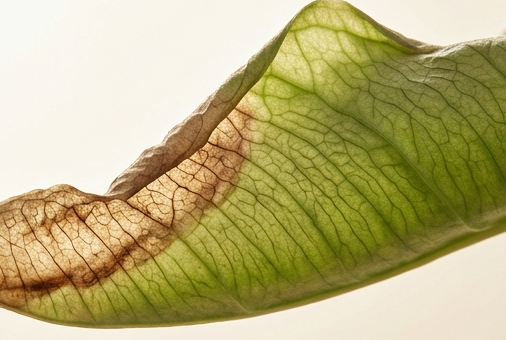
For pest-related curling, treat according to the specific pest. For humidity-related curling, increase ambient moisture with a humidifier, misting, or pebble tray. For environmental stress, relocate the plant away from AC vents, heaters, or drafty areas.
Prevention
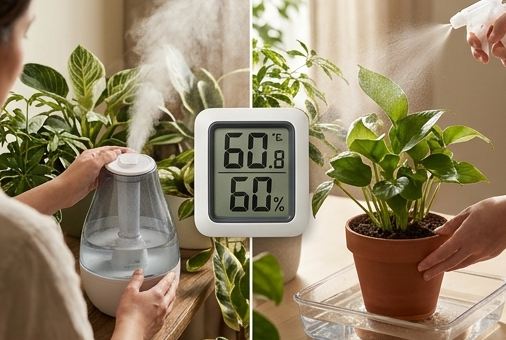
Maintain 50-70% ambient humidity; use a humidifier during dry seasons. Regularly check new leaf undersides for early pest detection. Avoid placing plants near AC vents, heaters, or drafty windows. Quarantine new plants for one week.