Leaf
Deformed Leaves
Abnormal new leaf development, irregular shapes
Overview
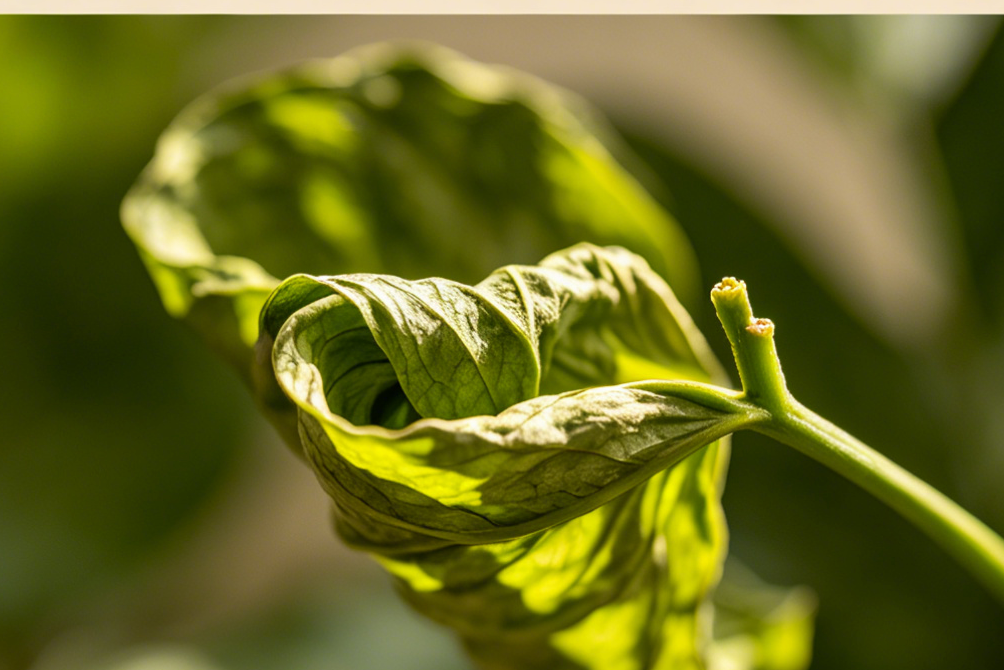
Deformed leaves refer to newly emerged leaves that are misshapen, incompletely developed, or fused together. Possible causes include: calcium deficiency causing new leaves to stick together and fail to unfold; boron deficiency causing growing point necrosis and leaf distortion; pest damage (especially thrips and aphids) feeding on tender new growth; or chemical burn from pesticides or over-fertilization harming developing tissue.
Symptoms
New leaves are twisted, asymmetrical, or have one side underdeveloped. Some new leaf tips stick together and cannot separate normally, forming spoon-like or wrinkled shapes. Older leaves appear normal — an important distinction from systemic diseases. Thrips damage also presents with silvery streaks and black fecal spots.

Treatment
Supplement with calcium (foliar calcium chelate) and boron (borax soil drench or boric acid foliar spray) every 7-10 days. Check new growth for thrips or aphids and treat accordingly. If chemical burn is suspected, stop all sprays and rinse leaves with clean water. Already deformed leaves will not recover; remove them once normal new growth emerges.
Prevention
Regularly supplement micronutrients during the growing season, especially calcium and boron. Maintain stable growing conditions, avoiding extreme temperature or humidity. Use pesticides and fertilizers strictly at recommended concentrations. Regularly inspect new shoots and leaves for early pest detection.