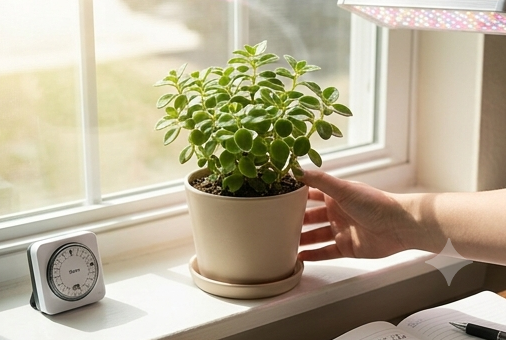
Whole Plant
Etiolation
Thin, elongated stems with large gaps between nodes due to low light
Overview
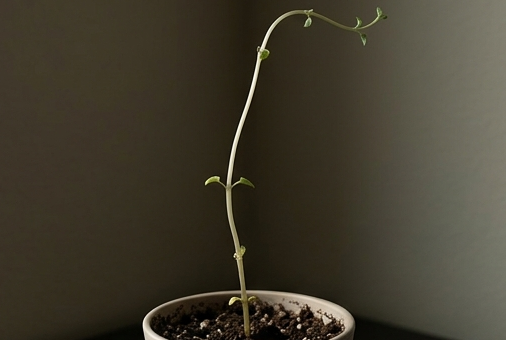
Etiolation is a plant's classic stress response to insufficient light. Stems stretch upward frantically searching for a light source, resulting in elongated internodes, weak thin stems, and sparse small leaves. While etiolation itself is not a disease, it ruins the plant's compact form, reduces stress tolerance, and makes it more prone to lodging and infection.
Symptoms
Stems are noticeably thinner and longer than normal, with greatly increased spacing between nodes and leaves. Leaves are smaller, paler, and the plant has a tall, sparse, leggy appearance. New leaves unfold slowly with long petioles. In severe cases, the stem cannot support its own weight and flops over.
Treatment
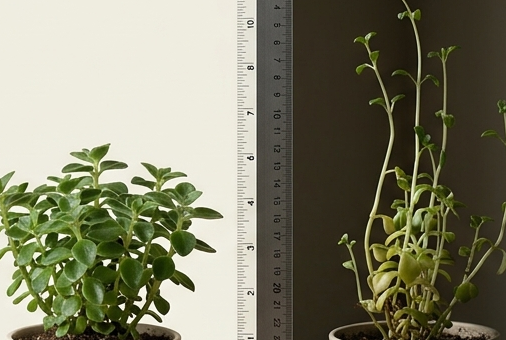
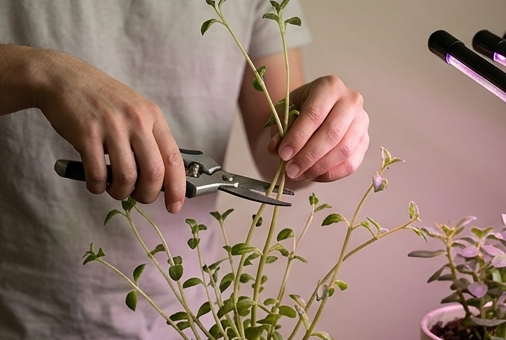
Gradually move the plant to a brighter location, avoiding sudden direct sun exposure. Prune leggy stems to encourage lateral branching and restore compact form. Use a grow light for 8-12 hours daily to effectively control etiolation. Pruned stems can be propagated from cuttings.
Prevention
Ensure at least 4-6 hours of bright indirect light daily; supplement with grow lights when natural light is insufficient. During seedling stages, moderate watering and increased temperature fluctuation help suppress etiolation. Choose compact varieties. Rotate pots regularly for even light exposure.