Leaf
Leaf Spot
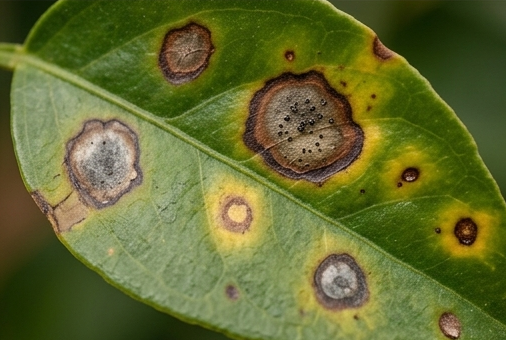
Brown necrotic spots on leaves, caused by various fungi
Overview
Leaf spot is a collective term for various fungal leaf diseases including anthracnose, brown spot, and target spot. Pathogenic fungi enter through stomata or wounds, multiply within leaf tissue causing cell death and characteristic necrotic spots. Different pathogens produce spots of varying shapes, colors, and sizes, but hot humid conditions with prolonged leaf wetness are universal triggers.
Symptoms
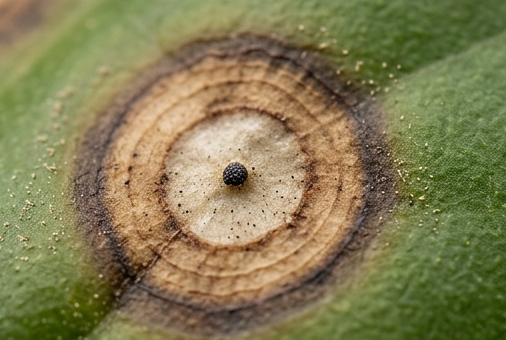
Circular, oval, or irregular brown, dark brown, or tan spots appear on leaves, ranging from pinprick to pea-sized. Spot margins may be darker or have yellow halos. Centers sometimes turn tan with tiny black specks (fungal fruiting bodies). Multiple spots may merge into large irregular necrotic patches; severely affected leaves yellow and drop prematurely.
Treatment
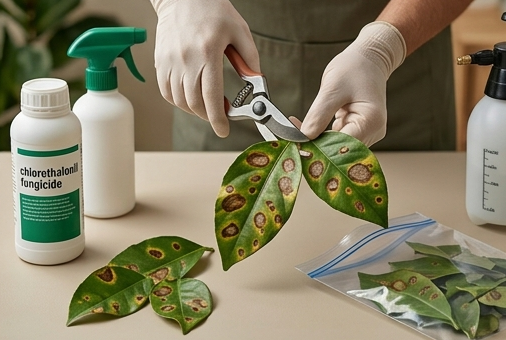
Remove affected leaves to reduce inoculum, disinfecting shears with alcohol between cuts. Apply broad-spectrum protective fungicides (mancozeb or chlorothalonil) to healthy foliage. For active infections, switch to curative fungicides (prochloraz or azoxystrobin) every 7-10 days for 2-3 treatments. Keep leaves dry and improve ventilation during treatment.
Prevention
Water at soil level to avoid wetting leaves. Regularly remove old lower leaves and diseased foliage for better air circulation. Apply preventive fungicide sprays before hot humid seasons. Increase potassium fertilization to enhance disease resistance.