Leaf
Powdery Mildew
White powdery coating on leaves, a fungal disease
Overview
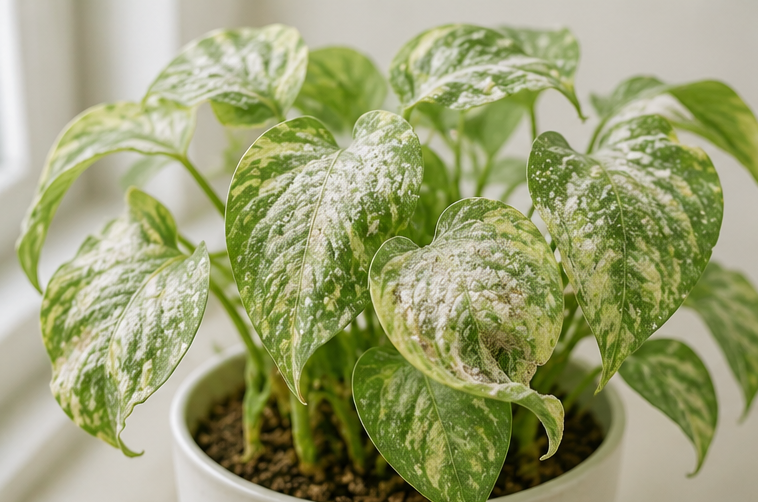
Powdery mildew is a common foliar disease caused by fungi in the Erysiphaceae family, characterized by a white powdery coating on leaf surfaces. It thrives in warm (20-25°C) conditions with moderate humidity but dry leaf surfaces — large day-night temperature swings and poor ventilation create ideal conditions. The fungus draws nutrients from leaf epidermal cells, causing gradual yellowing, curling, and leaf drop.
Symptoms
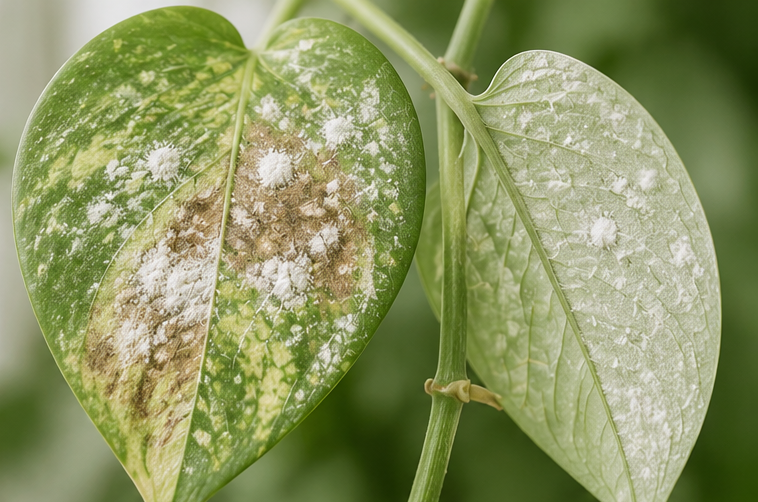
Initial white circular spots appear on leaves like dusted flour, gradually expanding to cover the entire surface. The white coating can be wiped off, revealing yellow-brown necrotic tissue underneath. In severe cases, the mildew spreads to leaf undersides, stems, and flower buds. Affected leaves curl, deform, and stop growing before dropping prematurely.
Treatment
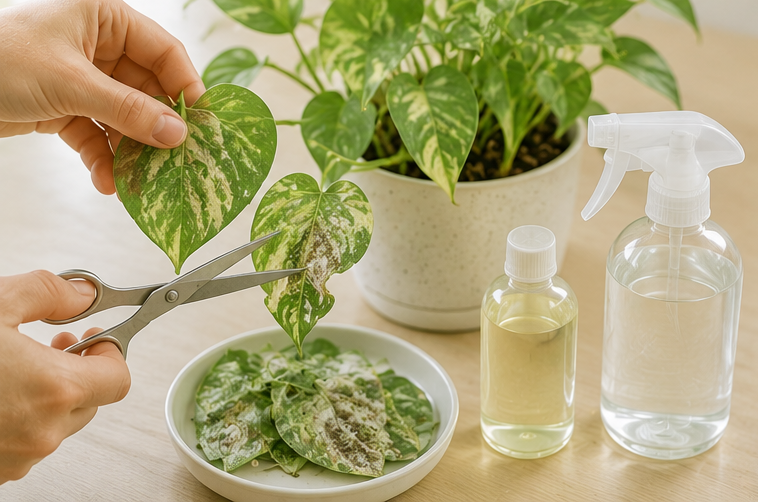
For mild infections, spray with 1:500 baking soda solution (2g baking soda + 1000ml water + a few drops of dish soap) every 3 days. For moderate to severe cases, remove badly affected leaves and apply a dedicated fungicide (triadimefon or tebuconazole) every 7 days for 3 treatments. Increase ventilation and reduce nighttime humidity during treatment.
Prevention
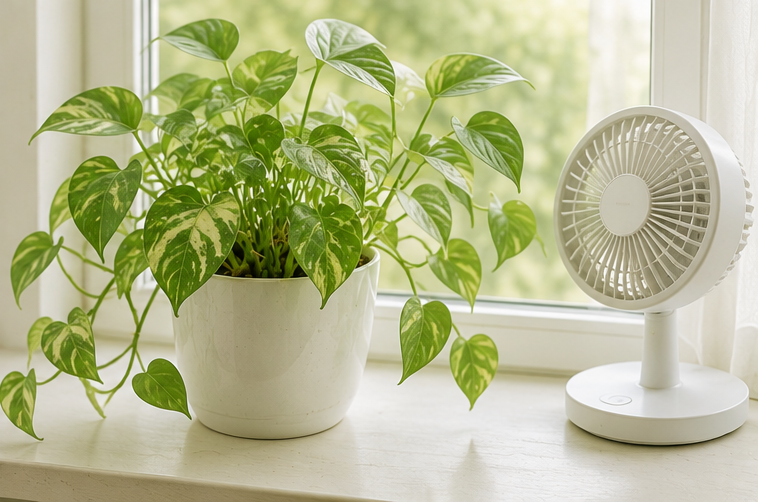
Maintain adequate spacing between plants for air circulation. Avoid prolonged leaf wetness — water at soil level. Mix beneficial microbes into the soil during spring repotting. Apply preventive sulfur sprays to susceptible varieties.