Leaf
Sooty Mold
Black soot-like coating on leaf surfaces
Overview
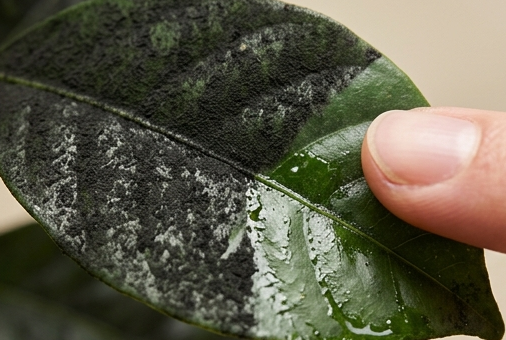
Sooty mold is not a direct plant disease but a saprophytic fungus that grows on the honeydew secreted by sap-sucking insects like aphids, scale, and whiteflies. The black mold coating covers leaf surfaces, blocking photosynthesis and gradually weakening the plant. As long as honeydew sources exist, sooty mold will persist — so controlling sooty mold means controlling the insects first.
Symptoms
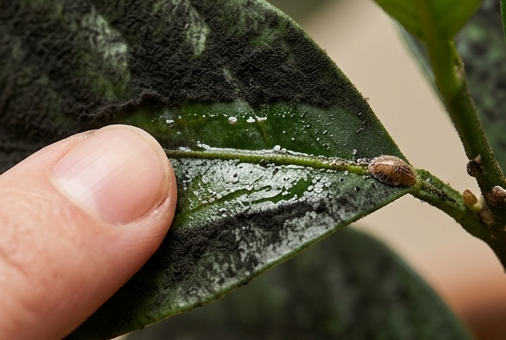
Leaves and stems are covered with a black or gray-black powdery coating, as if dusted with charcoal. The coating can be wiped off with a damp cloth but quickly reappears. Leaves feel sticky to the touch (honeydew). Ants are often seen on the plant feeding on honeydew. Aphids, scale insects, or whiteflies are concurrently present.
Treatment
First, wipe off the mold with a damp cloth to restore leaf photosynthesis. The key is eliminating the honeydew source — use systemic insecticides appropriate for the specific pest. After wiping, apply a fungicide (azoxystrobin) to suppress mold regrowth. Control ants with bait traps.

Prevention
Regularly inspect leaf undersides and new shoots for sap-sucking pests; treat early. Ant activity is a warning sign of honeydew — investigate for pests. Maintain good ventilation and moderate humidity. For outdoor plants, avoid placing under trees from which aphid honeydew may drip.