Pest
Spider Mites
Tiny red mites with fine webbing on leaf undersides
Overview
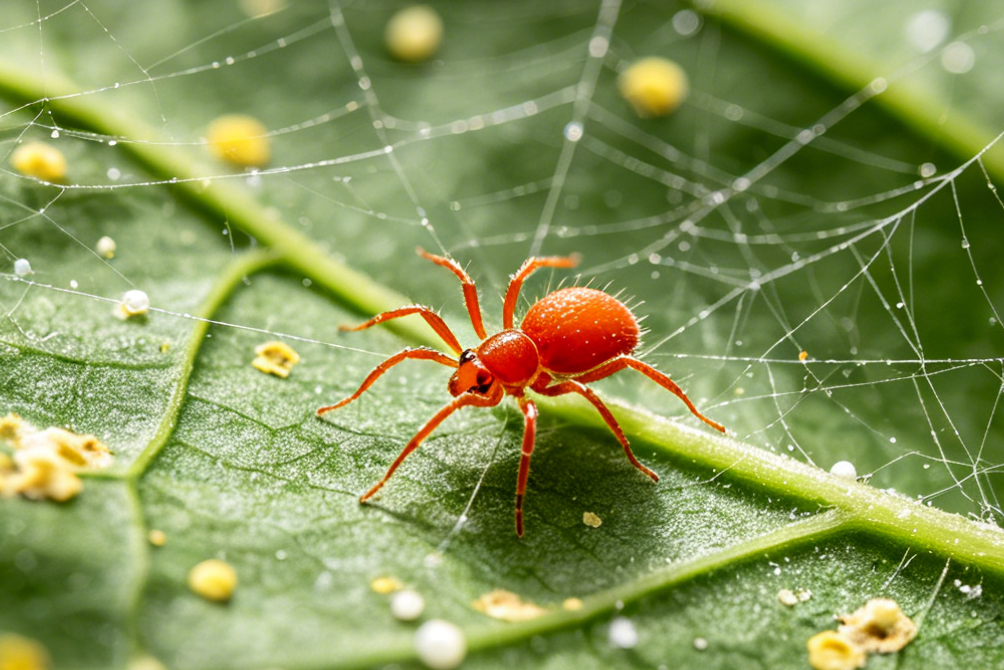
Spider mites (Tetranychus urticae) are not true spiders but belong to the arachnid class, measuring only 0.3-0.5mm — just barely visible as tiny red or orange dots. They thrive in hot, dry conditions (above 30°C, humidity below 50%), completing a generation in just one week. They pierce leaf epidermal cells with their mouthparts and suck out cell contents, causing dense stippling damage, and in severe cases, leaves yellow and fall prematurely.
Symptoms
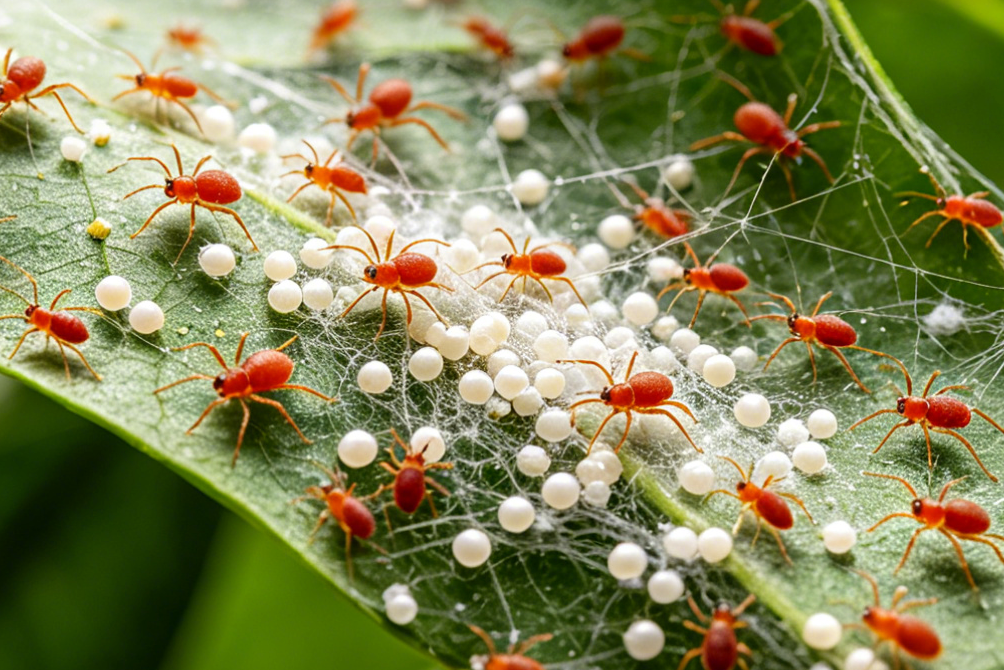
Leaf surfaces develop dense gray-white or yellow-white speckling, as if sprinkled with fine sand. Leaves lose their luster and appear dusty gray. Leaf undersides show tiny red or orange mites crawling along with fine transparent webbing about 3-5mm across. In severe cases, leaves curl, dry up, and drop, with webbing visible between stems.
Treatment
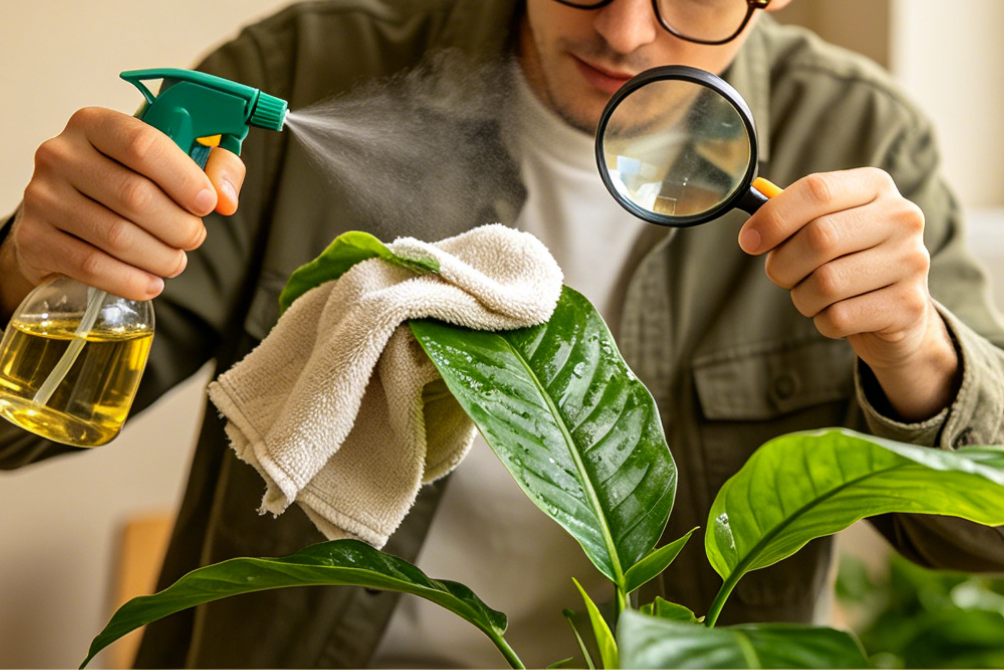
Immediately isolate the infested plant. Thoroughly rinse leaf undersides with a strong water spray (avoid excessive pressure that damages leaves), repeating every 2-3 days for 3 treatments. Apply a specialized miticide (bifenazate or abamectin) every 5-7 days for 3 treatments, ensuring complete coverage of leaf undersides.
Prevention
Maintain ambient humidity above 50% (spider mites dislike humid conditions). Mist plants regularly during dry seasons. Frequently inspect older leaf undersides. Quarantine new plants for one week. Place a humidifier in dry indoor spaces.