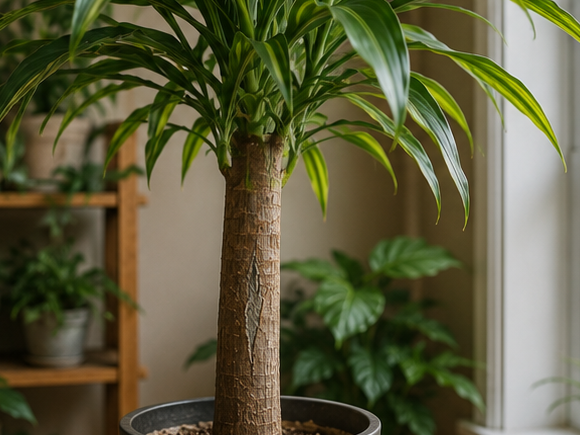
Stem
Stem Cracking
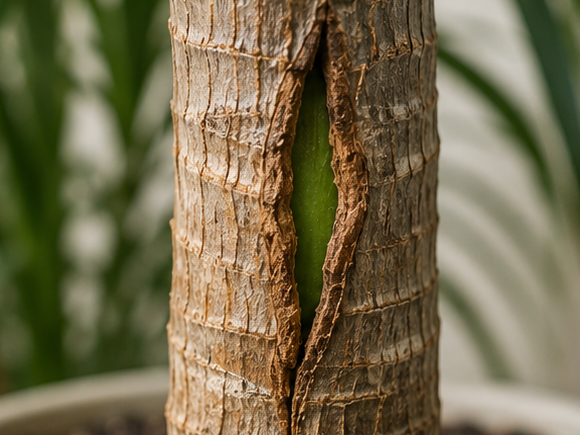
Vertical bark splitting exposing internal tissue
Overview
Stem cracking occurs when the bark of a plant's main trunk or branch splits vertically. Common causes include: sudden moisture fluctuation (a heavy watering after prolonged drought causes internal expansion pressure that splits the bark), rapid temperature changes causing expansion and contraction, growth that outpaces the bark's ability to expand, or freeze damage causing bark tissue necrosis and splitting.
Symptoms
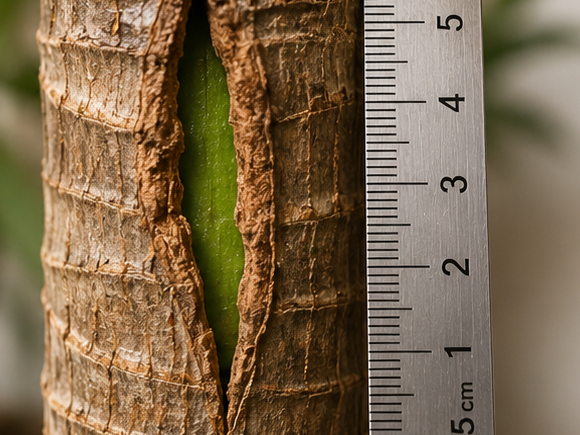
Vertical cracks appear in the stem bark, ranging from a few centimeters to over ten centimeters long. The crack exposes green or light yellow tissue underneath (phloem and cambium). Crack edges may slowly form raised, corky callus tissue (light brown). If the area around the crack becomes dark and rotten, infection has set in.
Treatment
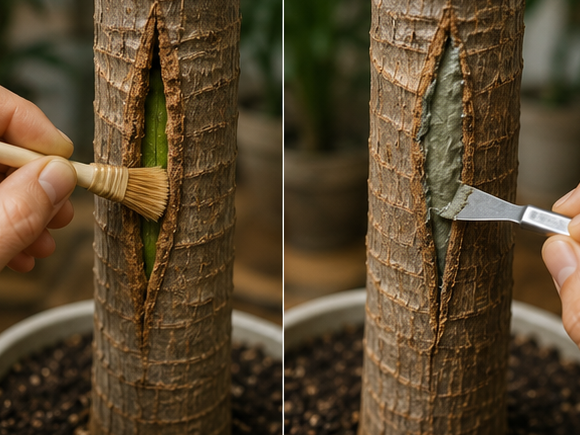
Clean the crack and apply a specialized wound sealant or grafting wax to prevent pathogen entry and moisture loss. Small cracks can heal naturally without treatment. Keep soil moisture stable to avoid further stress. If rot is present around the crack, cut away the infected tissue before applying sealant.
Prevention
Keep watering regular and consistent, especially during active growth. Protect from frost in winter to avoid large temperature swings. Fertilize in balance — avoid excessive nitrogen that causes rapid growth outpacing bark development. Handle roots carefully during repotting to avoid affecting water uptake.