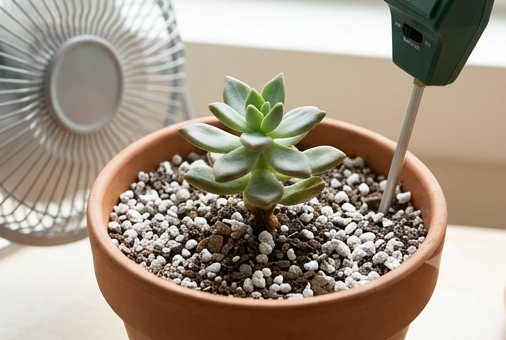
Stem
Stem Base Rot
Brown, mushy stem base, usually from overwatering
Overview
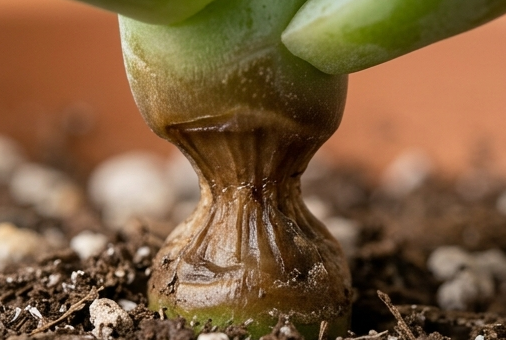
Stem base rot affects the portion of the stem near the soil line, caused by soil-borne pathogens including Pythium, Phytophthora, and Rhizoctonia. Permanently wet soil, poor drainage, and planting too deep are the most common triggers. Stem rot progresses rapidly — by the time it's noticed, irreversible damage has often already occurred, making it one of the most dangerous diseases for indoor plants.
Symptoms
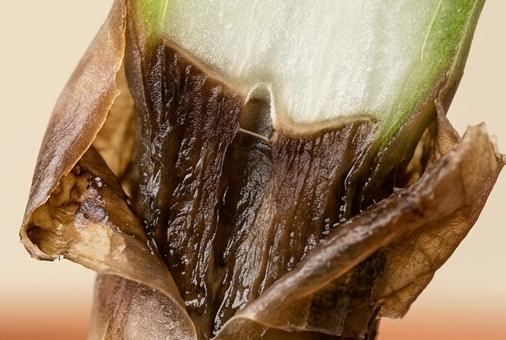
The stem base (2-3cm above and below soil level) turns brown, soft, and sunken — it feels noticeably soft when gently squeezed. Upper leaves gradually droop, yellow, and drop. The stem base becomes constricted in a classic 'hourglass' shape. Splitting the stem reveals browning inside. In severe cases, the entire plant collapses, connected only by the outer bark.
Treatment
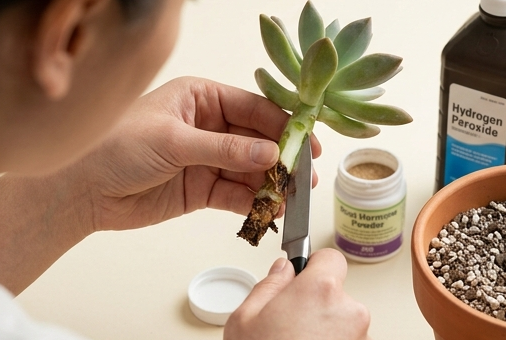
Stop watering immediately and remove the plant from its pot. Cut away all brown rotted tissue with a sterilized knife until only healthy green tissue remains. Dust the cut with carbendazim powder or wood ash. Repot in a fresh, dry pot with well-draining mix, planting slightly shallower than before. Keep soil on the dry side and place in a ventilated spot with indirect light.
Prevention
Do not plant too deep — the stem base should sit above the soil line. Use well-draining potting mix with a drainage layer of clay pebbles or coarse sand at the bottom. Check soil moisture with your finger before watering. Strictly control watering in winter. Periodically check stem base color and firmness.