Leaf
Tip Burn
Salt buildup, water quality issues, or over-fertilization
Overview
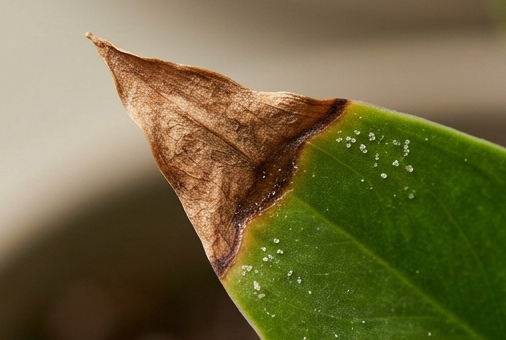
Tip burn appears as browning and crisping of leaf tips, with a clear boundary between burned and healthy tissue. The most common cause is salt accumulation in the soil (from long-term tap water use or over-fertilization), which disrupts osmotic balance and prevents water from reaching leaf tips. Additionally, fluoride-sensitive plants like spider plants and dracaenas react to fluoride in tap water with tip burn.
Symptoms
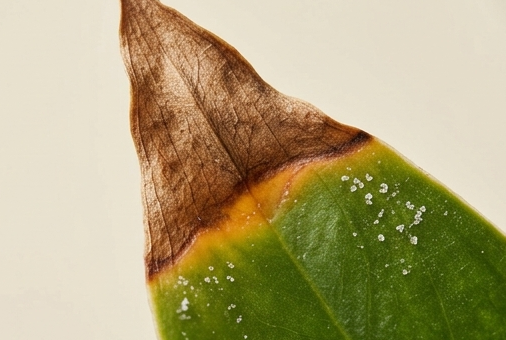
Leaf tips turn brown or tan and feel dry and brittle. Browning progresses from the tip along the leaf margins toward the base, with a distinct yellow or brown transition zone. White salt crystals may be visible on the pot rim or soil surface. Long-term tap water use with white deposits on the pot is a telltale sign.
Treatment
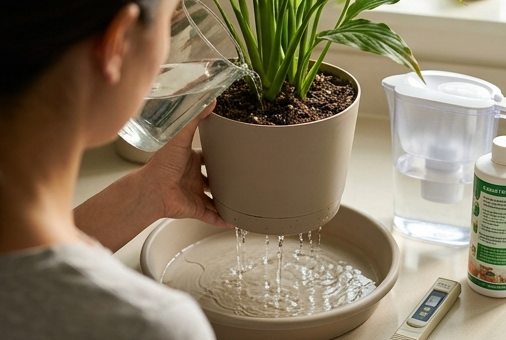
Slowly flush the pot with large amounts of clean water 2-3 times to leach excess salts from the drainage holes. Trim the burned tips just above the dead tissue. Switch to purified water, rainwater, or tap water left out overnight. Stop fertilizing for 1-2 months to allow soil recovery.
Prevention
Use distilled or rainwater for sensitive plants. Dilute fertilizer strictly according to instructions; avoid over-concentration. Stop fertilizing in winter. Flush the soil with clean water quarterly to remove accumulated salts. Ensure pots have clear drainage holes.