Leaf
Yellow Leaves
Commonly caused by overwatering, insufficient light, or nutrient issues
Overview
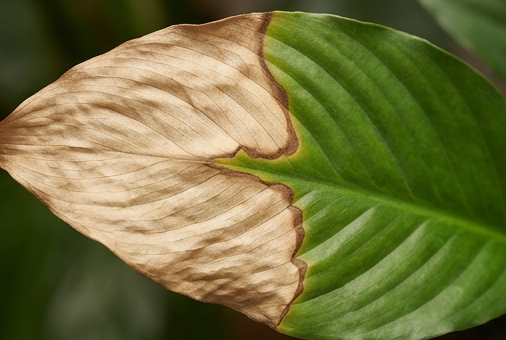
Yellowing leaves are the most common symptom in houseplant care and are rarely caused by a single factor. Diagnosis requires considering the location of yellowing (old vs. new leaves), the pattern (interveinal chlorosis vs. uniform yellowing), and soil moisture to identify the true cause and apply the right treatment.
Symptoms
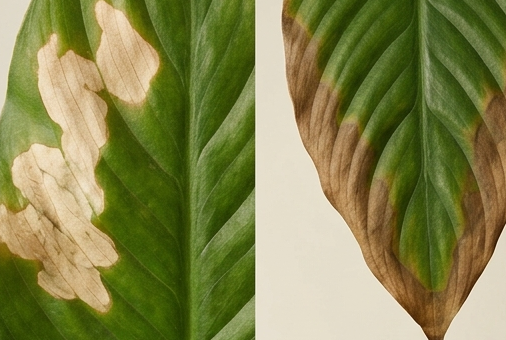
If older leaves turn uniformly yellow from the tip and drop off, overwatering causing root oxygen deficiency is likely. If new leaves are yellow but veins remain green (interveinal chlorosis), iron deficiency is probable. If the entire plant is pale yellow and leggy, insufficient light is the cause.
Treatment
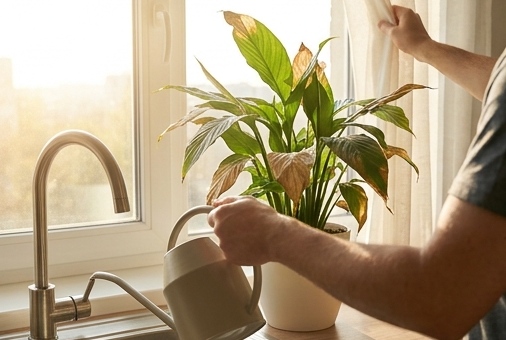
First, insert a chopstick or moisture meter 2/3 into the soil to check moisture. If wet, stop watering, loosen the soil, and improve ventilation. If dry, water thoroughly and move to bright indirect light. For iron chlorosis, apply chelated iron fertilizer diluted at the recommended rate every 7-10 days for 3 treatments. For light deficiency, gradually move to a brighter spot to avoid sunburn.
Prevention
Water only when the top 2cm of soil is dry. Apply balanced liquid fertilizer monthly during spring and fall; stop in winter. Rotate the pot quarterly to ensure even light exposure on all sides.