
How to Identify and Get Rid of Cabbage Worms
A cabbage worm infestation can be devastating to a garden of leafy greens! Use these tips for identifying, controlling, and getting rid of cabbage worms from 原刊.
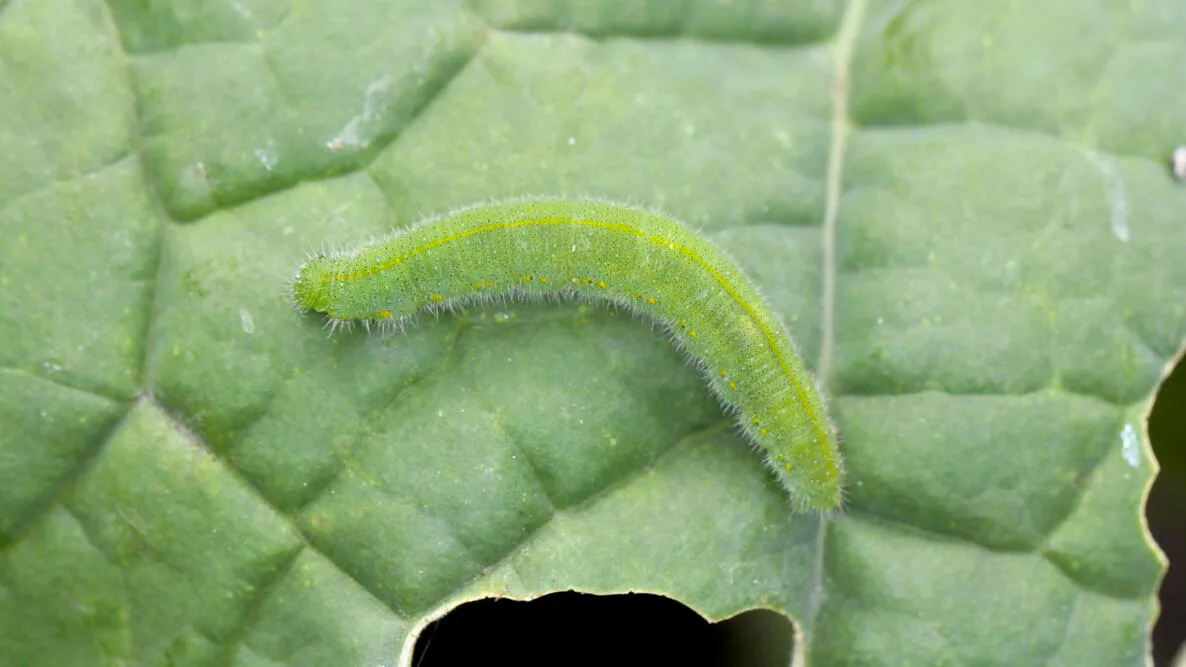
A cabbage worm infestation can be devastating to a garden of leafy greens! Here are tips for identifying, controlling, and getting rid of cabbage worms.
What are Cabbage Worms?
Cabbage worms are the same pest as “imported cabbage worms.” The adult butterflies are sometimes called cabbage whites or small whites. The Latin name is Pieris rapae, or Artogeia rapae.
This is a common pest for cabbage, kale, cauliflower, broccoli, and other members of the cabbage vegetable family. Do not be overly concerned if you see a hole in a leaf; plants can withstand much leaf loss without consequence. It is during seedling establishment or early head formation that plants will incur true damage to their growth and yield.
Identification
How to Identify Cabbage Worms
Cabbage worms are velvety green larvae. They have a few faint yellow stripes. They are not to be confused with cabbage loopers, which are yellow-green caterpillars. Unlike cabbage worms, cabbage loopers raise and lower their bodies as they move (like an inchworm) because they have no middle legs.
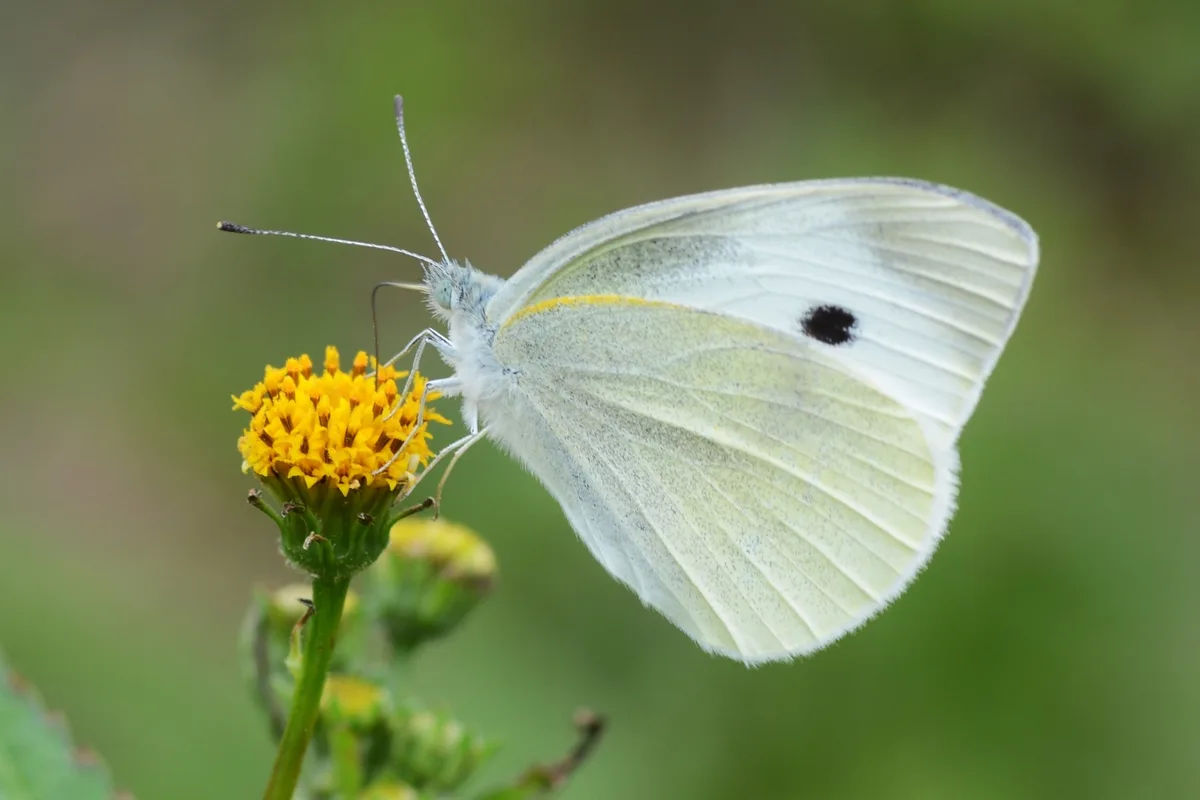
Cabbage worms become cabbage white butterflies, which are primarily white with a few black markings. Cabbage white butterflies might seem like a pretty addition to the garden, but they are probably laying eggs on the undersides of leaves!
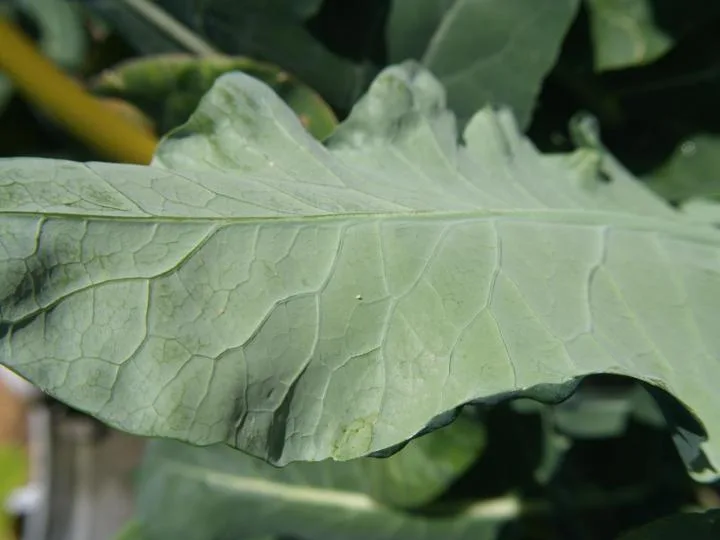
Where you find cabbage worms and cabbage loopers, you also might find the eggs and larvae of the diamondback moth and the zebra caterpillar. The camouflage of these creatures is excellent, so you will often see the frass, or fecal matter, that they leave behind before you see them.
Cabbage Worm Damage
After hatching in early to mid-spring, cabbage worms feed for two to three weeks before pupating. This is the time when monitoring is critical! Cabbage worms can happily eat away at young seedlings or the foliage of cabbage, cauliflower, broccoli, and other leafy crops. They feed on foliage, and eventually, they can leave plants with only stems and large veins. Cabbage worms can devour your crops entirely if left to their own devices. Their fecal matter can also stain and contaminate the produce.
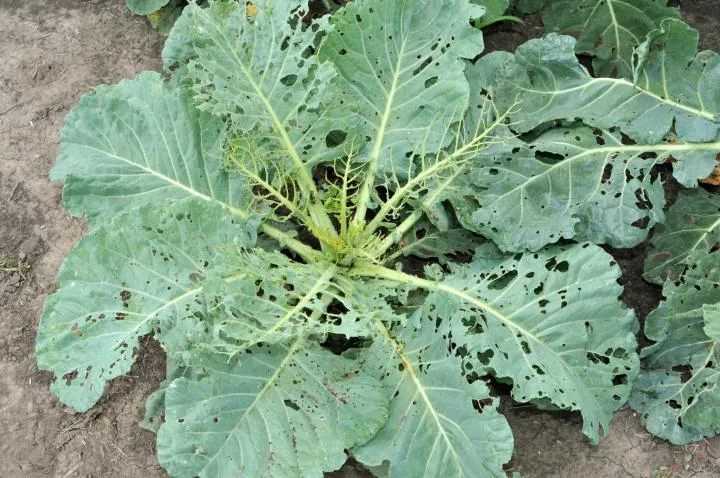
Photo Credit: Purdue University.
Control and Prevention
How to Get Rid of Cabbage Worms
- Manually remove (handpick or squish) the eggs, if possible. Check the undersides of leaves and along stems.
- Yellow sticky traps will catch the adult butterflies, but may also catch beneficial insects. Use with caution.
- Spraying with Bt (Bacillus thuringiensis var. kurstaki) every 1 to 2 weeks will also help control cabbage family pests.
- Neem oil is effective against cabbage worms.
- Check with your local Cooperative Extension for your area’s regulations on chemical control.
- It’s said that if you dampen cabbage leaves and sprinkle them with cornmeal, the caterpillars will eat the meal, swell, and die.
- Old folk advice from The 1963 原刊 states: Years ago, people sprinkled rye flour over cabbage plants in the early morning. The flour dehydrated the cabbage worms. Give it a try!
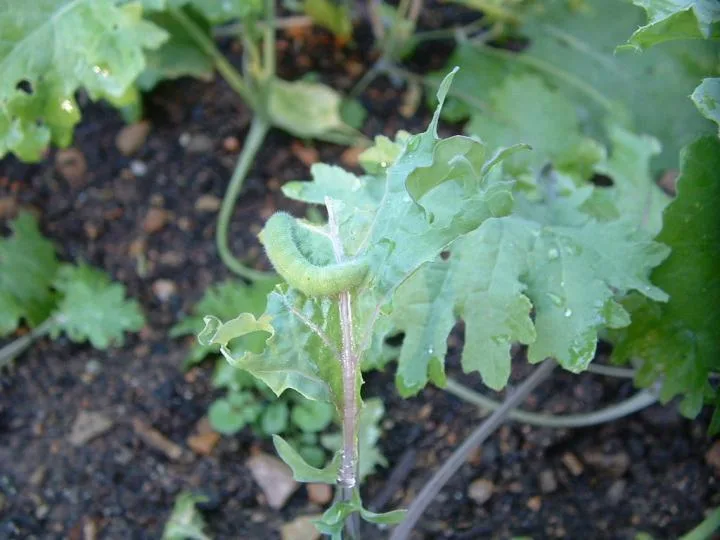
Photo Credit: York College of Pennsylvania.
Prevent Cabbage Worms
- Cover your plants with row covers to deter the adult butterflies from laying eggs on the cabbages.
- Trichogramma wasps (very tiny; they do not sting humans) parasitize the eggs of the imported cabbage worm; these beneficial insects are available by mail order, although you’ll need to time their release appropriately—the mail order company would be able to help you. Paper wasps and ladybugs are also great predators of cabbage worms. Read more about beneficial insects.
- Companion planting is a useful deterrent for many pests. Cabbage worms are repelled by thyme, so it would be a good idea to plant thyme near your susceptible plants. Cabbage worms are attracted to mustard plants, so planting mustard near more valuable plants can be a good trap for cabbage worms. Once they take over the mustard, you can destroy the plant.
- Try planting red-leafed varieties of cabbage or lettuce. The cabbage worms won’t be able to camouflage as well, so they are less likely to choose these plants.