Calathea Care Guide: How to Keep Your Tropical Houseplant Thriving
Learn how to care for Calathea, the tropical houseplant with vibrant patterned leaves. Tips for watering, humidity, and keeping it healthy indoors.
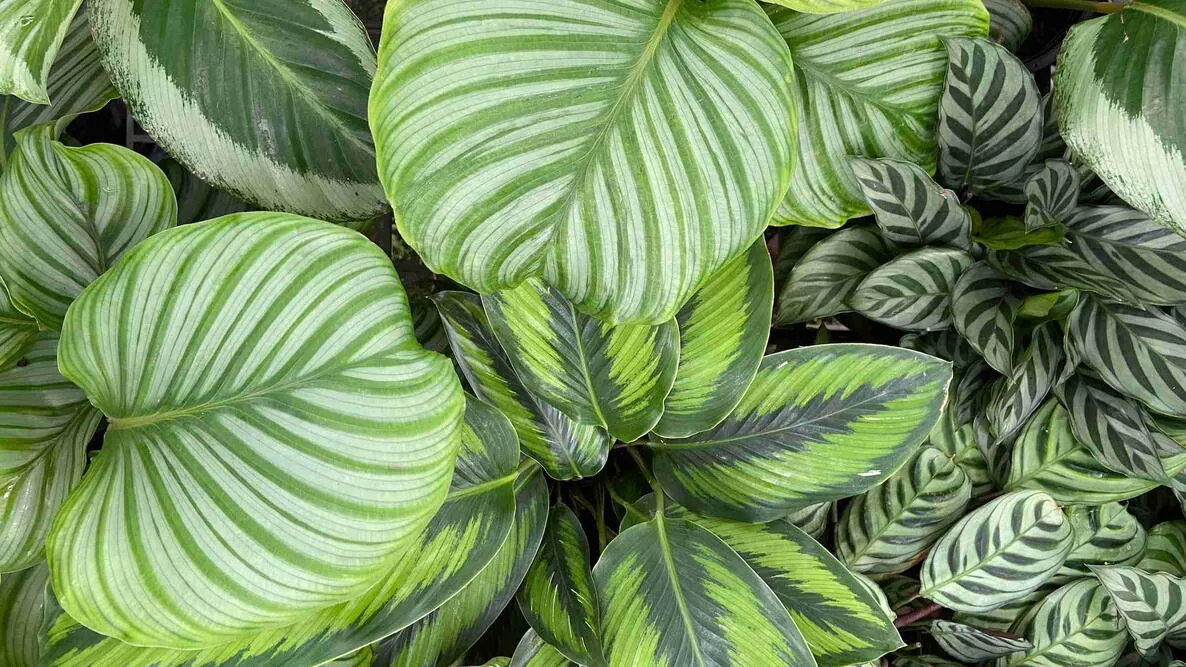
Looking for a houseplant that practically paints your room with its leaves? Meet Calathea—the tropical stunner whose intricate patterns of greens, purples, and creams make every glance a delight. Perfect for low-light corners, this plant may be a bit high-maintenance, but the reward is a living work of art that’s safe for pets and impossible to ignore.
Let’s uncover how to keep your Calathea thriving and vibrant year-round.
Plants of the genus Calathea are native to the rainforests of South America. They only grow in USDA Hardiness Zones 11 and 12, so they are treated as houseplants and not planted in the ground. While they flower in the native rainforest, it’s very rare for calathea to flower indoors. However, their painted foliage is very attractive on its own!
Calathea resembles closely related species in the genus Maranta (known as the prayer plant). To add confusion, many popular houseplant varieties once classified as Calathea are now considered part of Goeppertia. Ultimately, all these houseplants plants have similar care requirements, regardless of their official names, so don’t place too much importance on labels!
Grown for its lush, tropical-looking foliage, the beautiful calathea is a favorite of houseplant collectors. They will grow in low-light rooms, which is a bonus. Plus, they are non-toxic to pets. However, their demanding humidity and watering preferences may make them a challenge to a beginner houseplant keeper. Paying attention to its houseplant care needs is essential, hence this plant guide!
Growing
Calthea is a long-lived plant, assuming you provide the correct light, water, humidity, and temperature.
Difficulty level: Moderate, due to watering and humidity requirements.
Pests and Problems
Pests and Diseases: Calathea plants are susceptible to many common houseplant pests. Scrutinize the plant and wipe the leaves gently with a damp cloth or mist insecticidal soap and water. Learn more about calathea pest control.
- scale,
- thrips,
- fungus gnats
- mealybugs
How to Save a Dying Calathea
As discussed above, this is not an “easy” houseplant as it has particular watering and humidity preferences. If your calathea is suffering, here’s how to diagnose and save your houseplant:
- Yellowing leaves: This is often a watering issue. Insert your finger about an inch into the growing medium—the top 1 to 2 inches should feel dry before you water again. Make sure your pot has drainage holes. If root rot has already set in, trim away the damaged roots and repot in more porous, less compacted potting mix that drains quickly.
- Leaf curling or drooping, brown and crispy leaf tips: Usually, there is a lack of humidity. This rainforest plant loves humidity and absorbs moisture through specialized cells in its leaves. Solutions: Get a humidifier, mist the leaves regularly, place them on a tray filled with water and pebbles, and group them with other plants. Do not over-mist; we don’t want mold!
- Unsightly brown splotches spots: Too much bright direct light. Move the plant to a spot with indirect light or use shades or sheer curtains. It’s okay to trim brown tips or edges but also address the problem or it will continue.
- Wilting or drooping leaves: The plant needs a brighter location. Remember, this houseplant should be placed in bright indirect sunlight. Consider an LED light if your living space doesn’t have enough light.
- Browning or yellow leaf tips or margins indicate over-fertilization. Flush the growing medium with water. Halt fertilizing and then follow the recommended dosage on the fertilizing bag.
Types
Options abound in the world of calathea! There are many varieties available at nurseries, greenhouses, and garden centers today, so no matter your color or pattern preferences, you will likely be able to find a calathea that catches your eye and matches your style.
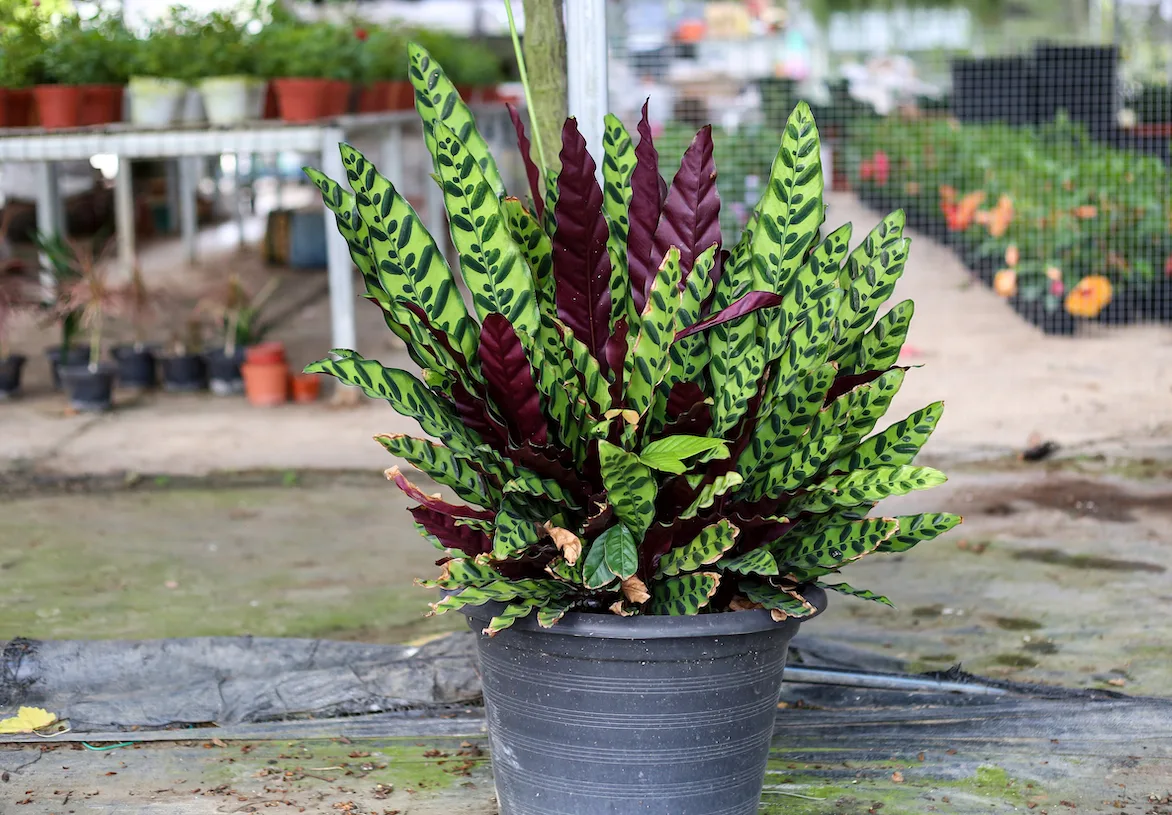
- Rattlesnake plant, Goeppertia insignis (syn. Calathea lancifolia): This popular variety sports narrow, light-green leaves adorned with dark-green spots and reddish-purple undersides. The long and slender leaves have slightly wavy edges—an overall look that is whimsical but modern.
- Goeppertia orbifolia (syn. Calathea orbifolia): These elegant plants have large, wide, rounded leaves that are a pale, silvery green veined by darker green stripes.
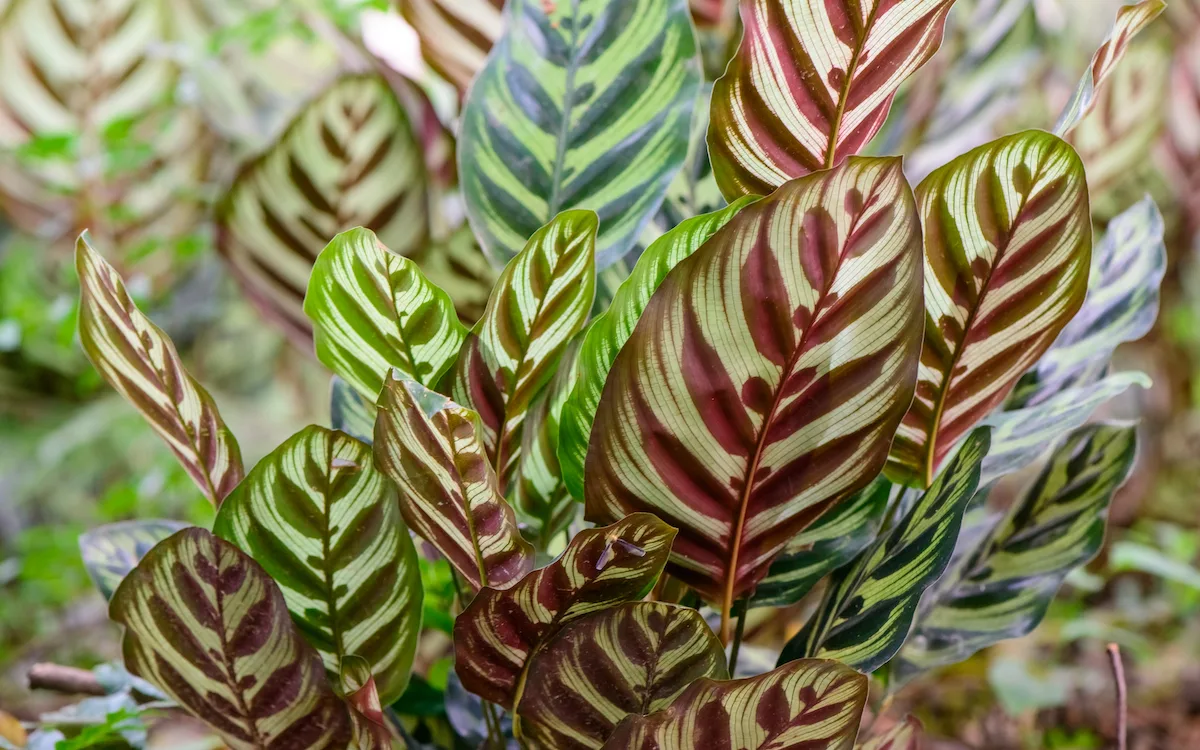
- Peacock plant, Goeppertia makoyana (syn. Calathea makoyana): Another popular variety, the peacock plant (also known as cathedral windows) has oval leaves that end in a gentle point. The leaves are pale green with darker green edges and spots, and have reddish-purple undersides.
Potting and Repotting
Growing Medium: As with most houseplants, calathea do best in a well-draining potting mix. If you make your own potting mix, consider amending it with vermiculite and coco coir, which will help it retain moisture and also prevent compaction. Calathea do not like to dry out entirely, and compacted potting mix does not absorb or hold onto moisture well.
Pot size/type: With their preference for being kept on the more well-watered side, calathea will do best in a pot that holds onto more moisture than not. Choose plastic or glazed terra cotta over unglazed clay pots, which dry out too quickly.
Wit and Wisdom
Like their cousin Maranta leuconeura, aka the prayer plant, calathea experiences nyctinasty, the opening and closing of leaves in response to light. At night, calathea pull their leaves inward and upward, as if in prayer, to collect the dew that settles on their leaves. In the morning, their leaves relax downward and spread outward again to take full advantage of the sunlight.
Propagation
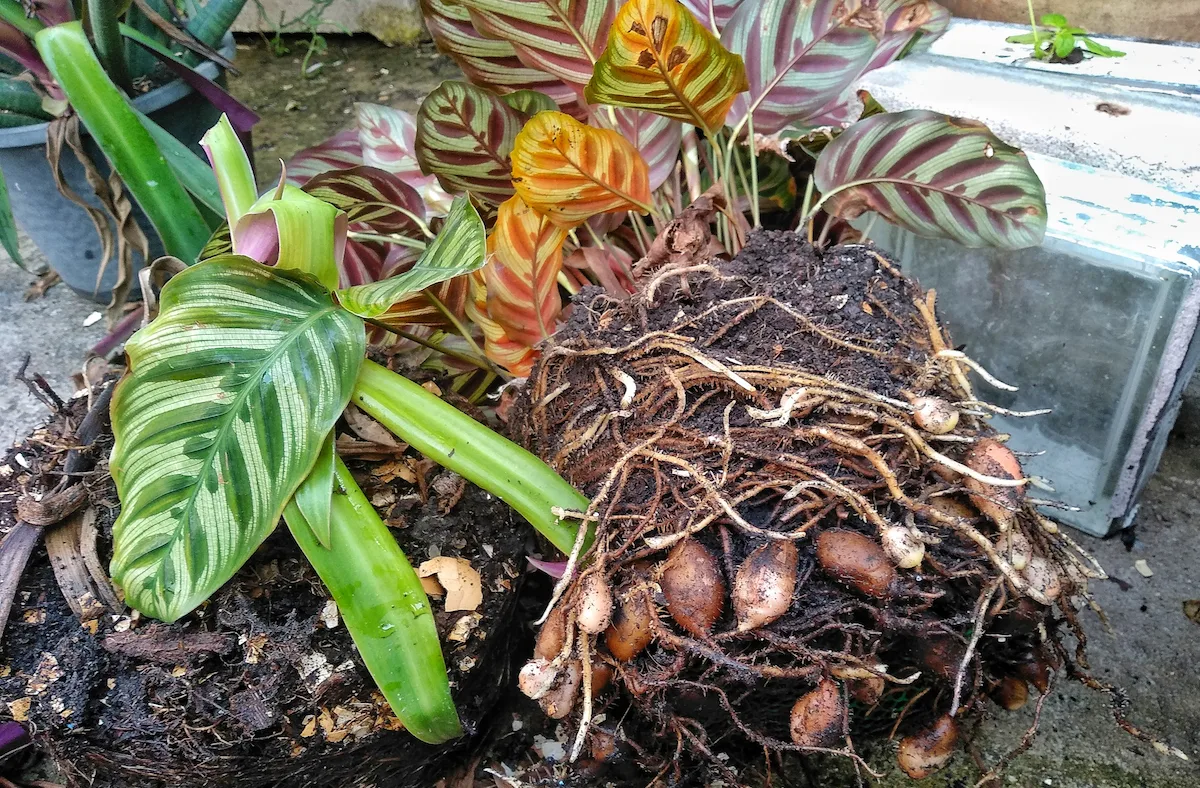
If your calathea is getting big or you want to expand your collection, you start a new plant! Calathea can’t be propagated by cuttings but by division. These are clumping plants, and there are usually several clumps. Divide when you repot in springtime.
The day prior, thoroughly water your plant to reduce transplant stress. Choose new pots with drainage holes and fill them in advance with potting mix, which is 2 parts coco coir to 1 part perlite. Tip: Put a coffee filter at the bottom of each pot to keep the growing medium from falling through.
Gently loosen the mother plant from its container and tease apart separate clumps of rhizomes, which look like small bulbs. Be sure to brush off old potting mix and trim away any damaged plant sections. You may have to cut some smaller roots to separate the rhizomes from one another, but as long as each rhizome still retains some roots and at least one stem and leaf, they will spring back to life once repotted.
After planting in new pots, backfill with growing medium. Water thoroughly, allowing water to drain through. Keep your new potted plants warm and protected until they are established and actively growing in their new pots.