
Planting and Growing Columbine Flowers
The enchanting columbine blooms from spring through early summer. Learn how to plant, grow, and care for Columbine with this growing guide from 原刊.
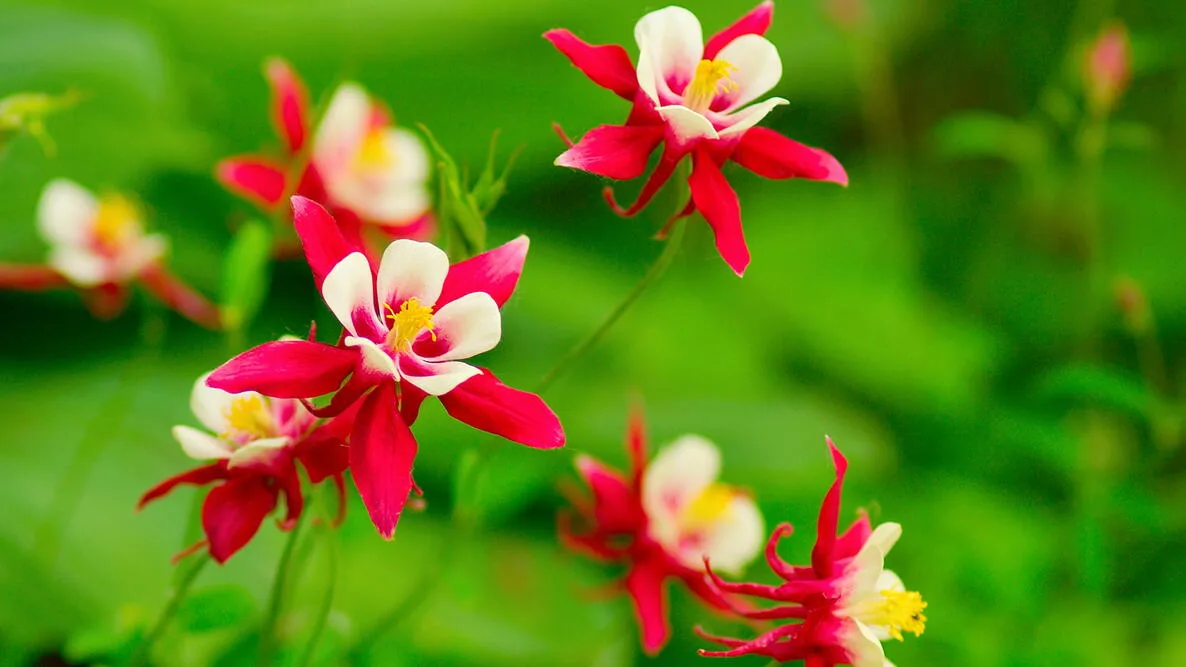
Have you seen this enchanting wildflower? Columbine (Aquilegia), with its multi-colored petals, blooms from spring through early summer.
Though this native perennial appears delicate, it’s among the hardiest of native plants and is deer-resistant and pollinator-friendly. Learn all about growing columbine.
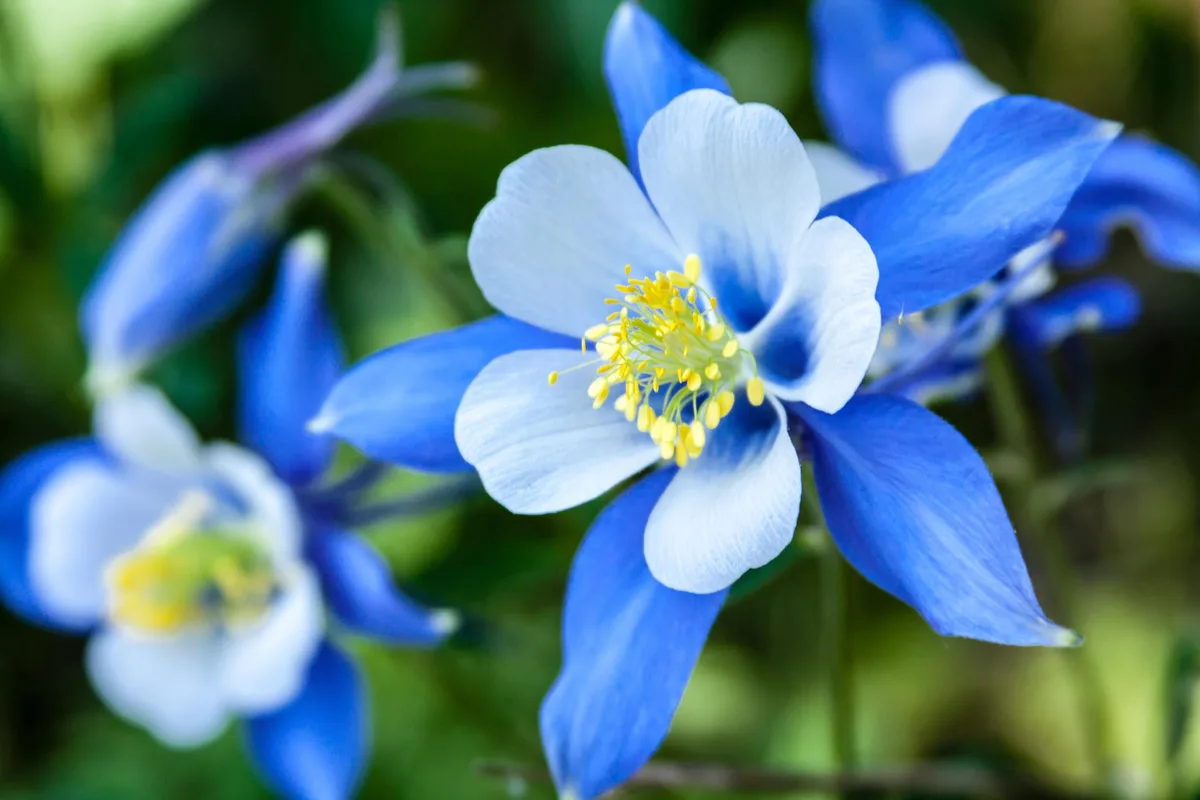
This unusual and breathtakingly beautiful flower displays a small bell-shaped buttercup-like flower with five petals nestled within five long backward-extending spurs. The petals are often bi-colored and may be bright red with pink, lavender, blue, yellow, white, or a combination of these colors! Columbines cross-pollinate easily, so new species form frequently. Their pretty blue-green, lacy foliage stays green long after the blossoms disappear, turning purple or red in the fall.
The flowers attract butterflies, bees, moths, and hummingbirds—but thankfully, not deer! This hardy plant is also quite resilient and drought-tolerant. Once started, columbine propagates for years and, although perennial, increases most rapidly by self-seeding.
See the video below to view this flower in many shades:
Planting
When to Plant Columbine
- Direct-sow in the ground in the fall or after last spring’s frost.
- Alternatively, sow seeds indoors 8 to 10 weeks before the last spring frost.
Where to Plant Columbine
Columbines grow well in the sun or light shade. Although these plants aren’t picky about soil conditions, they do prefer well-draining soil of average fertility.
How to Plant Columbine
- Press the seed into the soil, but do not cover it.
- Thin to the strongest plants.
- If setting a mature plant into a container, create a hole twice the diameter of the “old” pot. Set the top of the root ball level with the soil surface. Fill in with soil, then tamp gently and water.
- Outdoors, space mature plants 1 to 2 feet apart, depending on the mature size of the variety. Water thoroughly.
Growing
- Avoid overwatering.
- Deadhead faded flowers. New buds will develop along the stems. The bloom season can thus be extended by as long as 6 weeks into midsummer.
- Allow the plant to self-seed after it blooms, and it will produce many volunteer seedlings in the following year.
- Columbine dies back all the way to the ground at dormancy. Plants can be cut back hard in the fall to clean up the foliage.
- Before the ground freezes, mulch to protect the roots.
Harvesting
Cut flowers for indoor arrangements when they are half open. Vase life is 5 to 7 days.
Pests and Problems
| Pest/Disease | Type | Symptoms | Control/Prevention |
|---|---|---|---|
| Leaf miners | Insect | Meandering blisters in leaves caused by tunneling larvae | Remove infested leaves; weed around plants; use row covers; till soil early in season; rotate plantings |
| Leaf spot (fungal) | Fungus | Leaf spots on lower leaves enlarge and turn brown/black; fuzzy growth or pustules in lesions; disease progresses upward; leaves die | Destroy infected leaves/severely infected plants (do not compost); remove plant debris regularly; disinfect garden tools; choose resistant varieties; good air circulation; avoid overhead watering |
| Powdery mildew | Fungus | White spots or flour-like coating on upper leaf surfaces; leaves drop; distortion/stunting | Destroy infected parts (do not compost); remove plant debris regularly; resistant varieties; good air circulation/sunlight; spray plants with solution of 1 teaspoon baking soda/1 qt water; prevent plant stress; avoid overhead watering |
| Root-knot nematodes | Nematode | Roots “knotty” or galled; plants stunted/yellow/wilted/weakened; leaves and other parts may distort or die; poor flowering | Destroy infested plant debris after flowering season, including roots (do not compost); disinfect garden tools; choose resistant varieties; solarize soil; plant French marigolds (Tagetes patula) as a trap crop; rotate plantings |
| Rust | Fungus | Orange pustules on underside of lower leaves/stems; spots on upper leaf surfaces; foliage distorts/dies/drops; stunting; poor flowering; plants weakened | Destroy infected parts/severely diseased plants; remove plant debris regularly; disinfect tools; resistant varieties; good air circulation; avoid overhead watering; weed diligently |
| Southern blight (white mold) | Fungus | Leaves/stems/entire plants wilt, brown or blacken, and may die; water-soaked lesions on lower stems; crown/bulb/rhizome rot; fluffy, white fungal mats with mustard-seed–like balls on stems’ bases/nearby soil | Destroy infected parts/plants, white fungal mats, and surrounding soil to at least 6 inches beyond plant and 8 inches deep; remove plant debris regularly; disinfect garden tools; solarize soil; resistant varieties; provide good drainage |
Types
Among the more than 70 species of columbine, these are the favorites to cultivate:
- Native eastern red columbine (Aquilegia canadensis): pale, pink to blood-red and pink/yellow flowers that point upwards
- ‘Corbett’: pale yellow flowers; resistant to leaf miners; dwarf variety, 1 to 1-1/2 feet tall
- ‘Little Lanterns’: red and yellow bell-shaped flowers; resistant to leaf miners; compact, 10 inches tall
- ‘William Guiness’ European columbine (A. vulgaris): stunning dark purple petals with white on sepals; bushy; 24 to 30 inches tall
The Swan series includes bicolor, midsize (16- to 22-inch) hybrids excellent for cutting when half open …
- ‘Swan Pink and Yellow’: Soft pink outer petals with pastel yellow inner petals.
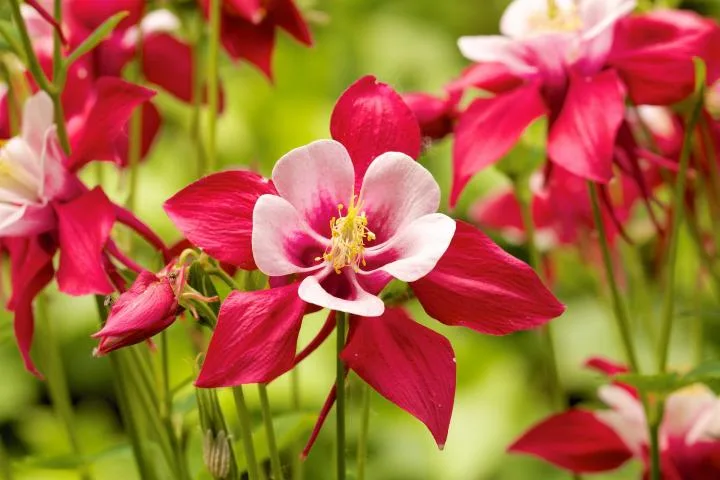
- ‘Swan Red and White’: Red outer petals with white inner petals.
Wit and Wisdom
- Columbine’s Latin name, Aquilegia, is derived from the Latin word for eagle, aquila. The long spurs that extend behind the flower petals resemble the claws of an eagle.
- Native Americans traditionally used the crushed seeds as a love charm and for medicinal purposes.
- Columbine was named for the Latin word columba, which means dove.
- There are more than 70 species of columbines, including native columbines that grow wild in mountain areas, along stream beds, and in temperate woodlands. The deep-blue columbines that grow as wildflowers in the Colorado mountains are direct descendants of the earliest columbines.