
Planting and Growing Coreopsis (Tickseed)
Learn how to plant, grow, and care for coreopsis, a long-blooming perennial also called tickseed, with practical tips for sun, soil, watering, and seasonal care.
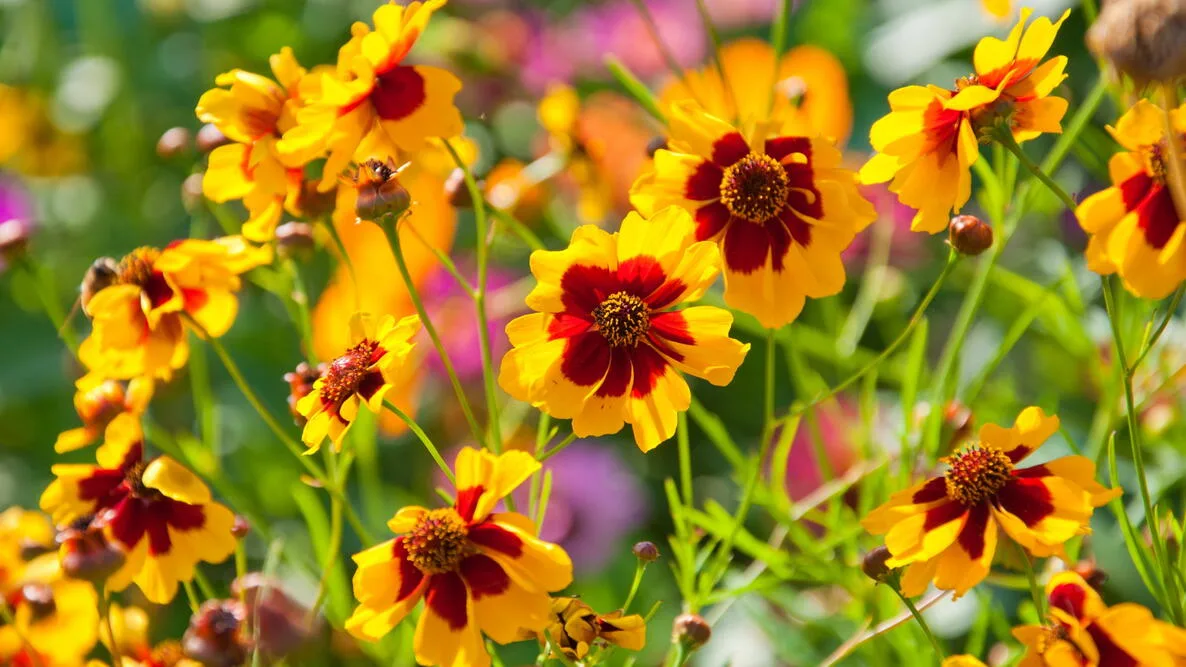
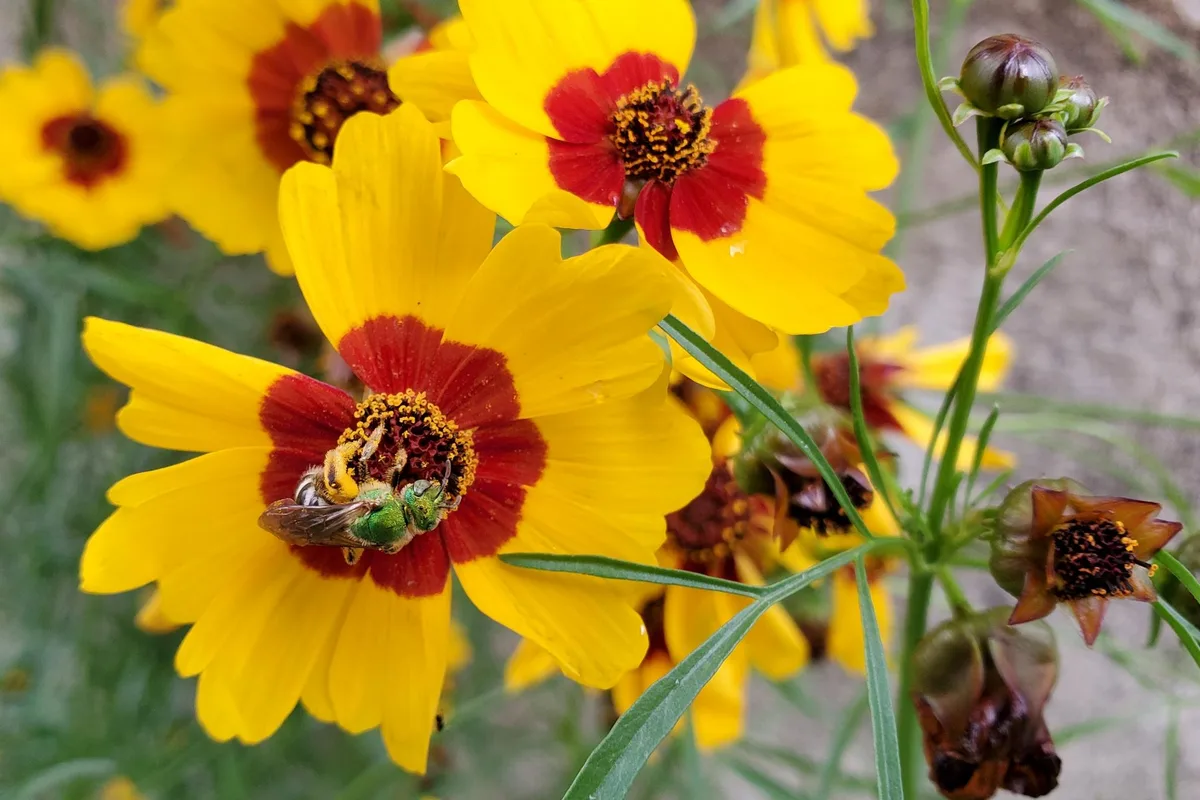
The coreopsis flower (tickseed) is a long-blooming perennial that flowers from early summer until fall frost. Planted in fall or spring, this deer-resistant native is beloved by bees and butterflies.
Here’s how to plant this fan favorite as well as deadhead coreopsis—and other growing tips.
Coreopsis is usually planted as a perennial that spreads with rhizomatous roots. However, there are annual types, too, that tend to be short-lived and self-sowing. The annual varieties are often included in wildflower seed mixes. Some hybrids put energy into making colorful blooms (but set few seeds).
The daisy-like yellow, red, orange, pink, and violet flowers bloom from summer to fall. Even as other summer flowers fade in the fall, coreopsis is often still strong. Countless small blooms sit atop thin, branching stems, making coreopsis suitable for planting in a number of areas. Not only do bees and butterflies love its nectar, but small birds, such as goldfinches, love its seeds.
This low-maintenance plant makes few demands. It tolerates heat, humidity, and drought, and when cut, adds cheer to a bouquet. Plant in masses for striking visual effects. It is well suited to beds, borders, and containers.
Planting
When to Plant Coreopsis
- Perennial coreopsis plants can be planted anytime from spring through early fall.
- Annual varieties should be seeded directly in the ground after the last spring frost.
- If you wish to start earlier, sow indoors 6 to 8 weeks before the last frost.
Where to Plant Coreopsis
Coreopsis requires full sun and good drainage, but they will grow and bloom (to a lesser extent) in partial sun, as well. It tolerates poor soil but not clay. Add compost to improve drainage before planting.
How to Plant Coreopsis
- Set perennial transplants 12 to 18 inches apart.
- If planting annuals, do not cover seeds. They need light for germination.
- If starting indoors, use a potting mix that contains either peat moss or perlite. Keep indoor seeds warm (70°F or so) and moist.
- Water until plants are established.
Growing
- Water established coreopsis plants during dry spells.
- Be careful with fertilizer, which may cause spindly plants with few flowers. Only apply 10-10-10 lightly in spring, if desired.
- Deadhead flowers for continuous blooms, removing both the spent flower and its stalk.
- In mid- to late summer, when flowers fade, shear off 1/4 to 1/2 of growth to encourage late-season reblooming.
- After a couple of fall frosts, cut perennials back to 6 to 8 inches to protect the crowns. Remove plant debris. Or, leave the seed heads on the plants in the fall for the birds.
- Spread a layer of compost, then a layer of mulch, around—not on—the crown.
- Annual varieties can be dug up and discarded after a few frosts.
- Divide perennials every 3 to 4 years in spring or early fall.
Harvesting
- Cut flowers for arrangements when they are fully opened. Cutting them in the morning is best.
- Recut the stems at an angle and remove leaves from the bottom half of the stems before placing in a vase.
- Change the water completely every 3 days.
- Coreopsis will last 7 to 10 days in a vase.
- Coreopsis is an excellent cut flower in a mixed bouquet.
Pests and Problems
Coreopsis Problems
Coreopsis is a hardy, low-maintenance plant and is generally resistant to deer, making it a dependable choice for many gardens.
However, poor growing conditions can lead to problems. Overcrowding or excessive moisture can weaken plants and reduce flowering. Coreopsis prefers well-drained soil and good air circulation to stay healthy.
Coreopsis Pests
Coreopsis may occasionally be affected by a few common garden pests.
Aphids can gather on stems and buds, feeding on plant sap and weakening growth.
Slugs and snails may chew holes in leaves, especially in damp or shady conditions.
To prevent pest issues:
- Check plants regularly
- Spray aphids off with water if needed
- Handpick slugs and snails or use barriers
Coreopsis Diseases
Coreopsis can be affected by several diseases, especially in wet or crowded conditions.
Aster yellows is a serious disease that causes yellowing, stunted growth, and deformed flowers.
Botrytis blight can develop in cool, damp conditions and may cause gray mold on leaves and stems.
Fungal leaf spot and rust create spots or discoloration on foliage, while powdery mildew appears as a white coating on leaves.
Rhizoctonia root and stem rot and Verticillium wilt can cause wilting, decline, and plant death.
Types
- Coreopsis verticillata (Threadleaf Tickseed) ‘Zagreb’: golden yellow; 12 to 18 inches tall; hardy in Zones 4 to 9
- C. grandiflora ‘SunKiss’: large yellow flowers with burgundy centers; 12 to 14 inches; ideal for cutting; hardy in Zones 4 to 9
- C. auriculata ‘Snowberry’: creamy white flowers with burgundy centers; 24 to 30 inches tall; hardy in Zones 3 to 8
- C. auriculata ‘Nana’: yellow flowers; 2 to 4 inches tall; makes a beautiful ground cover; hardy in Zones 4 to 9
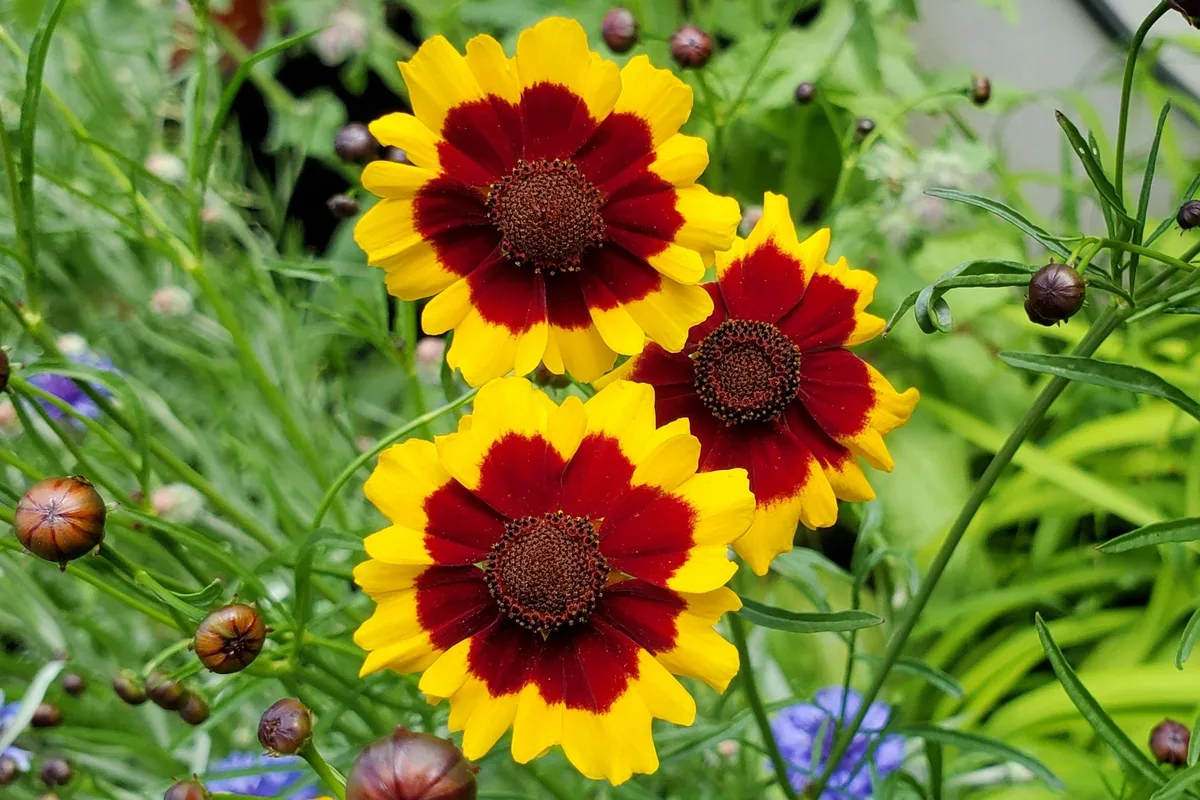
- Annual native C. tinctoria (aka plains coreopsis and calliopsis): yellow-red flowers with dark-red centers; 2 to 4 feet tall; hardy in Zones 2 to 11
- Hybrid C. ‘Razzle Dazzle’: large violet-purple blooms with white tips; 16 to 22 inches; hardy in Zones 5 to 9
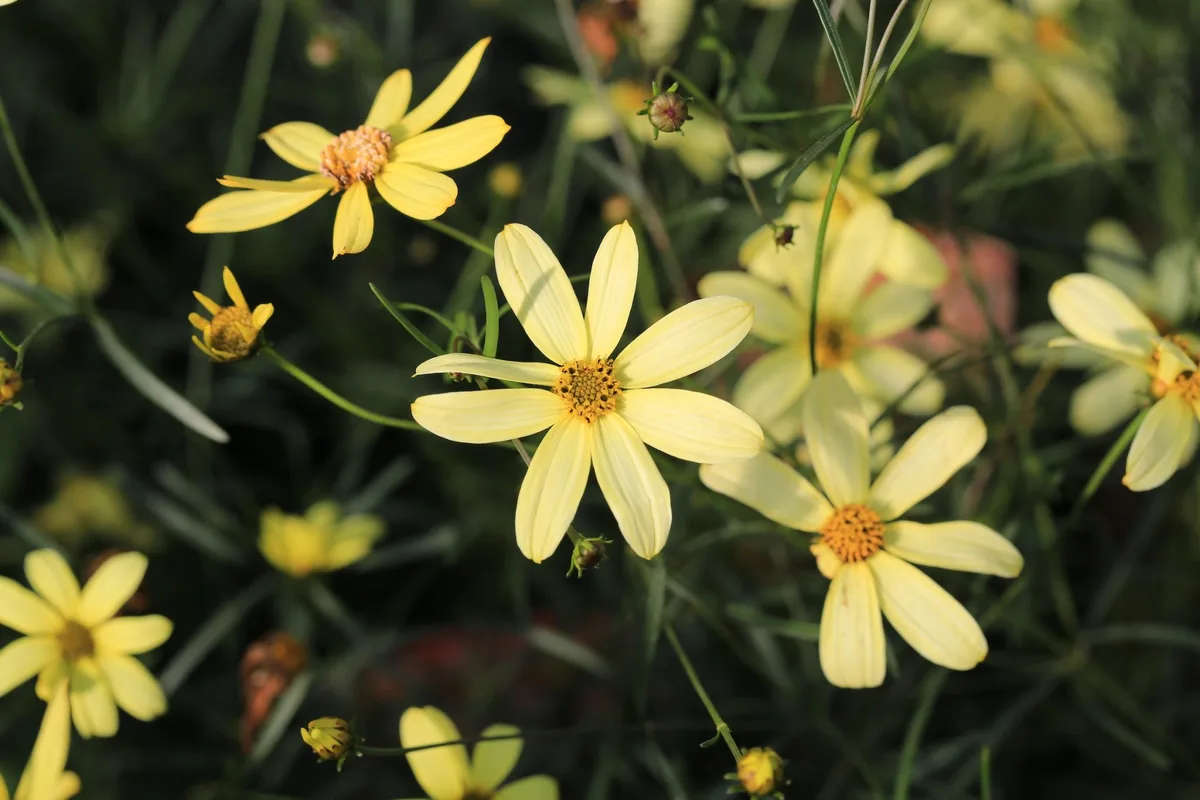
- Hybrid C. ‘Moonbeam’: light creamy yellow, 12 to 18 inches tall; hardy in Zones 4 to 9
Wit and Wisdom
- In the language of flowers, coreopsis means “always cheerful.”
- Coreopsis flowers and roots were traditionally steeped into teas by some early Native Americans.
- The flowers can be used to make yellow and red dyes.
- The name “coreopsis” stems from the Greek koris, for “bedbug,” and opis, meaning “resembling,” because the seeds look like bedbugs. The common name is tickseed, which comes from the seeds’ resemblance to ticks.