
How to Plant and Grow Crocuses: Early Spring Color That Critters Leave Alone
Learn how to plant and grow crocuses for early spring color. These critter-resistant, pollinator-friendly bulbs naturalize easily and bloom even through snow.
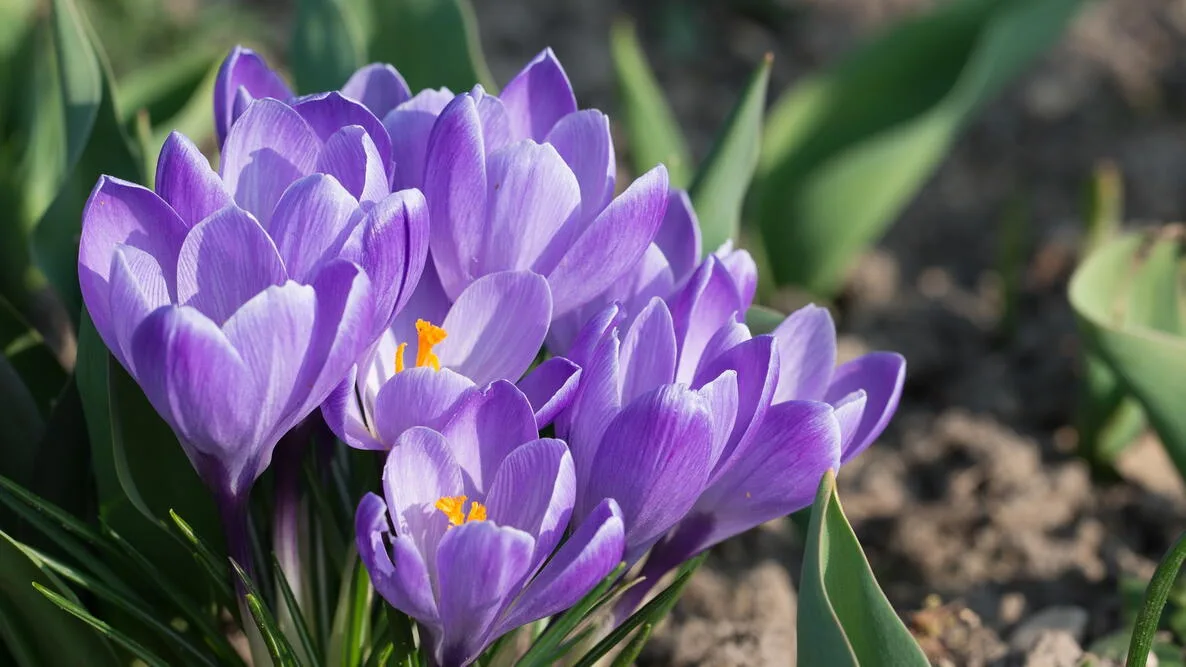
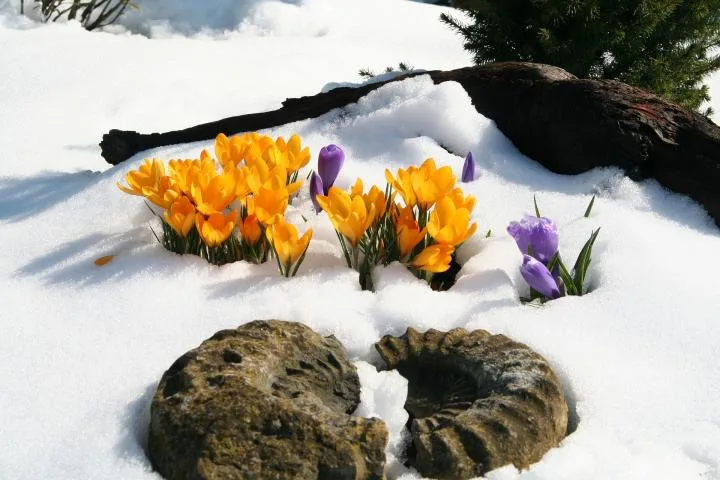
Just when winter seems determined to linger forever, crocuses prove it doesn’t stand a chance. These tiny but mighty spring bulbs push straight through snow and frozen soil to deliver a burst of color when your garden needs it most.
Even better? Crocuses are largely ignored by deer, squirrels, and rabbits—making them one of the most rewarding low-maintenance blooms you can plant. From fragrant snow crocuses to bold Dutch varieties, here’s everything you need to know to plant, grow, and enjoy these early-spring showstoppers year after year.
From snow crocuses (the first to bloom) to giant Dutch crocuses, all just 2 to 4 inches tall, these blooms offer a variety of colors (blues, oranges, pinks, purples, reds, yellows, and more) that stand out against the bleak late-winter landscape. Many have strong perfumes that lure bees out of their hives in February or March, too, providing the pollinators with an important early-spring food source.
Crocuses not only provide winter garden color but also naturalize, meaning that they spread and come back year after year—with minimal care—for an ever-larger display. As a bonus, deer, squirrels, and rabbits rarely bother early little crocus corms.
Planting
Where to Plant Crocuses
Crocuses do best in a spot that gets full sun (6+ hours of direct sunlight), but will grow in partial sun as well. Choose a planting site where there is well-draining soil; the corms will rot in soggy, compacted ground. Before planting, work in organic matter such as compost to a depth of at least 10 inches.
When to Plant Crocuses
- Crocuses need to experience an extended period of cold weather in order to bloom, so plant them in the fall to get spring blooms.
- Before the ground freezes in the fall, crocus corms can be planted most anywhere, except in the dense shade on the north side of buildings or under thickets.
- Ideally, plant crocus corms 6 to 8 weeks before a hard frost is expected in the fall and when the soil temperature is below 60°F (16°C). This is usually during September or October in the northern U.S. and Canada, and October or November in the southern United States.
How to Plant Crocuses
- Plant crocus corms 3 to 4 inches deep (with the pointy end up). After planting, water well.
- Plant bulbs in groups or clusters rather than spacing them in a single line along a walkway or border. Single flowers get lost in the landscape. Plant a few inches apart, and plant in groups of 10 or more.
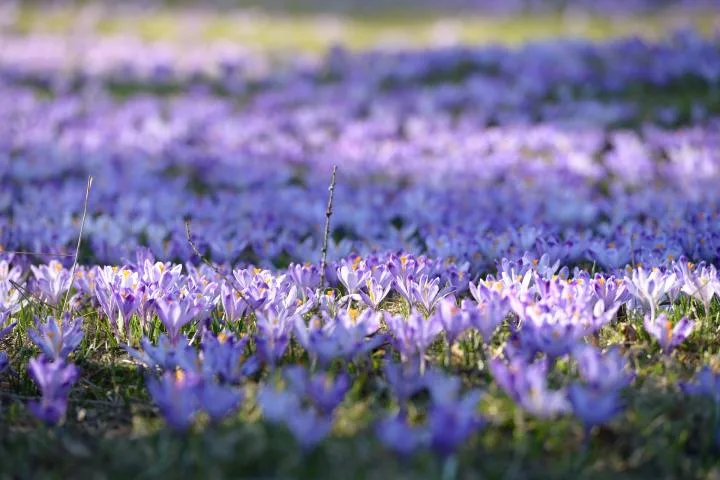
- Consider planting crocuses in lawns and meadows where they can form carpets, or mass them in the front of flower beds along the edge.
- Plant taller spring-flowering bulbs and shrubs behind the early bulbs for color contrast.
→ Learn more about planting fall bulbs.
Growing
- Apply a balanced fertilizer in early autumn if your spring is short and the days heat up fast; or apply fertilizer after bulbs flower in late winter if your spring is long and temperate. The crocuses will have a chance to use the extra nutrients to produce bigger carbohydrate stores.
- Through the autumn, keep crocus beds watered if the weather gets dry, but do not waterlog the soil. Cover the beds with mulch before the winter.
- In late February, remove heavy mulches from snowdrops and crocuses so that the shoots can come through. Leave a light layer of leaves to provide late-season protection from frost.
- In February and March, keep plastic milk jugs or other coverings on hand to protect the flowers of crocuses and other early bloomers against the return of severe weather.
- If you have crocuses growing in your lawn in mid-spring, don’t mow until their leaves have died down.
Pests and Problems
Types
- ‘Bowles White’ produces white flowers with deep golden yellow throats in early spring. It grows 2 to 3 inches tall.
- ’Flower Record’ has single pale violet flowers in spring to early summer. It grows 4 to 5 inches tall.
- ’Pickwick’ is a striped crocus with alternating pale and dark lilac and dark purple bases. It’s 4 to 5 inches tall and blooms in spring to early summer.
- ’Tricolor Crocus’ is a beauty. Each narrow flower has three distinct bands of lilac, white, and golden yellow. It grows 3 inches tall and blooms in late winter and early spring.
- ’Purpureus Grandiflorus’ has an abundance violet flowers with purple bases. It grows 4 to 5 inches tall and blooms spring to early summer.
Wit and Wisdom
- In the language of flowers, crocus means cheerfulness.
And all the woods are alive with the murmur and sound of Spring,
And the rose-bud breaks into pink on the climbing briar,
And the crocus-bed is a quivering moon of fire
Girdled round with the belt of an amethyst ring.
–Oscar Wilde