
How to Grow Edamame (Soybeans): Planting, Growing & Harvest Tips
Learn how to grow edamame (young soybeans) in your home garden. Discover planting tips, care instructions, and when to harvest for tender, protein-packed pods!
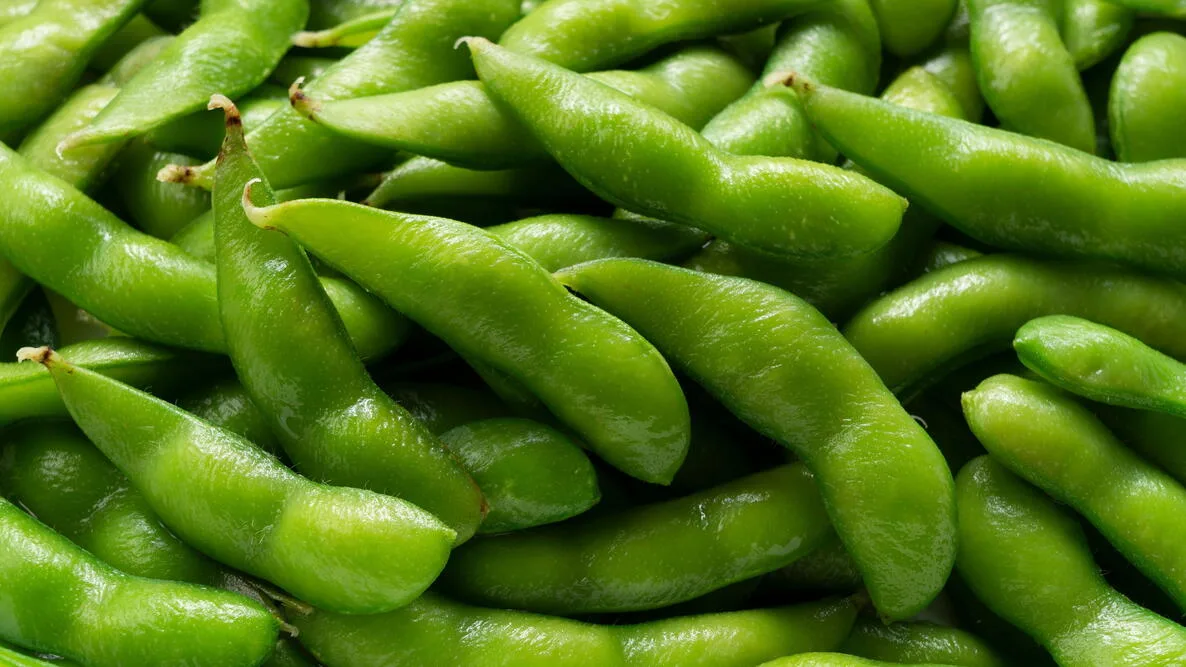
Looking for a snack-worthy garden superstar? Edamame’s got your back! These buttery green soybeans are packed with protein, easy to grow, and totally satisfying to pop straight from the pod. With just a little summer sun and 10 weeks of patience, you’ll be harvesting handfuls of tasty green goodness.
Let’s dig into how to grow your own edamame—from seed to savory snack!
Originating from Asia, edamame (pronounced eh-dah-MAH-may) is the name for young, green soybeans that are picked early in the green pod stage before they harden. (Once edamame pods mature, they become dried beans which are used to make soy products like tofu and soymilk.)
After the edamame pods are harvested and steamed in water, they are eaten by squeezing the beans out (2 to 3 per pod), popping directly into the mouth. They have a sweet, nutty, creamy flavor and are very high in protein.
Edamame is not a common crop, but has been gaining ground in North America in recent years. It’s a low-maintenance crop similar to bush beans, but often has a higher yield. As a legume, it also offers the same soil-health benefits as beans—specifically, it helps to fix nitrogen into the soil, making the soil more nutrient rich for later crops. This makes it a great vegetable to practice crop rotation with!
Planting
Edamame is a frost-tender vegetable that can be planted in late spring in a location with full sun (at least 6 hours) and average soil fertility. Two to 4 weeks before planting, dig 1 to 2 inches of compost into the garden bed to provide the plants with sufficient nutrients.
Avoid planting edamame where legumes (beans, peas) were grown in the previous season. This helps to prevent the continuation of diseases and pests, as well as the depletion of nutrients in the soil.
When to Plant Edamame
- Edamame requires a growing season of about 10 to 12 weeks, depending on the variety. (See Recommended Varieties, below, for more information.)
- Direct-sow seeds in the late spring safely after your last spring frost, when the soil is workable and warmed to at least 55°F (13°C). Air temperatures should have reached at least 60°F (16°C). Don’t rush it. Planting in cold wet soil can cause soybean seeds to rot.
- Stagger sowing times; each plant’s pods handily mature all at the same time. For a second harvest, plant again about 10 days later.
How to Plant Edamame
- Sow seeds ¼ to ½ of an inch deep, 2 to 4 inches apart, in rows 2 feet apart.
- Germination takes 1 to 2 weeks.
Growing
- Thin seedlings to 6 inches apart when the plants are 4 inches tall.
- Weed shallowly to avoid disturbing the plants’ roots.
- Apply compost, leaves, or hay mulch to control weeds and retain moisture.
- Water regularly. Edamame tolerates some drought, but yields may suffer.
- Like bush beans, edamame plants reach 1 to 3 feet tall and do not typically require staking.
Harvesting
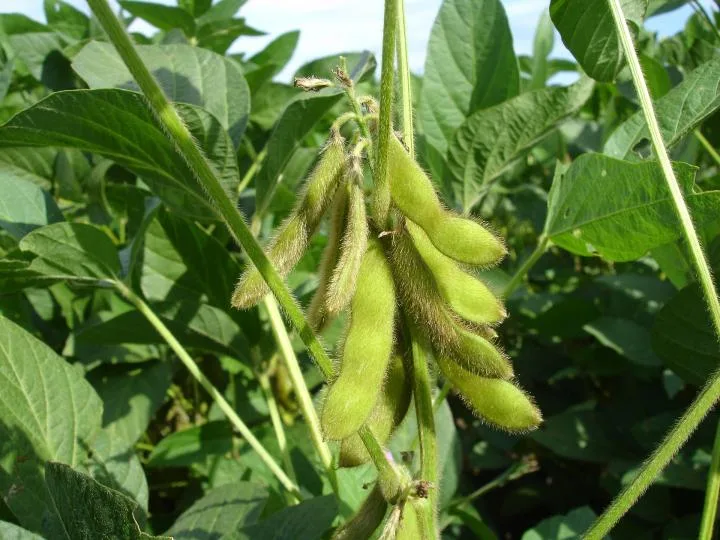
- For the best flavor, harvest edamame pods in the evening when they are 2 to 3 inches long, bright green, and plump. Snap or cut (do not tear) pods off plants. Or uproot the entire plant.
- Yellow pods and/or leaves indicate that the peak of flavor and texture has passed.
- Harvest dry soybeans when the plant and leaves are dry and brown and the seeds inside the pods rattle. Pull up the plants and hang them in a dark, dry area until the pods are completely dry.
How to Store Edamame
- Store fresh edamame in an airtight container or plastic bag in the refrigerator for up to 1 week. Use as soon as possible.
- To freeze edamame pods or shelled beans, blanch them, plunge them in ice water, and then drain. Store in an airtight bag or container in the freezer.
- Store dried beans in an airtight container in a dark, cool, dry location.
Pests and Problems
| Pest/Disease | Type | Symptoms | Control/Prevention |
|---|---|---|---|
| Mexican bean beetles | Insect | “Lacey,” skeletonized foliage; dark holes on bean pods | Handpick; purchase and release beneficial wasp Pediobius foveolatus when larvae observed; destroy severely infested plants; use row covers |
| Powdery mildew | Fungus | Typically, white spots on upper leaf surfaces expand to flour-like coating over entire leaves; foliage may yellow/die; distortion/stunting of leaves/flowers | Destroy infected leaves or plants; choose resistant varieties; plant in full sun, if possible; ensure good air circulation; spray plants with 1 teaspoon baking soda dissolved in 1 quart water; destroy crop residue |
| Root-knot nematodes | Nematode | Typically, roots “knotty” or galled; plants stunted/yellow/wilted | Destroy crop residue, including roots; choose resistant varieties; solarize soil; add aged manure/compost; disinfect tools; till in autumn; rotate crops |
| Stinkbugs | Insect | Yellow/white blotches on leaves; scarred, dimpled, or distorted pods; shriveled seeds; eggs, often keg-shape, in clusters on leaf undersides | Destroy crop residue; handpick (bugs emit odor, wear gloves); destroy eggs; spray nymphs with insecticidal soap; use row covers; weed; till soil in fall |
| White mold | Fungus | Pale gray, “water-soaked” areas on stems, leaves, and other plant parts that enlarge and develop white, cottony growth, later with black particles; bleached areas; crowns/fruit rot; plants wilt/collapse | Destroy infected plants; ensure good air circulation; water in morning; weed; destroy crop residue; rotating crops on 5-year or longer cycle may help |
| Whiteflies | Insect | Sticky “honeydew” (excrement); sooty, black mold; yellow/silver areas on leaves; wilted/stunted plants; distortion; adults fly if disturbed; some species transmit viruses | Remove infested leaves/plants; use handheld vacuum to remove pests; spray water on leaf undersides in morning/evening to knock off pests; monitor adults with yellow sticky traps; spray with insecticidal soap; invite beneficial insects and hummingbirds with native plants; weed; use reflective mulch |
| Wireworms | Insect | Seeds hollowed; seedlings severed; stunting/wilting; roots eaten | Trap by digging 2- to 4-inch-deep holes every 3 to 10 feet, fill with mix of germinating beans/corn/peas or potato sections as bait, cover with soil or a board, in 1 week uncover and kill collected wireworms; sow seeds in warm soil for quick germination; provide good drainage; remove plant debris; rotate crops |
Types
Edamame is sensitive to day length and classified into “maturity groups” (MG) 00 to 10 (sometimes shown as Roman numerals). The lower the number, the earlier the variety matures and produces pods. Day length is critical to flowering and the production of beans.
Low-number varieties are best suited for areas with shorter growing seasons; higher-number cultivars, for areas with longer growing season. Some suggested varieties:
| Varieties | Maturity Group | Comments |
|---|---|---|
| ‘Agate’ | MG 00 | Buttery flavor |
| ‘Black Jet’ | MG 00 | Medium-size beans, green when fresh, black when dry; rich flavor |
| ‘Envy’ | MG 0 | A short-season favorite |
| ‘Early Hakucho’ | MG 1 | Compact plant |
| ‘Shirofumi 90’ | MG 1 | High yield, over 100 pods per plant |
| ‘Madori Giant’ | MG 3 | Large beans; high yield |
| ‘Gardensoy 51’ | MG 5 | Small beans; high yield |
| ‘Owens’ | MG 6 | Small beans; high yield |
Wit and Wisdom
- Edamame originated in China more than 2,000 years ago. There, it’s called mao dou, which means “hairy bean.”
- Today, edamame is commonly thought of as a Japanese vegetable. In Japanese, edamame means “beans on a branch.”
- During the Civil War, soldiers used dried soybeans as “coffee berries” to brew a coffee-like drink.
- Edamame is a complete protein source and the only vegetable that contains all nine essential amino acids!