
How to Grow Ice Plants: Colorful, Drought-Tolerant Ground Cover
Learn how to grow ice plants—vibrant, drought-tolerant ground cover perfect for sunny gardens, containers, and xeriscapes. Easy care, bold color, big impact!
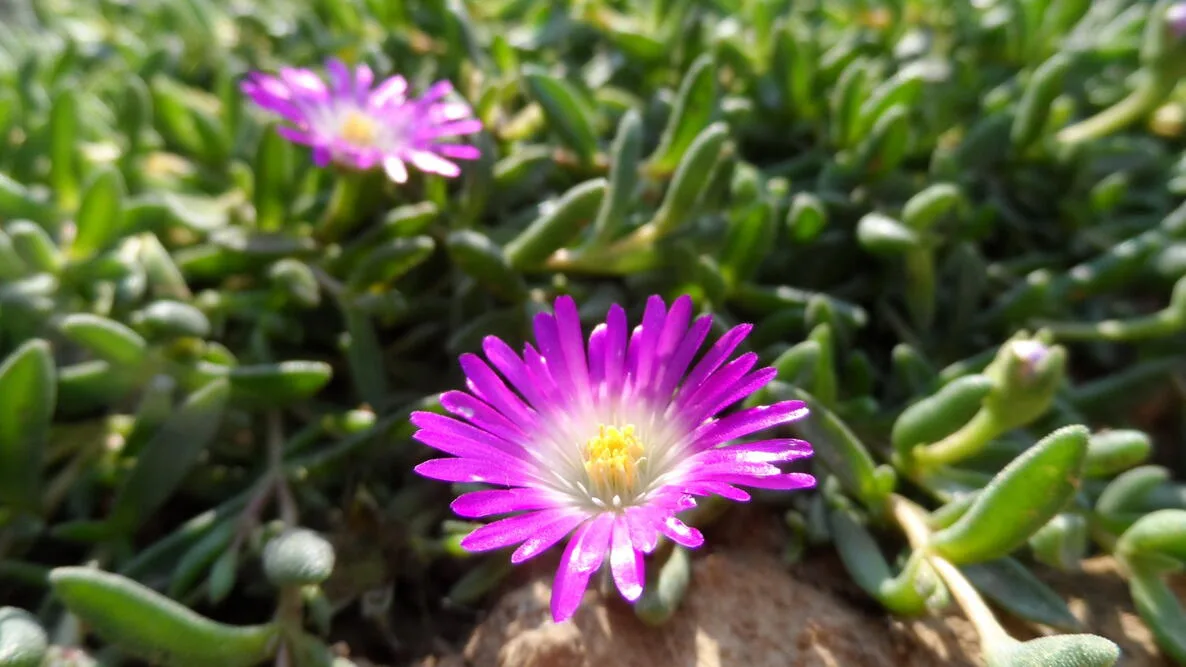
Ice, ice, baby! Despite the chilly name, ice plants bring the heat with vivid blooms and glistening succulent foliage that thrives in the sun. Perfect for xeriscaping, rock gardens, or spilling over containers, these fast-growing, drought-tolerant ground cover species are as easy to care for as they are striking.
Ready to turn your dry patch of yard into a carpet of color? Here’s how to plant, grow, and care for ice plants like a pro.
Ice plant is the common name for many species of plants in the genera Delosperma and Lampranthus. They are succulent-leaved perennial ground cover plants and are evergreen in warmer climates.
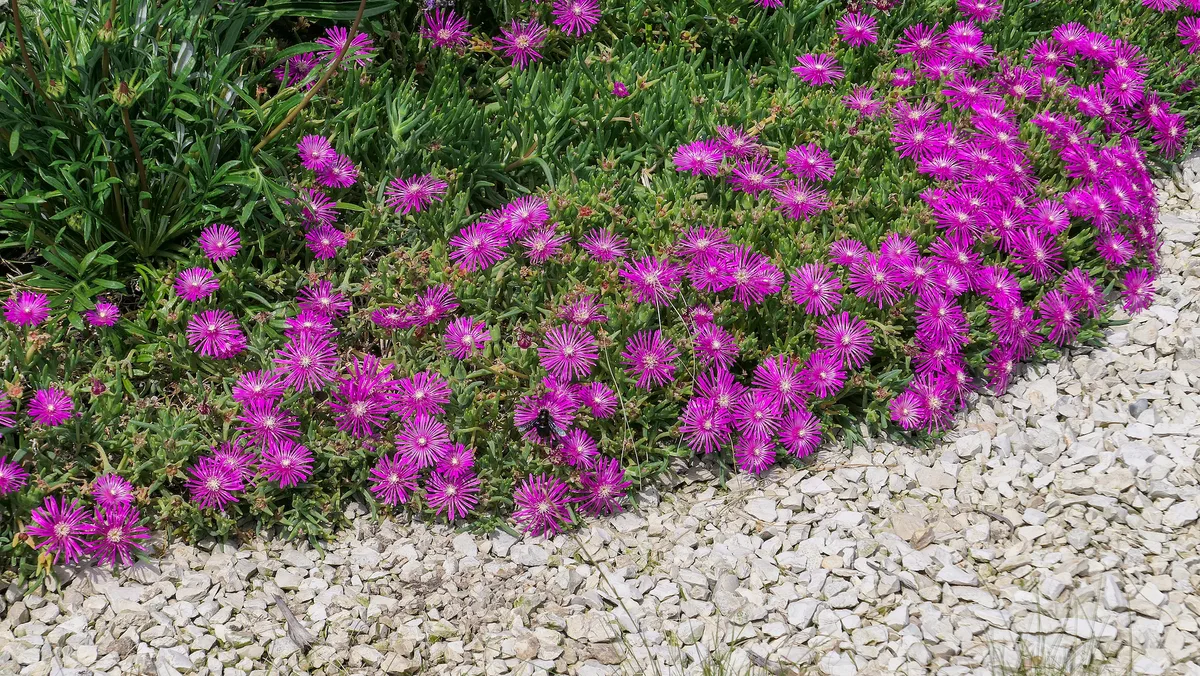
Ice plants are fast growers native to Africa and love hot, dry conditions. They are perfect for ground cover, rock gardens, and xeriscapes. They also love the arid and sunny conditions that other plants find challenging, and they tolerate poor soil well.
Planting
Where to Plant Ice Plants
Ice plants need a site with excellent drainage and will suffer or die in wet, heavy soil. They relish full sun and dry conditions, just like succulents you might grow in pots. Hardiness varies with species, but many are cold-hardy in USDA Zones 6 to 10. Sandy or shallow rocky and gravelly soil is perfect, and neutral soil pH is ideal.
Each plant will normally spread 1 to 2 feet, so map out how many you’ll need for an area if you plan on using them as ground cover, and purchase a few extra to fill in bare spots caused by casualties. For best coverage, space them about 15 to 18 inches apart. They can often be bought by the flat for a reduced price per plant when many are needed for large areas.
Ice plants in containers can be used as spiller plants, cascading over the edge of terra-cotta pots. Choose companion dry-loving plants like lavenders or succulents. Drainage is critical to happy, blooming ice plants, especially in containers.
When to Plant Ice Plants
In cooler regions, plant ice plants outdoors in late spring to early summer. In hot climates, try a fall planting to establish them before the next heat cycle.
How to Plant Ice Plants
Ice plants are often purchased as small 4-inch pots or smaller plugs from a garden center or nursery. Transplanting them is easy and fast.
- Water the plugs or pots of ice plants before you transplant them. This reduces plant stress. It will also help them come free from the pot more easily.
- Remove all grasses and weeds from the planting area, and loosen the soil at least 6 inches deep with a garden fork.
- Gently remove the ice plants from their containers. If you plan to plant ground cover, set them out and adjust the spacing before planting to avoid an empty spot. They should be about 15 to 18 inches apart.
- Use a hand trowel and dig small holes, as deep as the plugs or pots and a bit wider.
- Set the ice plants in the holes, check the depth, and refill the holes, firming the soil around the roots.
- Once all the ice plants are planted, grab the hose and sprinkler and give them a good soaking.
Growing
Watering
Ice plants are drought-resistant, but they’ll need water for the first season while getting established. Once they’ve begun to grow, they can be considered somewhat established, and you can cut back on watering. Well-established ice plants shouldn’t need supplemental watering.
Fertilizing
Ice plants are native to hot areas with stony, dry soils, and fertilizer is unnecessary except in the most nutrient-poor soils or containers. An excess of nutrients can cause all-foliage growth and few to no blooms. If you feel fertilization is necessary, use a low-nitrogen (N) product.
Dividing Ice Plants
When your ice plants are mature, you can divide them to expand your ground cover. Take your trowel, dig up a piece with roots and stems, and replant it. Treat any divided plants and the mother plant as though they are not yet established and water more frequently. Pruning can be done in spring to remove winter-killed stems.
Pests and Problems
- Aphids
- Mealybugs
Types
- ‘Alan’s Apricot’ Ice Plant (Delosperma hybrid) shows off delicately apricot-colored blooms on 2-inch-tall plants. It tolerates colder temperatures and may survive in USDA Zone 5.
- Cooper’s Hardy Ice Plant (Delosperma cooperi) is a magenta-blooming standout with bright golden centers. An excellent mat-forming ground cover that reaches about 3 to 6 inches high.
- ‘Fire Spinner’ Ice Plant (Delosperma hybrid) has pink, red, and orange rings on each of many blooms. A stunner in mass plantings, it is hardy in USDA Zones 5 to 9.
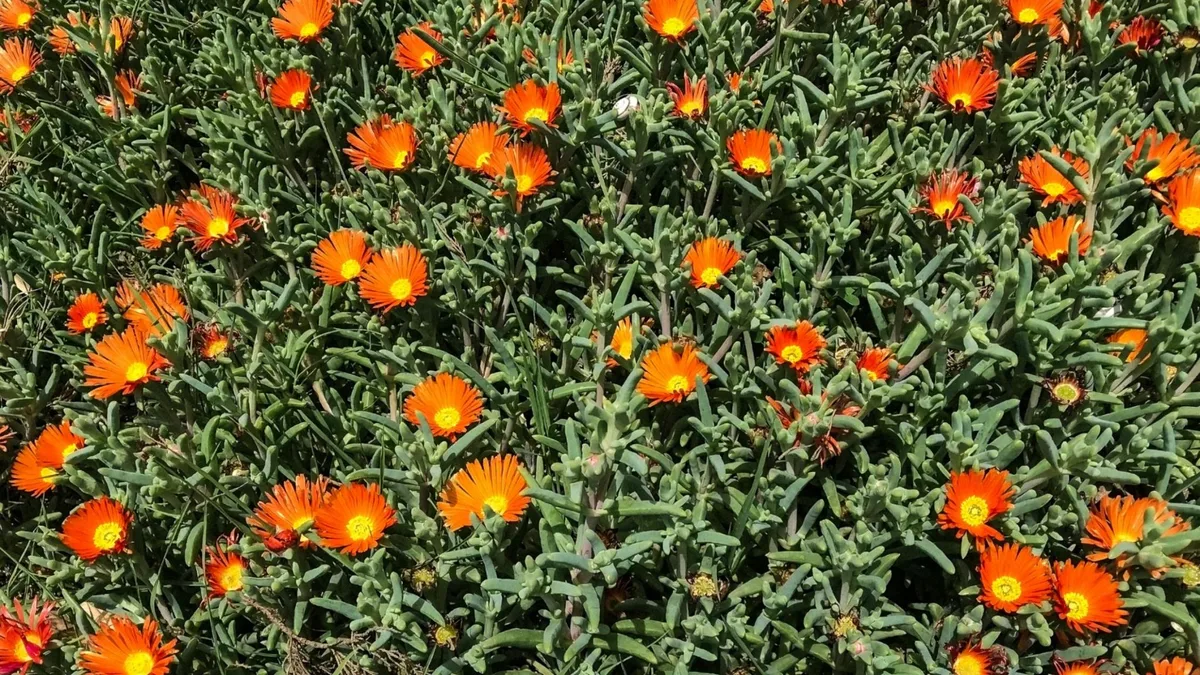
- Orange Ice Plant (Lampranthus aurantiacus) can be a giant for ice plants, reaching over 1 foot tall and spreading as much as 4 to 5 feet. Bright orange flowers are more upright than other ice plants, and they are hardy in USDA Zones 9 to 11.
Wit and Wisdom
- Why are they called ice plants? According to the Cooperative Extension at the University of Arkansas, “some species (but not the winter-hardy species) excrete calcium crystals on their leaves that give the plants the look of a heavy frost, hence the common name.” They sparkle in the sun!
- Planting ice plants near a south- or west-facing wall can provide extra warmth in regions that are borderline for cold hardiness.
- Foliage on succulents that turns brown or appears to wither and dry out may actually signify root rot from overwatering. Check the soil with your fingers.