
Planting and Growing Lupines
Lupines, with their colorful flower spikes, are planted in spring or fall. Also called bluebonnets, lupines not only attract butterflies and pollinators but also deer-resistant and low-maintenance! See how to grow and care for lupine flowers.
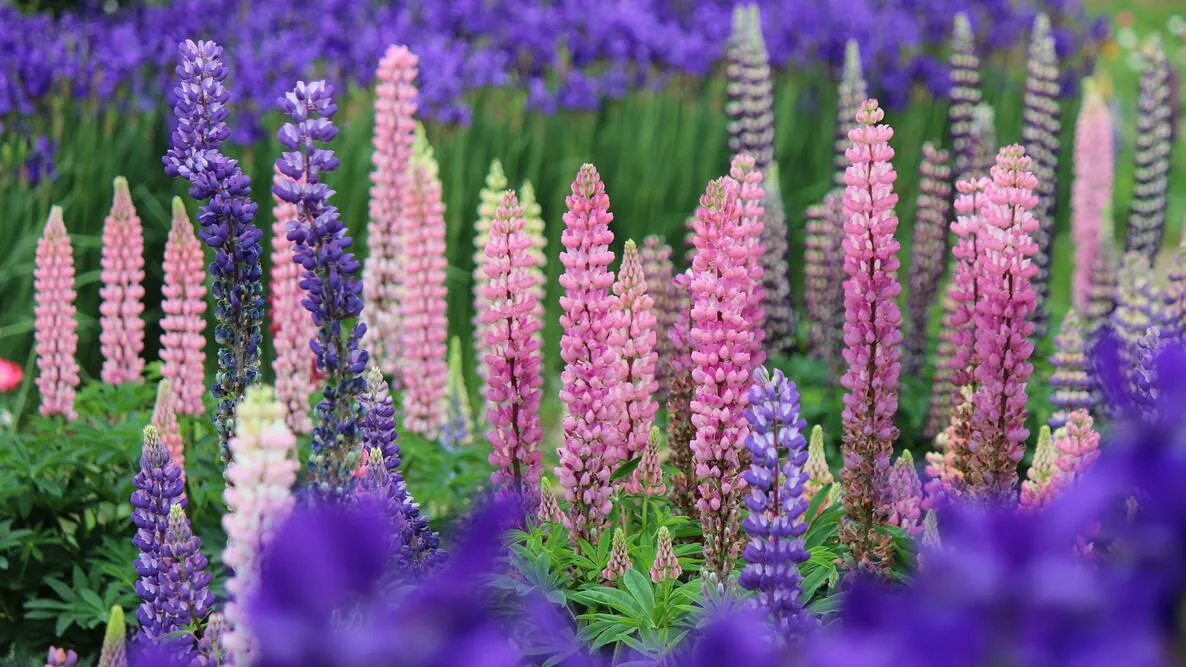
Lupines, with their colorful flower spikes, are planted in spring or fall. Also called bluebonnets, lupines not only attract butterflies and pollinators but also are deer-resistant and low-maintenance! See how to grow and care for lupines.
This hardy perennial blooms in late spring (April to June) and is a great addition to a low-maintenance meadowscape or cottage-style garden.
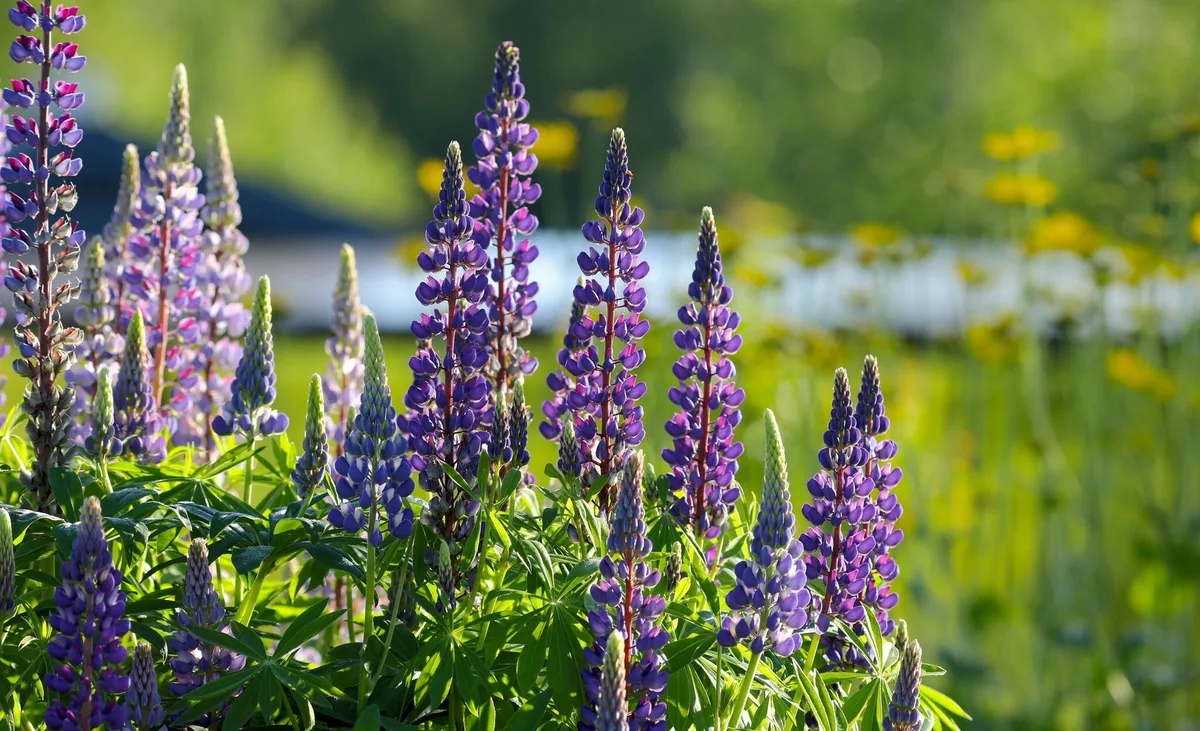
The pea-like flowers are arranged on upright spikes that vary in color from deep blue to purple shades. Growing 1 to 4 feet tall, the leaves of lupine are also beautiful with grey-green palmate foliage with silvery hairs. The seed pod looks like a hairy pea pod and contains up to 12 seeds. In fact, lupines are a legume, which means that they fix nitrogen in the soil and they enrich your soil health.
Note: Not all lupines are perennials; the potted plants are typically perennial cultivars, but other lupines are annuals.
Planting
When to Plant Lupines
- Plant in cool temperatures; lupine can not tolerate heat, humidity, or drought.
- Lupine seeds are sown in early spring or in the fall. Many gardeners prefer to plant in fall to enjoy them mid-spring.
- If starting seedlings indoors, you can transplant them when they are about 4 to 6 weeks old. At this age, they haven’t developed a long tap root and will have a better chance to survive.
Where to Plant Lupines
Lupines prefer full sun; they’ll grow in light shade but won’t flower as profusely. They also prefer sandy, well-draining soil and can’t survive waterlogged conditions. Also, they cannot tolerate heavy soils, so be sure to loosen the soil up before planting.
How to Plant Lupines
- First, just loosen the soil for the lupines’ long tap roots to grow. Loosen to a depth of about 1 to 1-1/2 feet; amend with organic matter and grit for good drainage.
- Before planting, soak seeds in a bowl of warm water for 24 to 48 hours to soften the tough seed coat, and then you can “scarify” the seeds to allow moisture to reach the seed; this means roughening the seeds between two sheets of sandpaper before planting. Scarifying the seeds greatly improves the odds of germination.
- To sow seeds, dig a hole 1/2 inch deeper than the seedling pot and twice as wide. Space seedlings for smaller varieties about 1 foot apart and larger varieties about 2 to 3 feet apart.
- Tamp down the seeds, ensuring good soil contact. Water, and if the weather is dry, water lightly until germination, which can take up to 10 days.
Growing
- Avoid fertilizing; if necessary, apply an acidifying agent to maintain slightly acidic pH in the soil.
- Taller varieties may need staking.
- Cut off faded flowers to promote more blooms.
- Save the seeds when the pods turn yellow.
- Don’t cut dead spikes in the fall; wait until spring.
- Harvest and save seeds when the pods turn yellow and seeds rattle inside.
- Add mulch around the plants to keep the roots cool (and for winter protection).
- Do not allow mulch or other organic matter to touch the crown of the plant, as it could introduce rot.
Pests and Problems
Lupine Problems
Lupine is generally easy to grow and is deer-resistant, making it a great choice for many gardens.
However, poor air circulation, overly wet soil, or crowded planting conditions can lead to disease issues. Lupines prefer well-drained soil and proper spacing to stay healthy.
Lupine Pests
Lupines may occasionally be affected by aphids, slugs, snails, and thrips.
Aphids and thrips can damage foliage by feeding on plant sap, while slugs and snails chew holes in leaves, especially in damp conditions.
Lupine Diseases
Lupines can be susceptible to a number of diseases, especially in humid or crowded conditions. Common issues include anthracnose, Botrytis blight, southern blight, brown spot, fungal leaf spots, downy and powdery mildew, rust, Fusarium wilt, and root and crown rots caused by Phytophthora and Rhizoctonia. Viral diseases may also occur.
These problems often appear as leaf spots, wilting, moldy growth, or rotting stems and roots.
Types
Lupinus includes hundreds of species, many native to North America! You’ll see them both in the wild and in gardens—from California to Maine. These usually have blue, white, or yellow flowers.
Garden lupine (Lupinus polyphyllus), aka big-leaved lupine: blue, pink, and purple flowers; native to much of western North America; prefers moist environments.
Wild lupine (L. perennis) is a blue perennial plant that grows in the eastern half of North America.
Texas bluebonnet (L. texensis) is an annual plant with dark blue flowers with white markings that cover fields and roadsides in Texas every April.
Russell hybrid lupines (L. polyphyllus), also called garden lupines, have been the basic perennial group from which all new hybrids are created. Be patient; it can take a year to begin its abundant blooms.
The Russell Lupine Mix seeds are easy to grow, and the tall flowers bloom in a variety of colors.
Lupine Woodfield hybrids are perennial plants that come in deeper shades and beautiful bi-colored blooms.
Dwarf hybrids ‘Dwarf Lulu’ and ‘Minarette’ grow only to 1½ to 2 feet tall. Excellent for small gardens, containers, or the front of beds and borders. Plants grow to 20 inches tall. Winter hardy to Zone 4.
Wit and Wisdom
- Lupines were once thought to steal nutrients from the soil—hence their genus name, Lupinus, which is Latin for wolf. However, lupines are in the pea family and, as nitrogen-fixers, can actually improve the soil.
- Many species of lupine are poisonous to livestock.
- The lupine flowers are not edible, but the seeds are. The nut-like seeds were once a favorite food for traveling troops in ancient Europe.
- Lupine seeds can be ground into flour. In Europe this flour is used in baking.