
Planting and Growing Moss Roses
Planting and caring for Moss Roses (Portulaca grandiflora) is a breeze! This low-maintenance annual thrives in hot sun, offering vibrant blooms all season long. Discover how to grow Moss Roses from seeds or cuttings for a dazzling summer display!
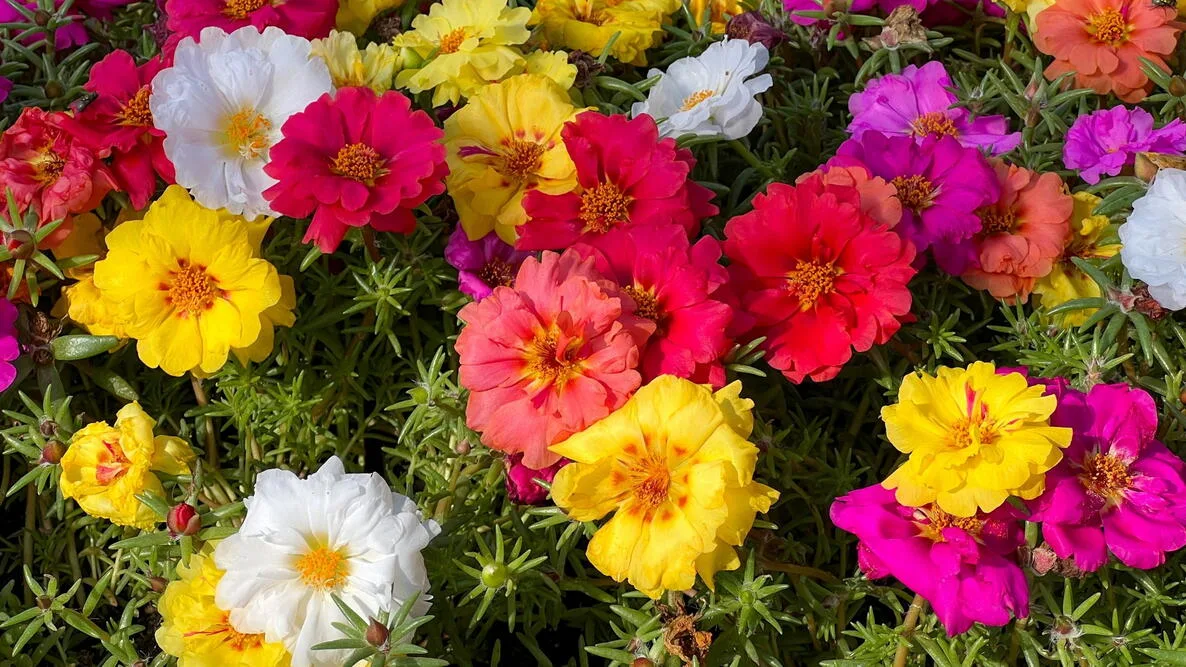
Bring vibrant color to your garden with the moss rose! This low-maintenance annual thrives in the hot sun and boasts cheerful blooms in a rainbow of hues.
Learn how to grow moss rose from seeds or cuttings, and discover easy tips for watering, fertilizing, and keeping your plants blooming all summer.
Portulaca grandiflora demands little in terms of care but spreads joy and delight wherever it grows—as long as the Sun shines.
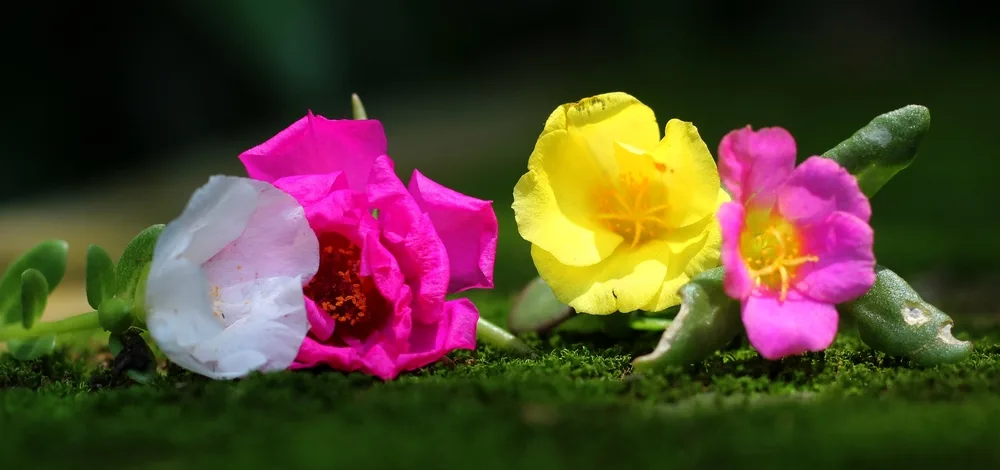
“The saucer-shaped, rose-like flowers are produced on the stem tips, held facing up above the foliage, opening from buds that resemble little popcorn kernels. They are only open in bright sunlight, closing at night and on cloudy days, but most of the newer hybrids will remain open throughout the day,” explains Susan Mahr of the University of Wisconsin–Madison.
Planting
Purchasing seedlings or starter plants may jump-start moss roses’ flowering period, but they can also be grown from seeds or propagated through cuttings from established plants.
Starting Moss Roses From Seeds
Start seeds in a seed-starting mix indoors 6 to 8 weeks before the last frost. Cover minimally; moss roses need sunlight to germinate. Learn to make your own seed-starting mix.
Dampen and maintain moisture. Plants germinate in about 10 to 14 days in 70° to 85°F temperatures.
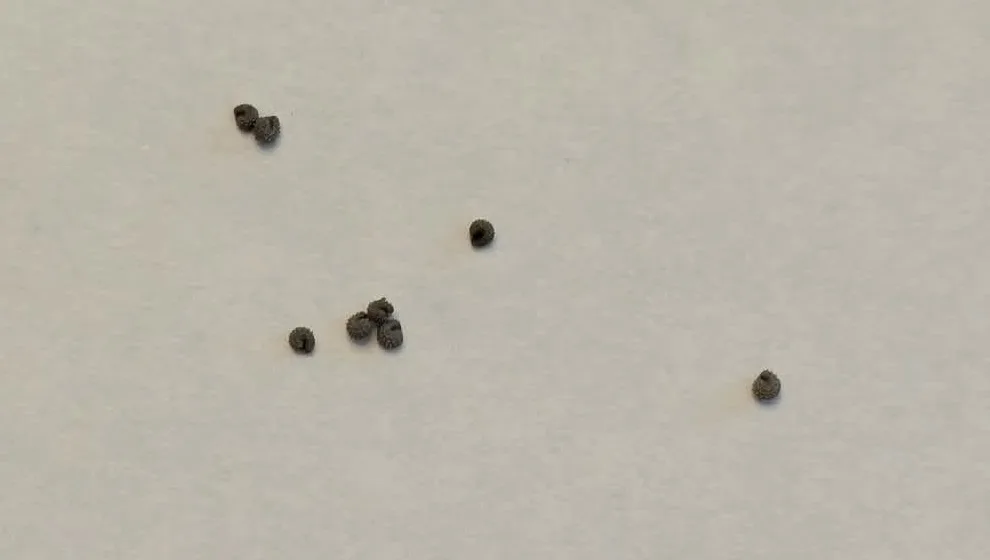
Photo: Melissa Crotts
Propagating Moss Roses
To propagate from a cutting, prepare damp potting mix. Trim off a 3-inch piece of the plant and remove any foliage from the last inch of the cut end. Insert the cut end into the potting mix. Maintain even moisture until new growth appears,
Transplanting Moss Roses
Be aware that moss rose transplants need special care: The night before transplanting, water to ensure that the plant is hydrated so that soil will cling to its shallow roots. Lift with a spoon or small spade (depending on plant size), including the soil surrounding the plant.
Space plants 6 to 12 inches apart; crowded plants flower poorly. Replant, with roots only just below the soil’s surface, as soon as possible.
Water lightly and keep moist until new growth appears (a sign that the plant is established). Moss rose’s shallow root system means that water is important until plants get going. Afterward, too much water can cause rot, which is why well-draining soil is essential.
Growing
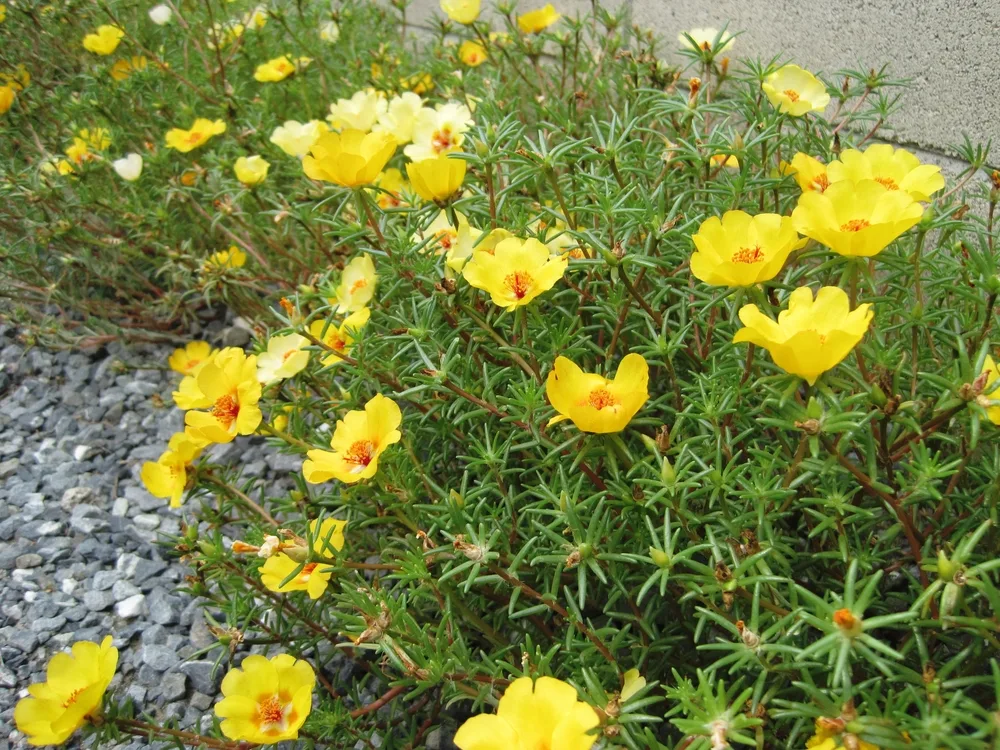
Moss rose is drought-tolerant but benefits from watering when the top inch of soil is dry.
Provide 6 to 8 or more hours of sunlight per day; warm temperatures are ideal. Shade may reduce blooms.
Deadhead to stimulate more blooms or to deter self-seeding, if desired. If plants become leggy, pinch stems back and provide a diluted dose of balanced fertilizer. New growth and blooms should follow.
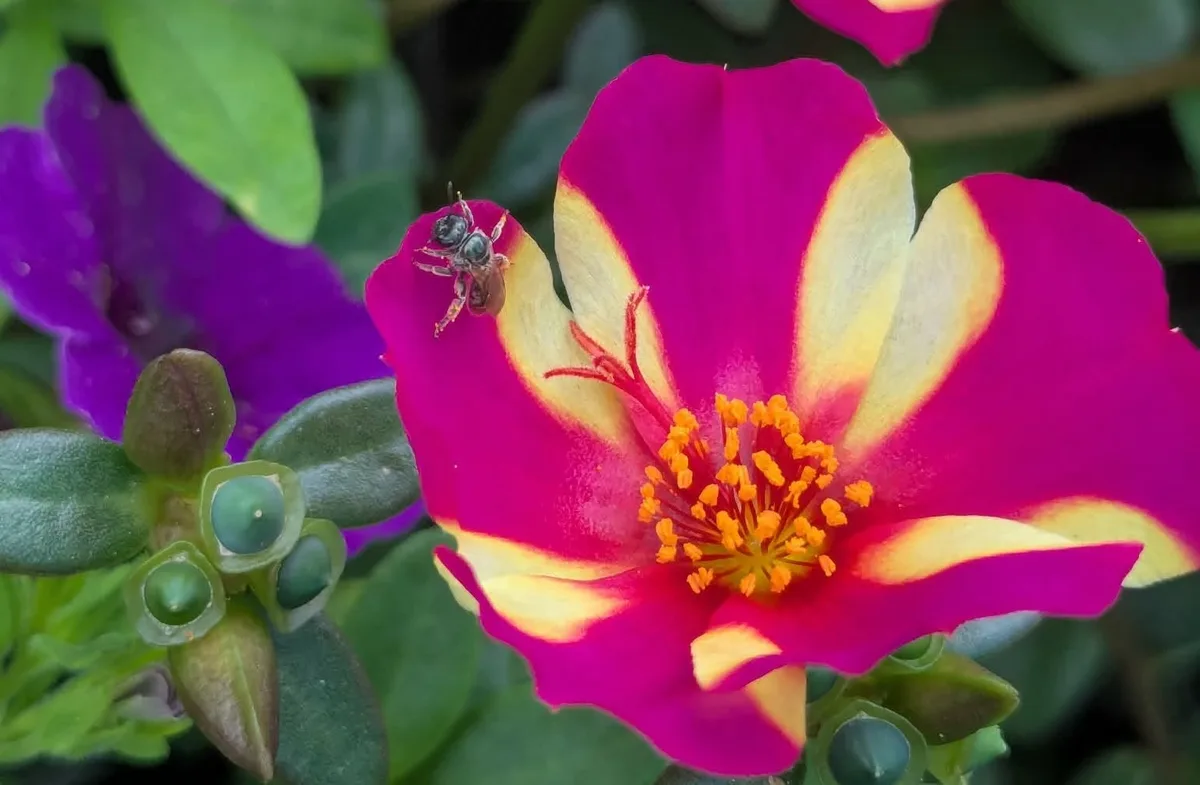
Photo: Melissa Crotts
Pests and Problems
Diseases: none serious; sometimes Botrytis blight, damping off, Pythium root and stem rot, Rhizoctonia root and stem rot.
Pests: aphids, slugs/snails.
Types
- ‘Afternoon Delight’ moss rose (Portulaca grandiflora): 2-inch flowers in numerous hues stay open longer than those of other varieties
- ‘Calypso Mix’ moss rose (P. grandiflora): not as fast-growing as others; requires consistently moist soil; orange, pink, red, and yellow flowers
- ‘Happy Hour’ series moss rose (P. grandiflora): bred to bloom earlier in season; large, double blooms in vivid colors attract butterflies and hummingbirds
- ‘Sundance’ series moss rose (P. grandiflora): semidouble flowers in a multitude of colors remain open most of the day
- ‘Sundial’ series moss rose (P. grandiflora): early-flowering; double flowers in numerous colors open in cooler and cloudy weather
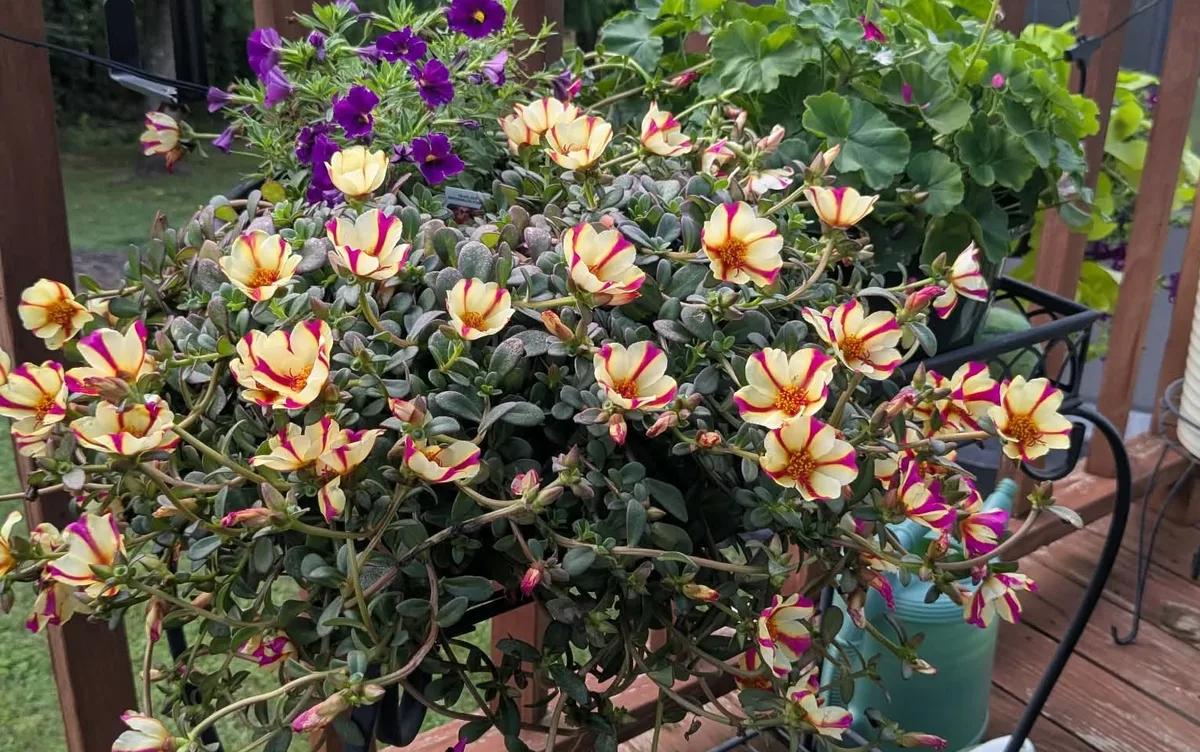
Photo: Melissa Crotts
Wit and Wisdom
- Portulaca oleracea, common purslane with flat, fleshy leaves that is sometimes grown as a vegetable and often considered a weed, is commonly known as “moss rose.” You can eat purslane! Learn more.
- Portulacas have been grown in American gardens since the 1700s.
- “Portulaca” may come from the Latin words porta, meaning “to carry,” and lac meaning “milk,” referring to the milky sap of some species.