
Planting and Growing Salsify: An Old-Timey Root Vegetable
Discover how to grow salsify—an old-fashioned, savory root veggie also known as “oyster plant.” Learn planting tips, harvesting times, and why this rare root deserves a spot in your garden.
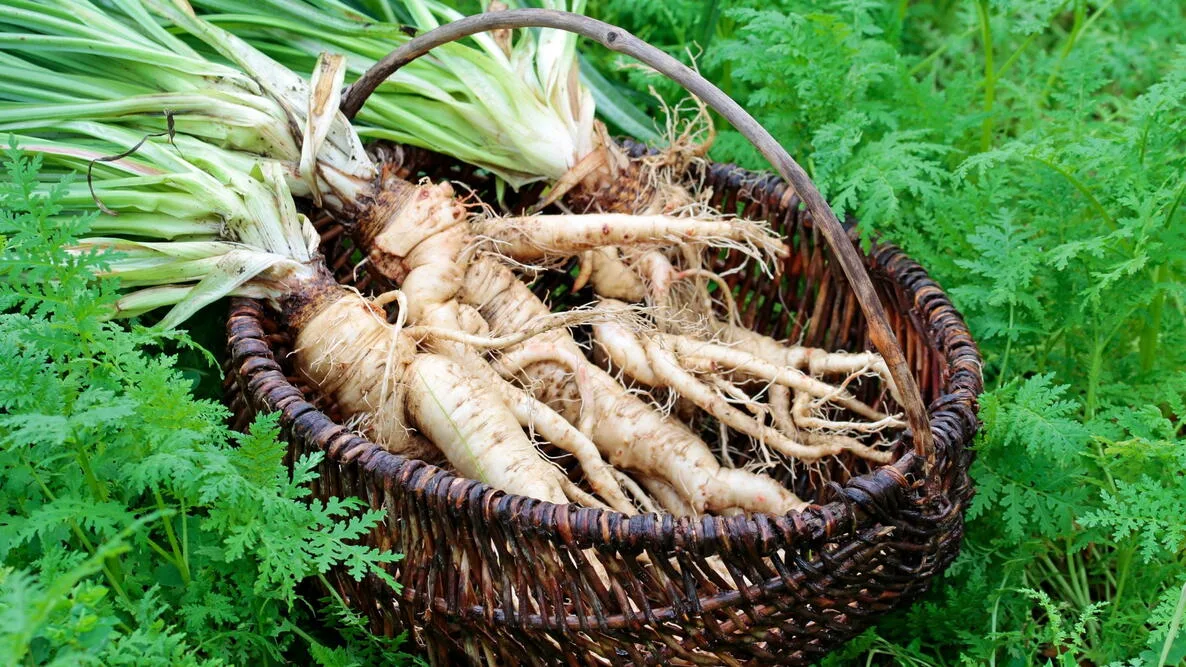
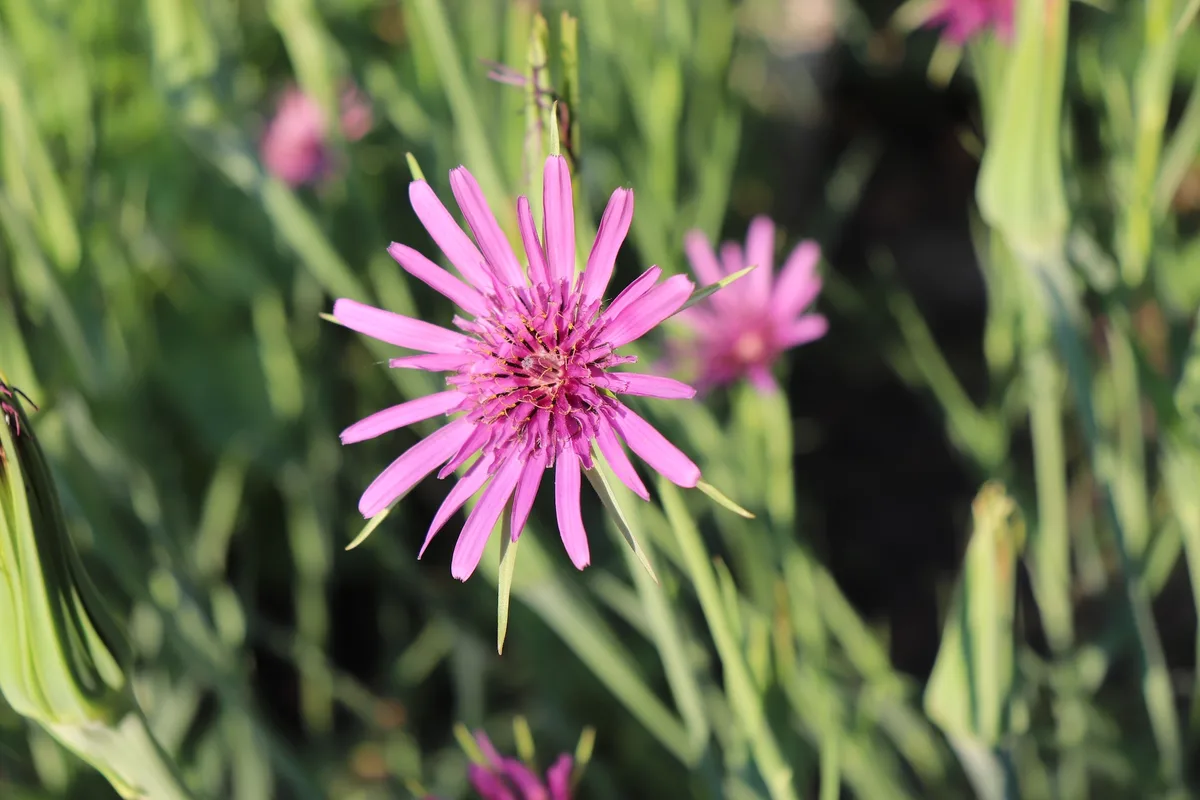
Ever heard of a veggie that tastes like oysters but grows like a carrot? Meet salsify, your garden’s next great conversation starter! With its creamy, savory flavor (some say artichoke; others say oyster!), this quirky root was once a kitchen staple in colonial gardens. Not only is salsify delicious and long-storing, but it also puts on a floral show with starry purple blooms that could charm any pollinator.
If you’re craving something a little different this season, it’s time to dig into growing salsify—the forgotten root with a flair for flavor and flowers!
For those unfamiliar with salsify (Tragopogon porrifolius), this root vegetable has an off-white color and creamy white flesh. It’s also known as the “oyster plant,” as some folks find it tastes a bit like an oyster. Others liken salsify’s flavor to artichoke hearts.
Salsify is a hardy biennial in the dandelion family, and in fact, the root looks much like the dandelion taproot you’d dig from your lawn. Salsify roots are typically 8 to 10 inches long and about an inch in diameter. They have green tops, which are also edible—sweet and tender enough for a salad.
These tasty vegetables were more popular before the global food trade, when they were prized for their taste and long-keeping ability. They were common in Thomas Jefferson’s day!
You may have trouble finding them in the grocery store, but they are easily grown in the garden if you have a little space. Planted in early spring, salsify is harvested in the fall through early winter, depending on your climate.
Salsify is also an ornamental flowering plant with blossoms that add beauty to your garden beds and bloom from spring through fall; they also look good in meadows.
Planting
When to Plant Salsify
Many salsify varieties require a long growing season—up to 120 days. Plant salsify in the early spring, as soon as soil can be worked, or about 2 to 3 weeks before your last frost in most locations. If you live in hot climates, try planting salsify in the fall and growing it over winter for more tender roots.
Where to Plant Salsify
Salsify needs full sun and moist, deep soil. Good drainage is a must. It prefers slightly alkaline soil with a pH of 7 or above. If you have more acidic soil, lime the bed in the fall to raise the pH for spring planting.
Raised beds will work fine if they are at least 10 inches deep. If yours are too shallow, you may be able to mound the soil up and plant salsify in the center to get a couple of extra inches of depth.
How to Plant Salsify
- Either sow the seeds with bottom heat from late winter to early spring or directly sow in light, fluffy soil.
- Double-dig the planting beds and amend them with compost. The soil should be loose at least 12 inches down. Rototilling won’t get deep enough. A stout garden fork works well.
- Plant seeds 1 inch apart, ½ inch deep, in rows 18–24 inches apart. Keep the soil moist until the seeds sprout. A heavy soil crust (from drying out in the sun) can prevent seedlings from emerging.
- Seeds will germinate in 2 to 3 weeks, but often sprout sooner in good conditions. Mark the row ends with radish seeds, similar to when planting parsnips. The radishes will pop up in a few days but be harvested before they interfere with the salsify crop.
Growing
Salsify doesn’t need much attention once it gets going, and in fact, you might forget it’s there. A little standard garden care is all it needs.
- Once they reach 2 to 3 inches tall, thin plants to 3- to 4-inch spacing.
- Mulching with straw, shredded leaves, or other natural material evenly modifies soil moisture and keeps weed pressure low.
- Hand-pull any weeds that get through the mulch. Salsify doesn’t do well with a lot of competition. Young plants look like grass, so take care when weeding.
- Provide supplemental watering during dry spells. Drought stress can yield tough, fibrous roots.
Harvesting
- Harvest after a hard freeze in autumn. A few frosts will enhance the flavor.
- Dig the roots like you would carrots or parsnips. Cut the tops off, leaving about an inch.
- Brush off excess soil and store in a cool, humid place. Just above freezing and high humidity (80–90%) are ideal.
- Refrigerate in an airtight container and use within 1 week.
- If your ground doesn’t freeze solid (or until it does), you may be able to store the roots in-ground over winter, digging them up as you need them.
- If you don’t receive heavy snow cover, pack a thick layer of straw mulch over the tops to protect them.
Pests and Problems
- Weeds
- Wireworms
Types
Pay attention to the botanical name. Tragopogon porrifolius, also known as purple or common salsify, is what you want. Tragopogon dubius, also known as yellow or western salsify, is an invasive species in many areas.
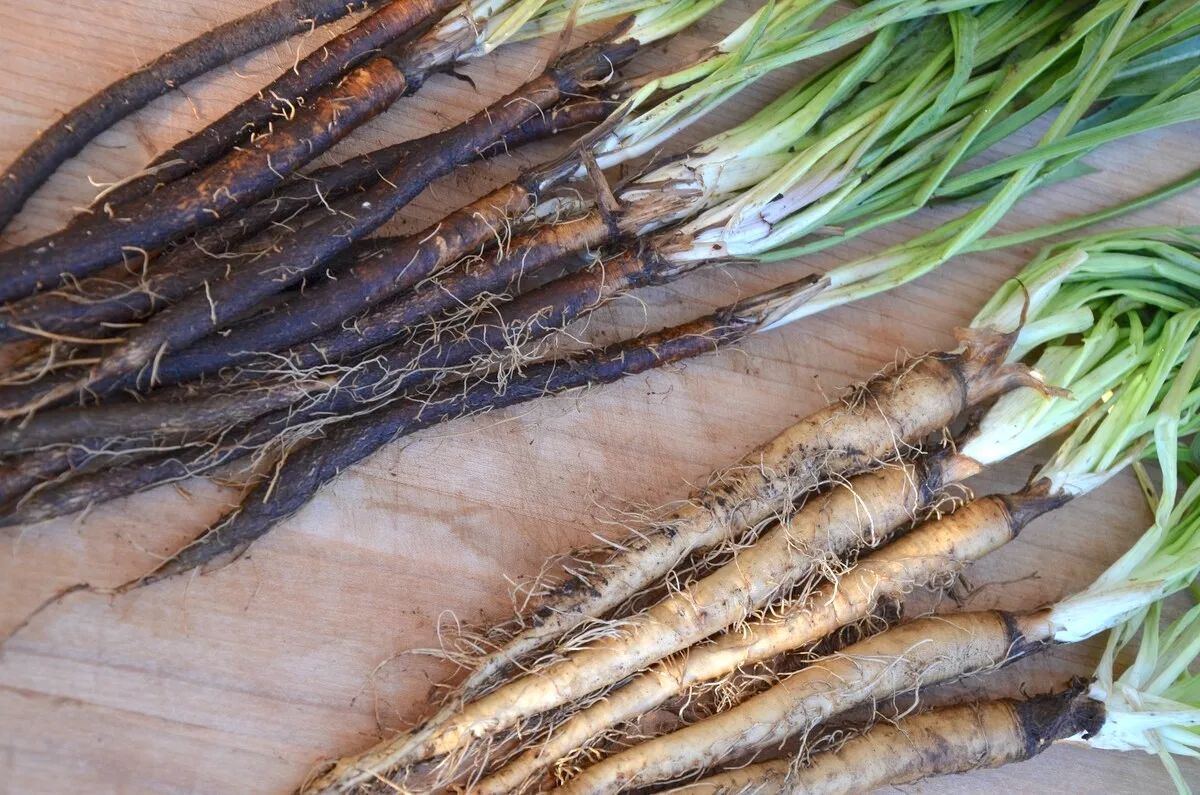
A similar plant is scorzonera (Scorzonera hispanica), also known as black salsify or Spanish salsify. Black on the outside and white on the inside, scorzonera has smaller, skinnier roots. Interestingly, even though it’s often called salsify, the plants are technically unrelated.
Here are a few excellent varieties to start from seed:
- ‘Mammoth Sandwich Island’ has large roots, as the name implies. Tasty greens and delicious roots.
- ‘Hoffman’s Schwarze’ is a black salsify variety perfect for simmering in soups and stew. It’s a perennial in Zone 5 and warmer.
- ‘Fiore Blu’ is a medium-sized root with a mild flavor—a reliable self-seeder for permaculture gardens.
Wit and Wisdom
- Eating raw salsify, which contains levulin, can cause some folks to get gassy.
- Price of seafood got you down? Black salsify is an excellent flavor substitute to make mock oyster soup.
- To keep salsify roots that pure white color after peeling, submerge them immediately in water with lemon juice or they will discolor.