



Planting and Growing common sunflower


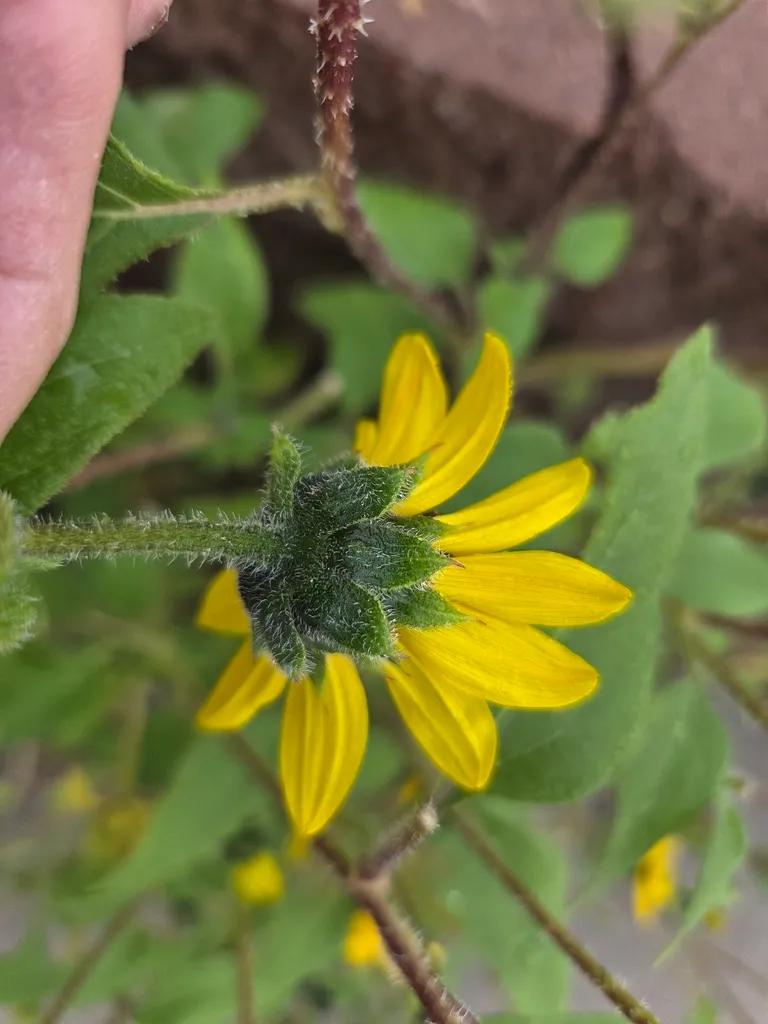

| Care difficulty | 1 / 5 |
|---|---|
| Watering schedule | Moderate regular watering, allowing brief slight drying between soakings |
| Sunlight requirements | Full sun |
| Ideal temperature | 15 – 25 °C |
| Soil type | Chalk · Clay · Loam · Sand |
| Soil pH | Alkaline · Neutral |
| Soil moisture | Moist but well drained |
| Fertilizing | Balanced perennial feed every four weeks from spring through summer |
| Toxicity | Information to be completed |
How to Water common sunflower?
Thriving in its native environment of open, arid plains, common sunflower has adapted to survive with infrequent rainfall. Its deep root system allows it to access moisture from deeper soil layers, making it relatively drought-tolerant. For optimal growth, watering should be consistent at twice a week. As an outdoor plant often cultivated for its vibrant and large flowering heads, common sunflower benefits significantly from thorough watering during its growing season to support its rapid development and blooming.
Learn more →What Are the Sunlight Requirements for common sunflower?
Common sunflower thrives in full sun conditions, requiring at least 6 to 8 hours of direct sunlight daily for optimal growth and flowering. While common sunflower can tolerate partial sun, deviating from full sun exposure may result in reduced vigor and fewer blooms. This plant is well-adapted to intense sunlight, with leaves that can orient themselves to maximize light absorption, elevating photosynthetic efficiency. For outdoor cultivation, common sunflower should be planted in open areas free from shade to ensure sufficient light access for robust development and maximum floral output.
Learn more →What Is the Ideal Temperature Range for common sunflower?

Sunflowers were originally native to North America, where it is cold in the winter and hot in the summer, meaning there is a significant annual variation in temperature. Sunflowers like a warm environment. The most suitable temperature for their growth is 18 to 30 ℃, and they can happily grow as long as the temperature is not lower than 10 ℃. Within this suitable temperature range, the higher the temperature is, the faster sunflowers grow. At different stages of their growth, sunflowers require different amounts of water, although in general they are drought-resistant. However, their soil should not be too moist since waterlogging soil can kill them. During the budding and flowering period, sunflowers should be regularly watered, to ensure better blooming.
Learn more →What Soil Is Best for common sunflower?
Sunflowers can grow well in all types of soil. However, the soil they most prefer is sandy loam or loamy soil, with a pH of between 5.8 and 6.5. Good soil drainage is crucial for the growth of sunflowers. If sunflowers are planted in the garden, it is recommended that loose and fertile loam is used, which can be mixed with decomposed compost as a base fertilizer. Quick-acting fertilizer can also be added. Soil should be dug over prior to fertilization and sowing to improve soil structure and drainage. If sunflowers are grown in pots, their soil should be made up of peat, vermiculite, and sand in the ratio 2: 1: 1; organic fertilizers can be mixed in at the same time. Please note that sunflowers should not be continuously planted in the same soil or in soil where other plants of the same family have been planted, otherwise they will grow poorly. It is recommended that the soil is replaced once a year, or that sunflowers are grown in a different area.
- Soil type
- Chalk · Clay · Loam · Sand
- Soil pH
- Alkaline · Neutral
What Are the Moisture Requirements for common sunflower?
Moist but well drained
Learn more →How to Fertilize common sunflower?

For common sunflower, a balanced, high-phosphorus fertilizer encourages robust growth and vibrant blooms. Apply monthly during the growing season. Use a granular, slow-release formula suited for flowering plants, proportionate to size, ensuring not to over-fertilize. Special attention is needed to avoid root burn: apply at the soil's perimeter, not directly against the stem. Seasonal changes influence feeding; reduce in fall to prepare common sunflower for dormancy. Water thoroughly post-fertilization to help nutrient absorption and prevent chemical concentration in soil that can harm common sunflower.
Learn more →How to Prune common sunflower?

Common sunflower is a tall, vibrant flowering plant known for its large, sunny blooms and fast growth. To maintain its health and optimal growth, prune in early to late spring. Focus on removing dead or damaged stems and any lateral shoots that may crowd the main stalk. Deadheading spent flowers encourages continuous blooming. Proper pruning enhances air circulation and light penetration, preventing disease. These techniques will ensure a robust and prolific display throughout the growing season.
Learn more →How to Propagate common sunflower?

Common sunflower thrive best when propagated through sowing. Gardeners should use quality seeds, ensuring good genetics and higher success rates. Soil should be well-draining and rich in organic matter to aid seedling development. Pots or trays with a fine seed mix are ideal for initial growth, and young seedlings require ample sunlight and consistent moisture without waterlogging. Once the seedlings are hearty enough, they can be transplanted outdoors to locations with full sun exposure where they reach their full potential.
Learn more →How to Transplant common sunflower?
The ideal season for transplanting common sunflower is from mid to late spring, allowing it to fully benefit from ample sunshine and warmth. Choose a sunny location with adequate space for its growth. Remember to handle common sunflower carefully during transplant to avoid damaging its roots.
Learn more →How to Plant common sunflower?
Indoors-potted: Thriving in bright locations, common sunflower adds a sunny touch to indoor settings; rotate the pot weekly for even growth as it reaches for light. Outdoors-potted: In pots, common sunflower may require staking; this beauty loves to grow tall and can be top-heavy when blooming its iconic flowers. Outdoors-in the ground: Common sunflower, though an annual, will generously self-seed outdoors, ensuring a burst of color in your garden year after year.
Learn more →How to Repot common sunflower?
Needs excellent drainage in pots.
Learn more →How to Harvest common sunflower?

For sunflowers planted to be used for cut flowers, they can be harvested when the outermost ligulate flowers bloom. It is best to harvest them in the early morning when the temperature is low; they should not be harvested at midday or in the afternoon, when the temperature is high. Gardening scissors should be used to cut the inflorescences obliquely at the bottom of the stem; this can increase the area for water absorption. The cut inflorescences should be placed in a container of clean water as soon as possible to avoid water loss. If the flower cannot be placed into water immediately, the bottom of the stem should be cut again before it is placed in water to ensure sufficient water absorption. The vase life of sunflowers is 6 to 8 days in the summer and 10 to 15 days in the winter.
Learn more →Common Pests & Diseases

Diseases
May be affected by powdery mildews and sclerotinia diseases
Pests
Can get slugs and snails
Explore the plant health library →