



Planting and Growing old lady cactus

| Care difficulty | 2 / 5 |
|---|---|
| Watering schedule | Water sparingly, allow soil to dry completely between waterings |
| Sunlight requirements | Full sun |
| Ideal temperature | 18 – 28 °C |
| Soil type | Loam · Sand |
| Soil pH | Acid · Alkaline · Neutral |
| Soil moisture | Well drained |
| Fertilizing | Monthly during growing season |
| Toxicity | Information to be completed |
How to Water old lady cactus?
Originating from arid regions, old lady cactus has adapted to store water efficiently, thriving with minimal moisture and high drought tolerance. Its natural habitat's infrequent rainfall has led to a preference for dry conditions, requiring watering only once every three weeks. Given its succulent nature, overwatering can be detrimental, making it essential to allow the soil to dry completely between waterings. Typically grown indoors due to its size and ornamental value, old lady cactus benefits from well-draining soil that mimics its native desert-like environment.
Learn more →What Are the Sunlight Requirements for old lady cactus?
Old lady cactus thrives in full sun exposure, which significantly enhances its growth, health, and blooming potential. Although it can tolerate partial sun, prolonged periods under such conditions can lead to suboptimal growth and reduced flowering frequency. Adaptively, old lady cactus may exhibit color intensification as a response to high light levels, reinforcing its resilience. When cultivated indoors, a south-facing windowsill is ideal to mirror its natural environment. For outdoor planting, old lady cactus favors a spot where it can bathe in unfiltered daylight for the majority of the day.
Learn more →What Is the Ideal Temperature Range for old lady cactus?

Old lady cactus is quite resilient to temperature variations, tolerating cold down to 0℃ (32℉) and heat up to 43℃ (109℉). Such adaptability means it can endure a wide range of environments but requires attention during extreme weather. If exposed to temperatures below its cold tolerance, old lady cactus may exhibit discoloration or shriveling. Overheating might cause scorching or wilting. Protective measures, like indoors relocation during frosts or shade provision during intense heat, are vital for maintaining its health. Monitoring the plant's condition and adjusting its environment accordingly ensures old lady cactus thrives despite temperature fluctuations.
Learn more →What Soil Is Best for old lady cactus?
Old lady cactus thrives in well-draining soil. For a suitable mix, combine 3 parts potting soil with 2 parts coarse sand and 1 part perlite, promoting aeration and preventing water-logging. Amend with a cactus-specific fertilizer during the growing season, following product instructions. If perlite is scarce, pumice or gravel are effective substitutes for drainage. Consistently damp soil should be avoided to ensure old lady cactus's health.
- Soil type
- Loam · Sand
- Soil pH
- Acid · Alkaline · Neutral
What Are the Moisture Requirements for old lady cactus?
Well drained
Learn more →How to Fertilize old lady cactus?

For old lady cactus, a succulent-specific fertilizer ensures vital nutrients are provided, promoting robust growth and flowering. Fertilize old lady cactus bi-weekly during its active growth in spring and summer with quarter-strength, balanced cacti food. Cease in fall and winter to respect its dormancy. Apply fertilizer to moist soil to avoid root burn and reduce dosage if old lady cactus shows signs of stress. Over-fertilization risks poor form, so err on the side of underfeeding.
Learn more →How to Prune old lady cactus?

Old lady cactus does not require much pruning. Remove withered flowers and branches so the plant uses nutrients on healthy growth.
Learn more →How to Propagate old lady cactus?

Belonging to the cacti family, old lady cactus is propagated predominantly through cuttings. To encourage successful growth, select a healthy segment and allow it to callus over for a few days before planting in well-draining cactus mix. Ensure the pot provides adequate drainage to prevent root rot, and place old lady cactus in bright, indirect light. Water sparingly once the soil is dry, providing the right conditions for this succulent to thrive and begin new growth.
Learn more →How to Transplant old lady cactus?
The best time to transplant old lady cactus is during mid-spring to early summer, as it allows ample time for proper root establishment. Choose a location with well-draining soil and partial sun exposure. Remember, a gentle touch is crucial while handling old lady cactus during transplanting!
Learn more →How to Care for old lady cactus in Winter?

Old lady cactus thrives in the dry, oscillating temperatures of Mexican deserts, adapting to winter by reducing its metabolism and water intake. In colder climates, it requires indoor shelter to avoid frost damage. Gardeners should bear in mind that old lady cactus requires a cool, dry winter environment, with minimal watering and temperatures that mirror its native habitat. Winter is a time for old lady cactus to rest, so refrain from fertilizing during this period.
Learn more →How to Plant old lady cactus?
Indoors-potted: For an indoor setting, old lady cactus thrives with proper drainage to prevent root rot, a common issue for succulents in confined spaces. Outdoors-potted: When potted outdoors, old lady cactus requires a sturdy container to support its delicate spines and dense structure against the elements. Outdoors-in the ground: Old lady cactus is not typically suited for outdoor ground planting unless it's in arid regions; excessive moisture can be detrimental.
Learn more →How to Repot old lady cactus?
Old lady cactus thrives best when repotted every 2-3 years, as it is a slow-growing succulent. Choose early spring for repotting to align with its growth spurt. Provide a slightly larger pot to accommodate growth, ensuring it has good drainage. Post-repotting, place old lady cactus in bright, indirect light and resume watering after a week to prevent root rot and encourage recovery.
Learn more →How to Harvest old lady cactus?

Most fruits of old lady cactus are edible. Pick the fruit when they turn red. Avoid food safety issues by confirming the species with experts. Wear gloves or use scissors and other tools to harvest.
Learn more →Common Pests & Diseases

Diseases
Generally disease free
Pests
May be attacked by mealybugs
Explore the plant health library →Troubleshooting
Soft, Yellowing, or Mushy Base (Root and Stem Rot)
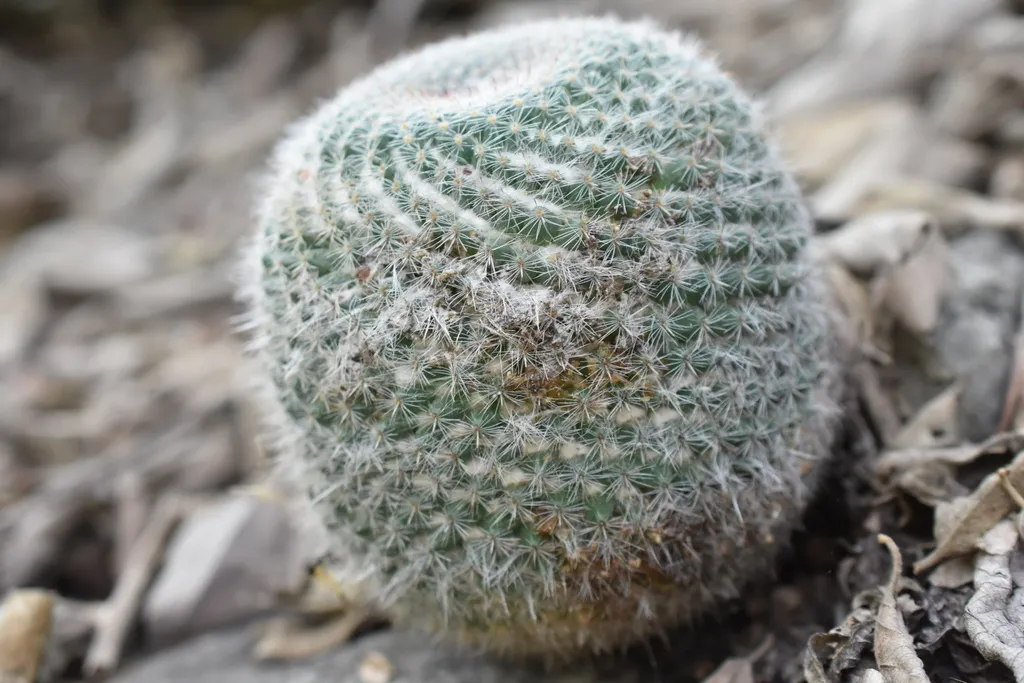
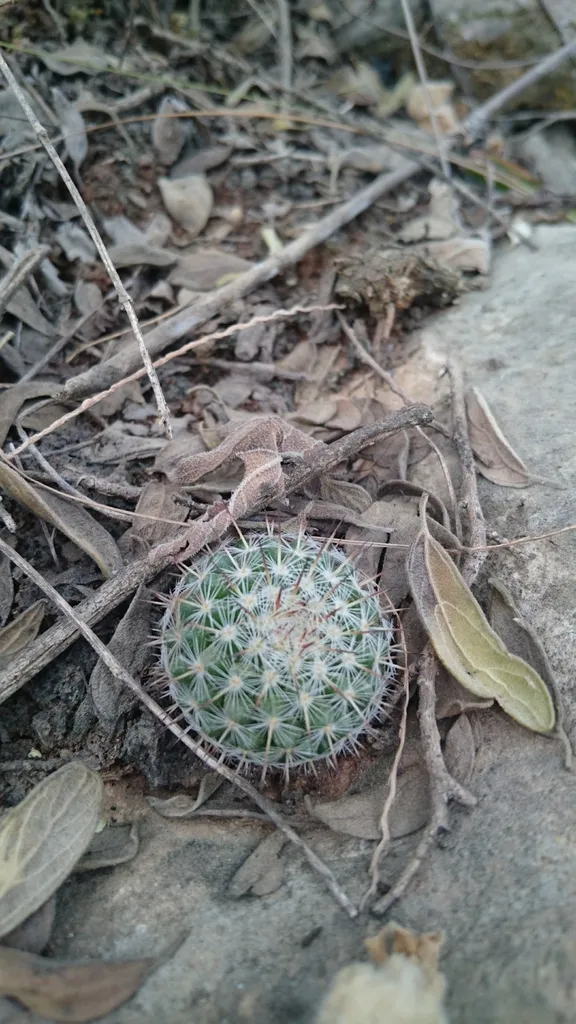
Mammillaria hahniana (old lady cactus) is a globular Mexican desert cactus covered in white hair-like spines that rots quickly if watered in winter dormancy or grown in moisture-retentive potting soil.
| What you notice | Possible explanation | What to check next |
|---|---|---|
| Lower body turns yellow-brown, soft, or sunken while potting mix stays damp or compacted | Overwatering, heavy soil, or watering during cool winter dormancy | Stop watering immediately and check the firmness of the cactus body carefully using tongs or thick gloves. |
| Corky tan scarring forms right at the soil line while the upper body stays firm and green | Normal age-related corking (suberization) at the base | Confirm the tissue is hard and dry rather than mushy; hard corking is normal and needs no treatment. |
- Grow in an ultra-gritty, fast-draining mineral cactus mix (at least 50% to 70% pumice, perlite, or coarse grit) in a terracotta or well-drained pot with open drainage holes.
- Water thoroughly only after the gritty mix has dried out completely during warm spring through early autumn growth, and keep completely dry (or water once very lightly) during cool winter rest.
- If basal rot is detected early, cut well above any discolored tissue with a sterile blade (wearing thick gloves/tongs), let the cut callous for 1 to 2 weeks in a dry shaded spot, and re-root on dry mineral mix.
Never pour water over the woolly white crown hairs in stagnant air, as trapped moisture encourages rot and stains the white wool.
Stretching Top (Etiolation) or Lack of Pink Flower Crown
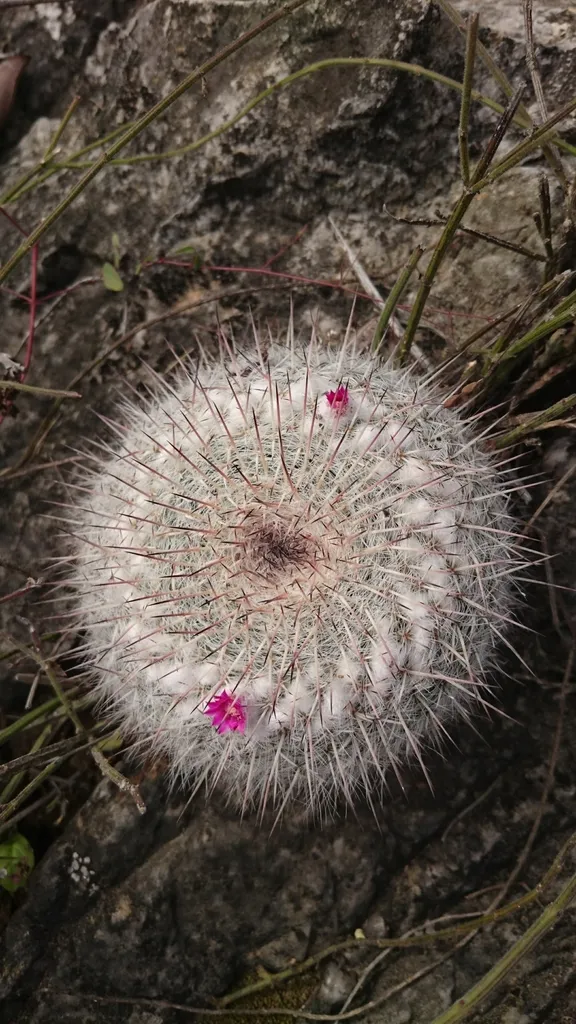
Mammillaria hahniana forms a ring (crown) of small magenta-pink flowers near the top in spring only after receiving intense sunlight and a cool, dry winter rest.
| What you notice | Possible explanation | What to check next |
|---|---|---|
| Globular stem narrows and stretches into a pale green cone at the top | Insufficient direct sunlight (etiolation) | Move the cactus gradually to a bright south- or west-facing window receiving at least 6 hours of direct sun. |
| Healthy mature cactus fails to produce its spring ring of pink flowers | Warm, wet winter conditions instead of a cool, dry winter rest, or insufficient sun | Provide a bright, cool (8°C to 13°C / 46°F to 55°F), dry winter rest period. |
- Provide at least 6 hours of direct sunlight daily (acclimating gradually to avoid sunburn).
- Give a cool, bright, dry winter rest from late autumn through late winter to trigger spring flowering.
- Mammillaria species are non-toxic to cats and dogs, though their sharp spines can cause physical injury.
Use folded newspaper, silicone tongs, or thick leather gloves when repotting to protect both your hands and the delicate white hair-like spines.