



Planting and Growing pineapple

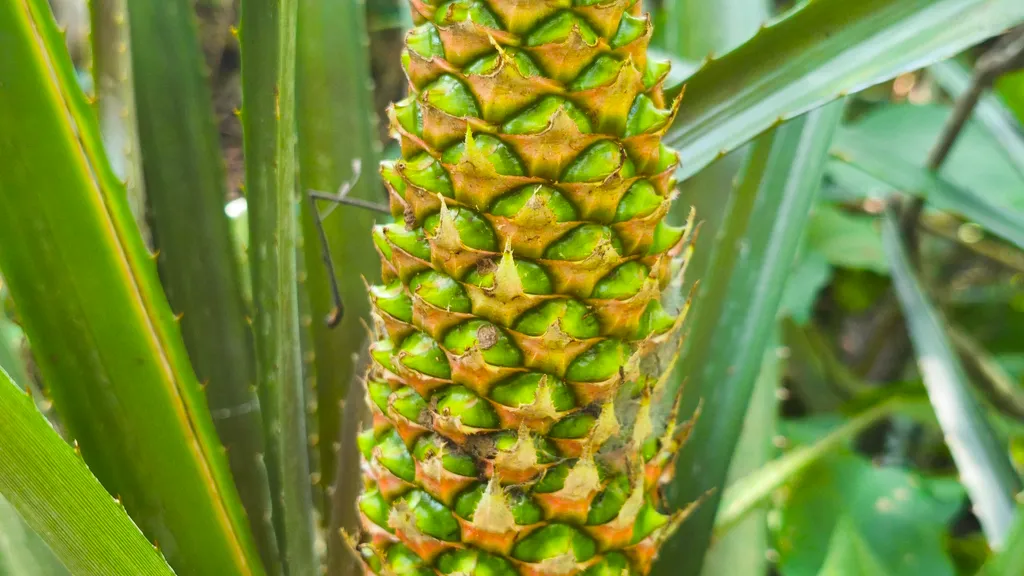
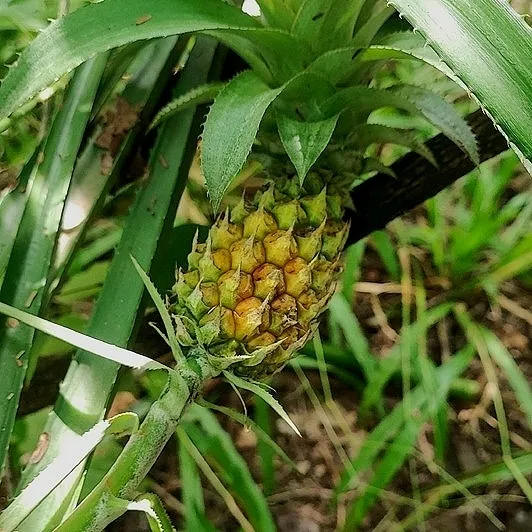
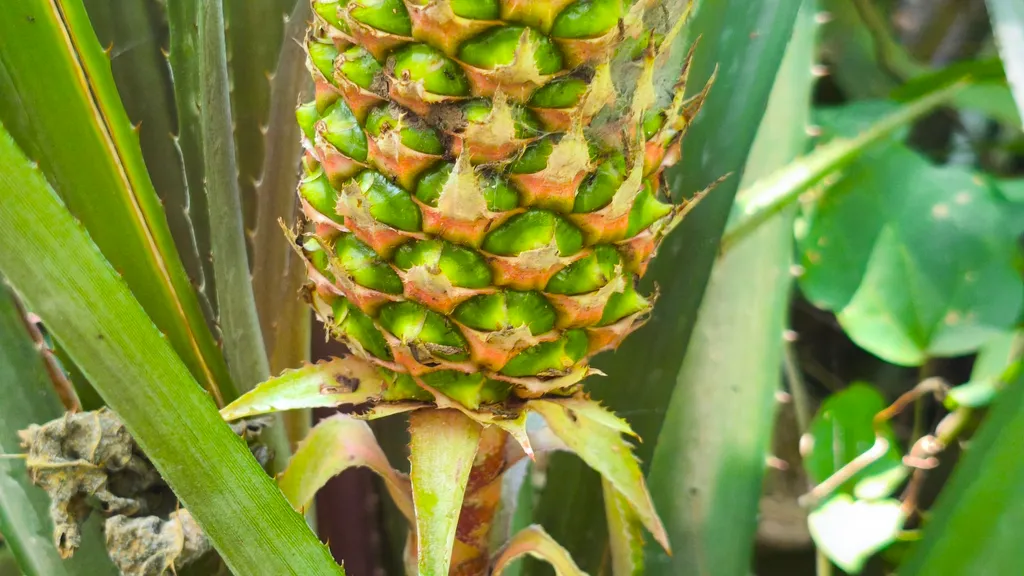
| Care difficulty | 2 / 5 |
|---|---|
| Watering schedule | Moderate regular watering, allowing brief slight drying between soakings |
| Sunlight requirements | Full sun |
| Ideal temperature | 20 – 30 °C |
| Soil type | Loam |
| Soil pH | Acid |
| Soil moisture | Well drained |
| Fertilizing | Balanced perennial feed every four weeks from spring through summer |
| Toxicity | Information to be completed |
How to Water pineapple?
Originating from the tropical regions, pineapple thrives in environments with high humidity and consistent warmth. This species is well-adapted to absorb moisture efficiently, exhibiting a preference for regular hydration without being waterlogged. The watering schedule for pineapple should be maintained at once every week to mimic its natural conditions. As an evergreen plant, pineapple benefits significantly from proper watering during its active growth phase, ensuring lush foliage and optimal health.
Learn more →What Are the Sunlight Requirements for pineapple?
Pineapple thrives in environments with full sun exposure, where it can receive direct light for optimal growth. The intensity of the light promotes healthy foliage and fruit development. While pineapple can tolerate lower light conditions such as partial sun, prolonged periods of full shade may impede its photosynthesis process, affecting overall vigor and yield. Adaptively, pineapple can adjust its leaves to maximize light absorption under suboptimal conditions, yet its preference for bright light is evident. Pineapple is typically an outdoor plant, flourishing best in locations that provide abundant sunlight throughout the day.
Learn more →What Is the Ideal Temperature Range for pineapple?

Pineapple exhibits moderate resilience to temperature fluctuations, tolerating cold down to 0°C (32°F) and heat up to 43°C (109°F). This tolerance requires protective measures in extreme conditions, such as frost protection or shading during heat waves. Under cold stress, pineapple may exhibit slowed growth and leaf yellowing, whereas overheating can cause leaf burn and dehydration. To counter overcooling, employ frost covers and move the plant indoors if possible. During excessive heat, ensure ample hydration and provide shade to prevent foliage damage. This adaptability makes pineapple suitable for warmer climates but demands care in temperate regions with significant seasonal temperature changes.
Learn more →What Soil Is Best for pineapple?
Pineapple thrives in well-aerated, fast-draining soil. A suitable mix is equal parts potting mix and perlite to prevent water-logging. In the absence of perlite, sand can be used as an alternative. Regularly apply a balanced fertilizer to enhance growth, per product instructions. Emphasize good drainage to maintain healthy roots.
- Soil type
- Loam
- Soil pH
- Acid
What Are the Moisture Requirements for pineapple?
Well drained
Learn more →How to Fertilize pineapple?

For optimal growth, pineapple benefits from fertilization with high phosphorus formulas during the flowering phase and balanced N-P-K formulas otherwise. Apply fertilizers quarterly, adjusting dosages according to package instructions. Fertilizing enhances growth, flowering, and fruit production. Excessive application can damage roots and reduce yield. During active growth in warmer seasons, increase frequency slightly. Use slow-release fertilizers or dilute liquid ones to minimize risks and ensure balanced nutrient uptake. Watch for signs of over or under-fertilization, like leaf discoloration or poor growth, and adjust accordingly.
Learn more →How to Prune pineapple?

This tropical plant, known for its spiky leaves and sweet fruit, benefits from careful pruning to enhance growth and fruit production. Optimal pruning occurs in early summer, targeting dead or damaged leaves and spent flower stalks. Regularly removing suckers (small offshoots) helps focus energy on the main plant, improving yield. Pruning not only maintains plant health but also boosts air circulation, minimizing disease risks. Ensure tools are sterilized to prevent infections during pruning.
Learn more →How to Propagate pineapple?

Pineapple is best propagated through division during Spring and Autumn. Its propagation is relatively easy, with successful signs including new growth and roots forming at the base. Ensure proper root separation and adequate water supply for optimal results.
Learn more →How to Transplant pineapple?
The prime time to transplant pineapple is during the warmth of mid-summer, providing optimal growth. Choose a sunny location with well-draining soil for a thriving transplant. Occasionally offer transplant tips to ensure success. Embrace the joy of nurturing pineapple in your landscape!
Learn more →How to Care for pineapple in Winter?

Pineapple originates from tropical humid climates, unaccustomed to winter cold. Their high water content makes freezing temperatures a destructive force. To survive, they have evolved to rapidly propagate before cold seasons. As a gardener, you'll need to provide a consistently warm environment for pineapple during winter, ensuring no frost exposure occurs. Bright light, well-draining soil, and occasional water are vital but avoid overwatering. An indoor setting is often best.
Learn more →How to Plant pineapple?
Indoors-potted: Ensure your pineapple has ample space to grow indoors; its spiky leaves can spread wide and may require occasional trimming. Outdoors-potted: In an outdoor pot, rotate your pineapple periodically to encourage even growth and symmetry due to its natural response to light. Outdoors-in the ground: Planting pineapple in the ground outdoors allows for optimal root expansion, but beware of frost which can severely damage this tropical plant.
Learn more →How to Repot pineapple?
Repot pineapple, a spiky, tropical bromeliad, every 2-3 years to accommodate its size and root system. Ideal repotting occurs in spring or early summer, aligning with its active growth phase. Utilize a container slightly larger than the previous one, ensuring ample drainage. After repotting, provide pineapple with bright, indirect light and resume regular watering after a week, allowing it to establish in its new home.
Learn more →How to Harvest pineapple?

Information to be completed
Learn more →Common Pests & Diseases

Diseases
Generally disease-free
Pests
May be susceptible to scale insects
Explore the plant health library →The Toxicity of pineapple
Information to be completed