



Planting and Growing milky-white freesia

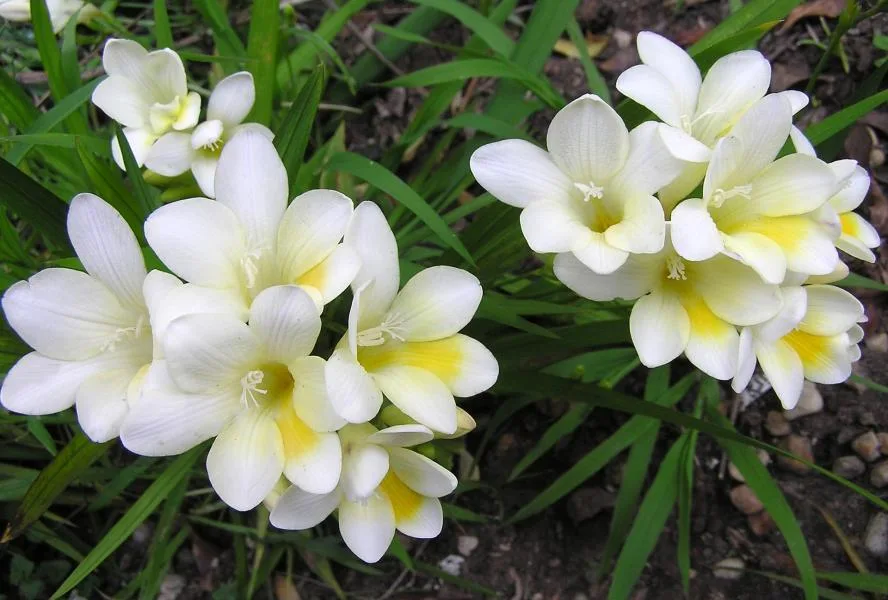
| Care difficulty | 3 / 5 |
|---|---|
| Watering schedule | Moderate regular watering, allowing brief slight drying between soakings |
| Sunlight requirements | Full sun |
| Ideal temperature | Information to be completed |
| Soil type | Chalk · Loam · Sand |
| Soil pH | Alkaline · Neutral |
| Soil moisture | Well drained |
| Fertilizing | Balanced perennial feed every four weeks from spring through summer |
| Toxicity | Information to be completed |
How to Water milky-white freesia?
Moderate regular watering, allowing brief slight drying between soakings
Learn more →What Are the Sunlight Requirements for milky-white freesia?
Full sun
Learn more →What Soil Is Best for milky-white freesia?
- Soil type
- Chalk · Loam · Sand
- Soil pH
- Alkaline · Neutral
What Are the Moisture Requirements for milky-white freesia?
Well drained
Learn more →How to Fertilize milky-white freesia?

Balanced perennial feed every four weeks from spring through summer
Learn more →How to Prune milky-white freesia?

Foliage can be removed after it dies down after flowering
Learn more →How to Propagate milky-white freesia?

Remove offsets in autumn
Learn more →How to Plant milky-white freesia?
Freesias are naturally winter-growers starting into growth in autumn through to late spring so are usually grown in a frost-free greenhouse. Plant in pots of John Innes No.2 loam-based compost with added gritty sand. Place in full light with good ventilation, water well and feed monthly until flower buds form. After flowering dry off pots and store dry over the summer. Corms can also be stored dry over the winter and planted in well-drained soil in spring for later flowering. Lift in autumn and store dry
Learn more →Common Pests & Diseases

Diseases
Susceptible to fusarium wilt and a virus
Pests
Susceptible to glasshouse red spider mite and aphids
Explore the plant health library →