



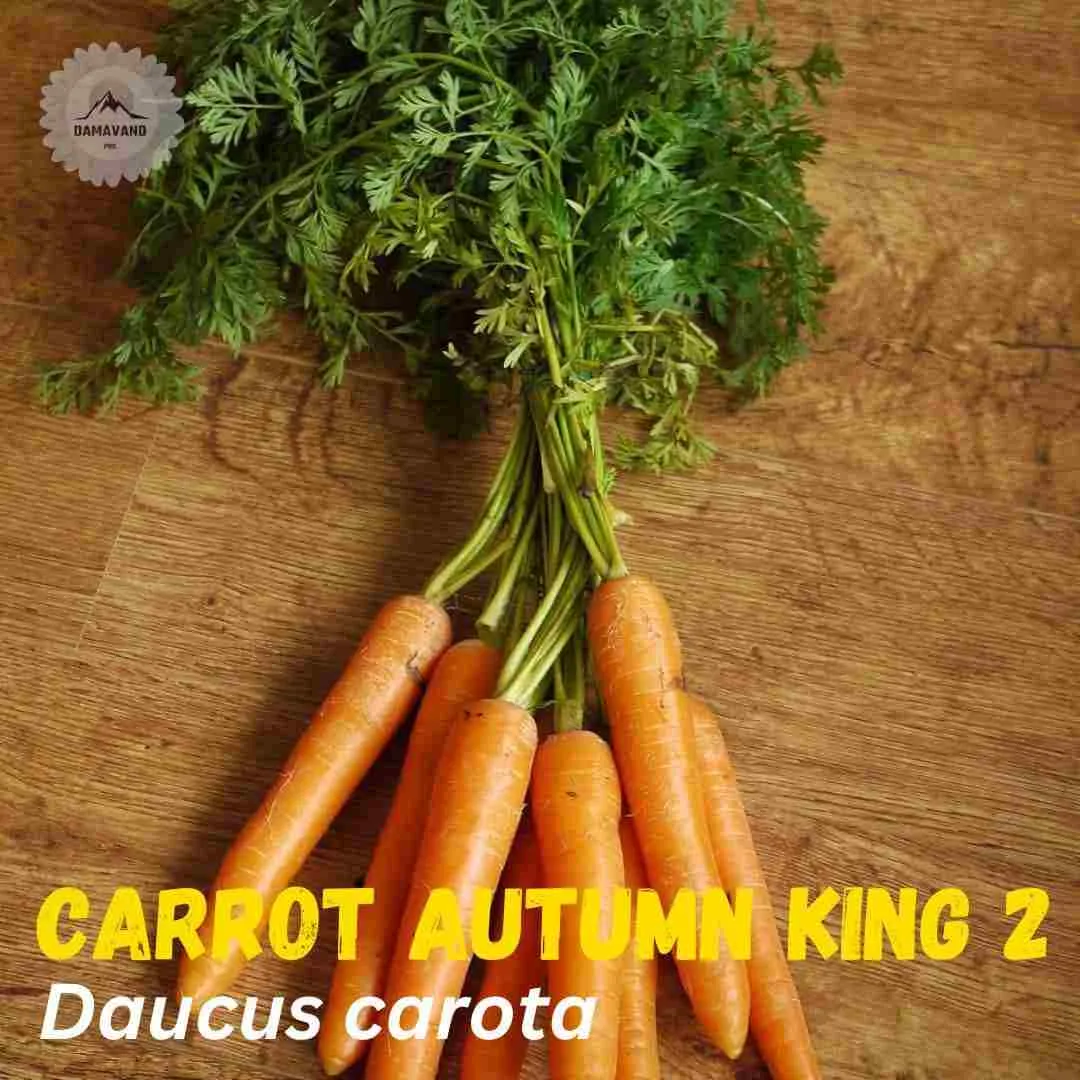
Planting and Growing carrot 'Autumn King 2'

| Care difficulty | 1 / 5 |
|---|---|
| Watering schedule | Regular even moisture supply, avoid prolonged full substrate dryness spells |
| Sunlight requirements | Full sun |
| Ideal temperature | Information to be completed |
| Soil type | Clay · Loam · Sand |
| Soil pH | Acid · Alkaline · Neutral |
| Soil moisture | Moist but well drained · Well drained |
| Fertilizing | High-nitrogen vegetable feed biweekly throughout active growing phase |
| Toxicity | Information to be completed |
How to Water carrot 'Autumn King 2'?
Regular even moisture supply, avoid prolonged full substrate dryness spells
Learn more →What Are the Sunlight Requirements for carrot 'Autumn King 2'?
Full sun
Learn more →What Soil Is Best for carrot 'Autumn King 2'?
- Soil type
- Clay · Loam · Sand
- Soil pH
- Acid · Alkaline · Neutral
What Are the Moisture Requirements for carrot 'Autumn King 2'?
Moist but well drained · Well drained
Learn more →How to Fertilize carrot 'Autumn King 2'?

High-nitrogen vegetable feed biweekly throughout active growing phase
Learn more →How to Prune carrot 'Autumn King 2'?

No pruning required
Learn more →How to Propagate carrot 'Autumn King 2'?

Propagate by seed. See sowing vegetable seeds
Learn more →How to Plant carrot 'Autumn King 2'?
Grow in an open, sunny position with deeply cultivated, well-drained soil; heavy clay or stony soils may cause carrots to fork so it is best to make sure you have removed as many stones as possible and for clay soils add plenty of organic matter, such as well rotted manure. To reduce chances of harvesting forked carrots in clay soil choose a short-rooted cultivar. Keep seeds well-watered until your seedlings have emerged. You can also sow seeds in containers, especially if you select a cultivar with a shorter root. Best harvested as a maincrop from August until December. For more advice, see carrots cultivation.
Learn more →Common Pests & Diseases

Diseases
Generally disease-free although may be susceptible to carrot leaf blight in wet conditions during the growing season.
Pests
Roots may be susceptible to carrot fly larvae, wireworm, slugs and rodents; foliage may be affected by aphids. A barrier of fine insect mesh at least 60cm high around the beds can help prevent carrot fly laying eggs.
Explore the plant health library →